The Federal Ministry of Labour and Employment has signed a Memorandum of Understanding (MoU) among key institutions responsible for generating and managing labour market data to strengthen employment governance and evidence-based labour market planning.
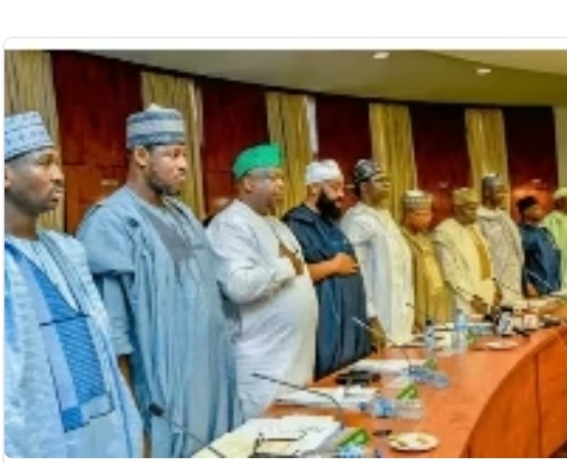
The agreement which was signed at the 13th meeting of the National Employment Council in Abuja yesterday was to end fragmented National Labour Market Information System (NLMIS).
The goal is to provide policymakers with credible data to identify labour market trends, forecast skills requirements, monitor employment outcomes and evaluate public interventions.
Speaking at the event, the minister of labour and employment, Mohammed Maigari Dingyadi described the agreement as a landmark achievement in Nigeria’s labour market reform agenda, saying reliable labour market intelligence remains critical to addressing unemployment and skills gaps.
The minister who also chair the council, stated that Nigeria’s growing labour force and youthful population present enormous opportunities for economic growth but stressed that deliberate and coordinated action is needed to translate the demographic advantage into prosperity.
According to him, employment creation can no longer be viewed as the responsibility of a single institution, noting that effective job creation requires coordinated interventions across education, skills development, agriculture, technology, infrastructure trade and labour administration.
“The world of work is changing at an unprecedented pace. Across continents, economies are adapting to technological innovation, digital transformation, artificial intelligence, green transitions, demographic changes, and evolving business models.
Today’s Memorandum of Understanding signing ceremony therefore represents a landmark achievement in Nigeria’s labour market reform journey. The institutions participating in this framework collectively represent the country’s most important producers, custodians and users of labour market data and statistics,” he said.
In her remarks, the International Labour Organisation (ILO) country director for Nigeria and ECOWAS, Vanessa Phala, noted that a robust labour market information system would help government and stakeholders identify where jobs exist, where labour demand is growing and where skills supply is available, enabling more effective interventions.
Phala also stressed the importance of labour inspection in promoting compliance with labour laws and improving workplace standards.
“The signing of the MOU is a very important step, a step in the right direction. It will really coordinate the way we share information. As we know, in the digital era, information is power.
With strong labour inspection capacity, we are able to drive the implementation of the policies in a much more holistic and effective manner.
We will continue to support the Ministry, the Council and all stakeholders to build an employment framework that positions Nigeria as a leader in shaping employment policies and creating opportunities for its young population,” Phala said.
Earlier, the permanent secretary of the ministry, Kamil Shoretire, described the MoU as a major step towards ending fragmented labour market information systems in the country.
“This ceremony represents far more than the signing of a document. It signifies a shared commitment to institutional collaboration, data harmonization, transparency, and evidence-based decision-making,” Shoretire said.
Key institutions to the agreement includes; the Federal Ministry of Education, National Bureau of Statistics, National Universities Commission, National Population Commission, National Board for Technical Education and the Nigerian Institute of Social and Economic Research.
We’ve got the edge. Get real-time reports, breaking scoops, and exclusive angles delivered straight to your phone. Don’t settle for stale news. Join THISTIMES on WhatsApp for 24/7 updates →
Join Our WhatsApp Channel