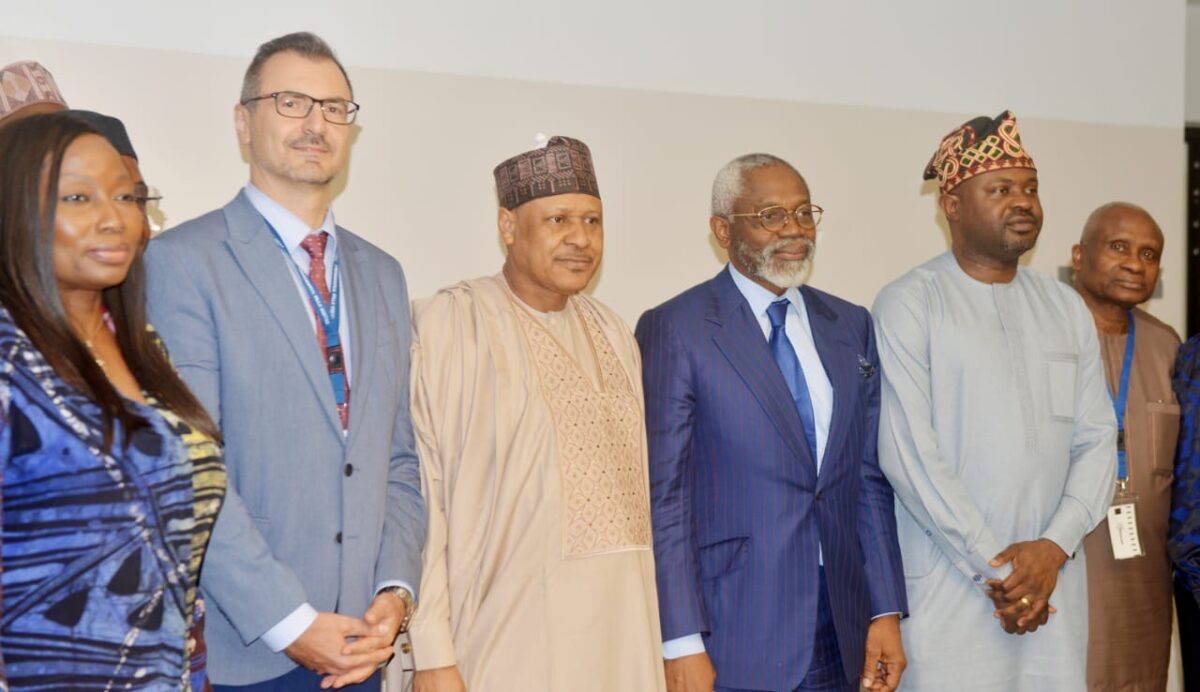
The Presidency, on Thursday,President Bola said Nigeria must not be caught off guard by the Ebola Virus Disease (EVD), as the Federal Government inaugurated a Presidential Task Force on Ebola preparedness to prevent any possible outbreak.
Chief of Staff to the President, Femi Gbajabiamila, stated this after inaugurating the task force at the State House, Abuja, while the Director-General of the Nigeria Centre for Disease Control and Prevention (NCDC), Dr Jide Idris, assured that no case of Ebola had been recorded in the country.
Gbajabiamila said the government’s focus was on prevention rather than response, stressing that authorities were determined not to be caught unprepared.
“We did the inauguration today on the preparedness of Nigeria for the Ebola virus disease. We’ve covered a lot of grounds. Right now, there’s no case reported, and that’s good news, and that’s why all hands have to be on deck to make sure that the measures we are taking are preventive and not curative.
“We don’t want to be in the situation we were last time, where we had a carrier in the country and we’re all running helter-skelter,” he said.
The Chief of Staff disclosed that the task force had established several subcommittees to coordinate critical areas of preparedness, including surveillance, border control, immigration management and emergency response.
According to him, one of the key lessons from the 2014 outbreak is the need for stronger coordination among stakeholders, particularly between the Federal Government and states with international points of entry.
He noted that governors and representatives of states hosting international airports, including Lagos, Rivers, Enugu and the Federal Capital Territory, participated in the meeting, describing the collaboration as essential to preventing the virus from entering the country.
Gbajabiamila said special attention was also being given to Nigeria’s land borders, noting that cross-border migration required increased vigilance.
“Normally when people talk about emergency preparedness and cross-border diseases such as this, they think about airports. But now we’re covering not just the airports; we’re putting a lot of emphasis on land borders.
“We have a lot of cross-migration through the land borders, and the Border Control Development Agency is involved, immigration is involved, and a lot of the border communities are involved,” he said.
The Chief of Staff said the government had drawn valuable lessons from the country’s successful containment of the Ebola outbreak in 2014 and was building stronger structures to eliminate gaps in preparedness.
“What we want is a zero case, as we have now. We want to maintain a zero case,” he added.
Also speaking, Idris said surveillance systems had already been strengthened at major points of entry across the country, particularly airports.
He stressed that preparedness remained critical despite the absence of any recorded case of the disease in Nigeria.
“The focus is to be prepared. We don’t have any Ebola case here now, but we need to be prepared. We need to ensure that we don’t get that Ebola virus here.
“However, just in case one slips in, we want to be prepared nationally to identify and deal with the case,” he said.
The NCDC boss explained that existing disease surveillance and emergency response structures were being upgraded and adapted specifically to address Ebola-related threats.
He said the preparedness framework brings together multiple government institutions, including the ministries of health, interior and education, as well as immigration, border control agencies and state governments.
According to him, emergency preparedness requires a coordinated national response built on teamwork, clearly defined responsibilities and an effective command-and-control structure.
“The bottom line is that the objective is that we do not allow Ebola to come in. If it does come in, we are prepared to rapidly identify and manage the case nationally,” he said.
Idris added that state governments across the federation had already been mobilised as part of the preparedness strategy, with efforts focused on surveillance, early detection, rapid response and public health coordination.
The inauguration of the task force comes amid heightened vigilance across several African countries following renewed concerns over Ebola outbreaks in parts of the continent.
We’ve got the edge. Get real-time reports, breaking scoops, and exclusive angles delivered straight to your phone. Don’t settle for stale news. Join THISTIMES on WhatsApp for 24/7 updates →
Join Our WhatsApp Channel