The African Telecommunications Union (ATU) has outlined strategies to shape the continent’s digital future in the era of emerging technologies, to drive investment and bring economic prosperity to the region’s people.
The ATU is the champion of digital transformation across Africa, and this move is consistent with the region’s plans to bridge the digital divide. The continent, despite its enormous potential, is suffering an acute deficit in this critical sector.
Despite broadband availability, nearly one billion Africans lack mobile internet access, and ATU has the responsibility to provide the devices needed to promote affordability, tackle poor digital literacy and inadequate infrastructure, and address the vexed issue of fragmented tech policies.
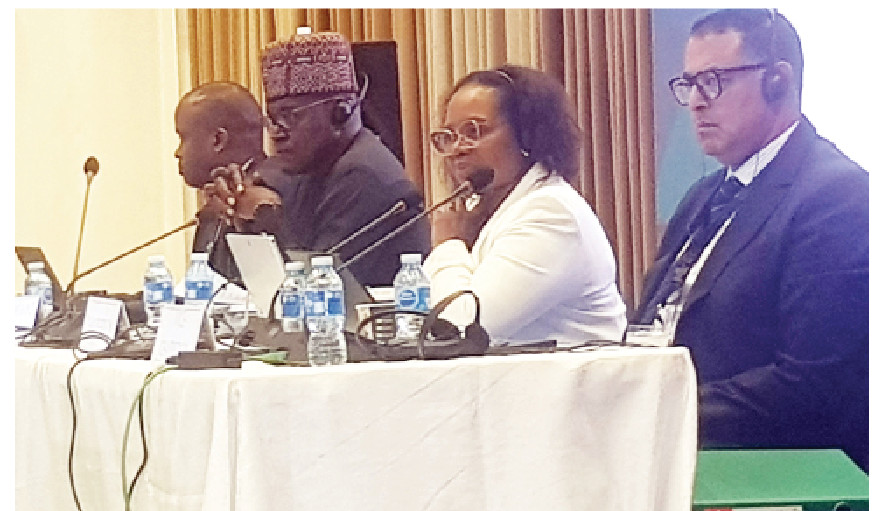
This was the crux of the Special Session of the Administrative Council of the ATU that commenced in Abuja on Thursday, ahead of the forthcoming International Telecommunication Union (ITU) Conference of Plenipotentiaries in Doha 2026, where Africa hopes to strengthen its common position on key telecommunications and digital policy issues.
Nigeria’s Minister of Communications, Innovation and Digital Economy, Dr Bosun Tijani, in his remarks, noted that Africa has made significant progress in the ICT sector over the years. He added that mobile connectivity has grown, digital innovation is expanding rapidly, and governments are increasingly adopting digital technologies to improve public service delivery.
The Minister, represented by the Permanent Secretary of the Ministry, Nadungu Gagare, however, lamented that many challenges remain, as millions of Africa’s citizens still lack reliable internet access, adding that digital infrastructure is unevenly distributed and that emerging technologies such as Artificial Intelligence require coordinated policies and sustained capacity building.
“Recent evidence gives this responsibility greater urgency. Almost one billion people in Africa do not use mobile internet despite living within broadband coverage. Infrastructure expansion must therefore be matched by affordability, suitable devices, digital skills, trust and local services,” he said.
He said Nigeria remains fully committed to this work and to the vision and objectives of the African Telecommunications Union. “We believe that regional cooperation is essential if Africa is to build a strong, inclusive and innovative digital economy. By working together, we can expand connectivity, improve digital infrastructure, promote digital skills, strengthen cybersecurity, protect data, and create opportunities for our people, especially our youth,” he added.
Secretary-General of the ATU, Mr John Omo, in his remarks, said that the meeting offers an opportunity to make recommendations for the interest of member states and Associates, adding that the platform will enable participants to put forward credible proposals to shape collective and coordinating information. He also appealed to member countries to pay the backlog of their contributions to enable the Union to operate smoothly.
In her remarks, Chairperson of the ATU Administrative Council Nonkqubela Jordan-Dyani, said the continent needs to build an ATU to maximise the potential that will help the region achieve greater regional integration, contributing to the African Continental Free Trade Area (AfCFTA) as well as driving development through ICT to deliver the African Union Agenda 2063.
She said, “This development reminds us that building our economic resilience cannot be viewed as a future aspiration; it must become a deliberate regional strategy. It is really important that we redouble our efforts to strengthen regional cooperation as well as integration.”
She emphasised that ATU must be at the forefront of shaping the digital future of Africa, working in partnership with the AU, the ITU, the UN and other regional bodies, including development finance institutions, together with the private sector, civil society and academia.
“We must ensure access is affordable and that we provide opportunities for digital skills, innovation and inclusivity. Particular attention should be given to SMEs, whose participation in the digital economy can drive job creation, competitiveness, innovation, and economic growth.
“Another key area is emerging technologies such as Artificial Intelligence, which will continue to reshape economies and societies, and in this regard, we need to create an enabling policy and regulatory environment that will bridge the digital divide while promoting investment and trust,” she noted.
In Africa, connectivity infrastructure exists, but high data and smartphone costs prevent adoption. This forces citizens to choose between digital devices and basic necessities. Also, rural and remote areas still severely lack necessary fibre-optic cables and 5G networks, concentrating digital growth in major urban centres.
Africa also suffers from a lack of localised digital education, and limited internet access limits regular internet use. ATU must therefore prod Member Countries to improve digital literacy to keep populations engaged.
We’ve got the edge. Get real-time reports, breaking scoops, and exclusive angles delivered straight to your phone. Don’t settle for stale news. Join THISTIMES on WhatsApp for 24/7 updates →
Join Our WhatsApp Channel