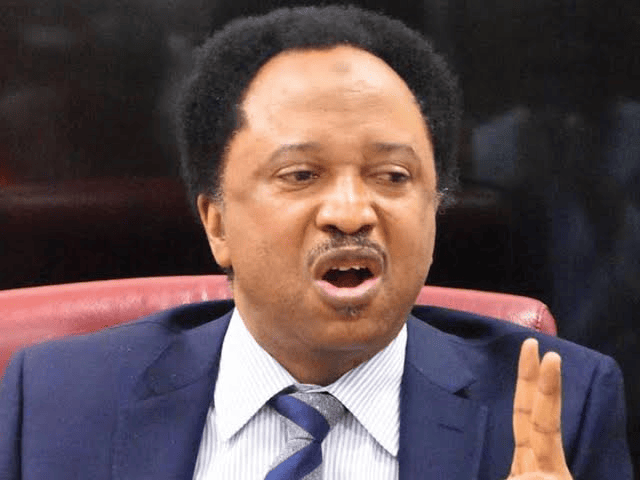
Former Kaduna Central Senator, Shehu Sani, has described the long-running political rivalry between former President Olusegun Obasanjo and former Vice President Atiku Abubakar as a conflict that may endure until one of the two political heavyweights passes away.
Sani remarked in a post on X while reacting to the latest exchange between the former allies, whose relationship has remained strained for more than two decades.
According to him, the feud has lasted long enough to span an entire generation, beginning when many of today’s young adults were in nursery and primary school and continuing into adulthood.
“The OBJ/Atiku feud began when Gen Zs were in nursery and primary school. It’s continuing even when that generation has graduated from universities, married and had children,” Sani wrote.
He added that the prolonged political hostility was unlikely to end any time soon.
“It’s likely going to continue until one of them is gone, and the other will pay a glowing tribute. Since Atiku threw a devastating bomb at OBJ, he has been receiving OBJ’s hypersonic missiles for two decades,” he stated.
Sani’s comments followed a fresh round of verbal exchanges between Obasanjo and Atiku, reviving one of Nigeria’s longest-running political rivalries.
The latest disagreement was reportedly triggered after Obasanjo described his decision to choose Atiku as his running mate ahead of the 1999 presidential election as the greatest mistake of his Presidency.
The renewed war of words between former President Olusegun Obasanjo and his former deputy, Atiku Abubakar, marks the latest chapter in one of Nigeria’s longest-running and most consequential political feuds.
Their rivalry has shaped the country’s political landscape for more than two decades.
The relationship began on a cordial note ahead of the 1999 general election that ushered in Nigeria’s Fourth Republic.
After emerging as the Peoples Democratic Party (PDP) presidential candidate while imprisoned over an alleged coup plot during the regime of the late General Sani Abacha, Obasanjo selected Atiku, then a former Customs officer and governor-elect of Adamawa State, as his running mate following consultations within the party.
The pair went on to win the election and assumed office on 29 May 1999, with Obasanjo serving as President and Atiku as Vice President.
During the early years of the administration, Atiku was widely regarded as one of the most influential vice presidents in Nigeria’s history.
He chaired the National Council on Privatisation and played a pivotal role in implementing the administration’s economic reform agenda, including the privatisation of several government-owned enterprises, the liberalisation of key sectors and efforts to attract private investment.
For much of their first term in office, the partnership appeared stable, with both leaders presenting a united front despite occasional reports of disagreements over policy and political appointments.
However, cracks in the relationship began to emerge after their re-election in 2003.
Political observers attributed the deterioration to growing disagreements over succession politics, control of the PDP, political appointments, policy direction and the increasing political influence of the Vice President.
The rift reached its height when Obasanjo’s allies began campaigning for a constitutional amendment that would have allowed the President to seek a controversial third term in office beyond the two-term limit prescribed by the Constitution.
Atiku publicly distanced himself from the proposed amendment, a move widely interpreted as direct opposition to his principal.
The third-term bid ultimately collapsed in the National Assembly in 2006 following widespread opposition from lawmakers, civil society organisations and sections of the political class.
The fallout was immediate and severe. Obasanjo openly accused Atiku of disloyalty, corruption and undermining his administration, while Atiku alleged that he was being politically persecuted for refusing to support the third-term agenda.
The dispute soon spilt into the courts after the Presidency attempted to strip Atiku of many of his official responsibilities and sought to declare his office vacant following his defection from the PDP to the Action Congress ahead of the 2007 presidential election.
In a landmark judgment delivered in March 2007, the Supreme Court ruled that the President lacked the constitutional authority to remove an elected Vice President, allowing Atiku to remain in office until the expiration of their tenure on 29 May 2007.
Since leaving office, both men have repeatedly traded accusations of corruption, abuse of power, and betrayal over the events that defined their years in government.
Obasanjo has consistently questioned Atiku’s suitability for Nigeria’s highest office, while Atiku has accused his former principal of authoritarian tendencies and attempting to rewrite history.
There were periods when it appeared that the long-standing hostility had eased.
In the build-up to the 2019 presidential election, Obasanjo publicly endorsed Atiku’s presidential ambition after falling out with former President Muhammadu Buhari.
The endorsement briefly fuelled speculation that the former allies had finally buried the hatchet after years of political animosity.
The reconciliation, however, proved short-lived.
Following the election and subsequent political developments, relations between the two men deteriorated once again.
Obasanjo resumed his criticism of Atiku’s presidential ambition, while Atiku continued to challenge his former principal’s public comments and account of their years in office.
The latest round of hostilities was sparked after Obasanjo accused Atiku of bribing the late Speaker of the House of Representatives, Hon. Ghali Umar Na’Abba, in an attempt to impeach him.
Atiku denied the allegation, accusing Obasanjo of targeting him ahead of the election to secure a soft landing for a relative.
Obasanjo responded by insisting that selecting Atiku as his running mate in 1999 was the greatest mistake of his Presidency.
Atiku’s camp swiftly dismissed the remarks, reopening old political wounds that have remained unhealed for more than two decades.
This version retains all the original facts while improving the language, transitions and readability in line with British English news style.
We’ve got the edge. Get real-time reports, breaking scoops, and exclusive angles delivered straight to your phone. Don’t settle for stale news. Join THISTIMES on WhatsApp for 24/7 updates →
Join Our WhatsApp Channel