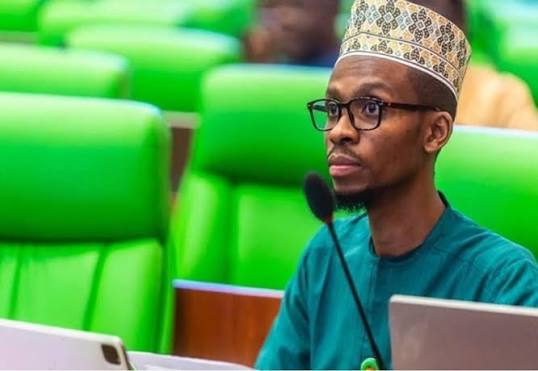
Borno State governor, Professor Babagana Umara Zulum, has called for stronger regional coordination in the fight against terrorism and insurgency as representatives of Sahel countries and ambassadors converged on Maiduguri for a high-level security retreat.
The retreat, held on Saturday at the conference hall of the Musa Usman Secretariat, brought together regional and diplomatic stakeholders to deliberate on coordinated responses to terrorism, insurgency, displacement and the broader security crisis confronting the Sahel.
The meeting further positioned Maiduguri, the capital of Nigeria’s frontline insurgency-affected state, as an emerging platform for regional dialogue on counter-terrorism and stabilisation.
Zulum, who has consistently advocated a comprehensive response to insecurity, used the gathering to rally regional stakeholders around the need for a unified strategy against terrorist organisations, including Boko Haram and the Islamic State of West African Province (ISWAP).
Drawing from Borno’s long experience with insurgency, the governor said military operations remained necessary but could not, on their own, resolve the complex security and humanitarian challenges confronting the region.
He argued that counter-terrorism efforts must combine military action with non-kinetic measures, including deradicalisation, reintegration, humanitarian assistance, development and stronger community engagement.
“While our armed forces continue their brave operations, we must enhance intelligence sharing, community-based border management, and joint stabilisation initiatives alongside the Multinational Joint Task Force (MNJTF),” Zulum said.
The governor’s position reflects his longstanding advocacy for a broader approach to addressing the consequences of insurgency, particularly the displacement of communities and disruption of livelihoods across the Lake Chad Basin.
He stressed the importance of cooperation among countries sharing borders and security challenges, arguing that terrorist networks exploit gaps in coordination and border management.
The call for a coordinated regional response was echoed by the State Minister of Foreign Affairs, Sola Enikanolaiye, who urged governments across the Sahel to deepen cooperation while addressing the underlying causes of insecurity.
Enikanolaiye said efforts to defeat terrorism must go beyond military operations to address the conditions that allow violent extremist groups to recruit, operate and expand their influence.
Permanent Secretary of the Ministry of Foreign Affairs, Dunoma Umara, also underscored Nigeria’s strategic interest in stability across the Sahel.
He noted that the region’s historical, cultural and economic ties with Nigeria meant that instability in neighbouring countries had direct implications for Nigeria’s national security and economic prosperity.
The Ambassador of Chad to Nigeria, Brah Mahamat, called for a collective regional resolve to confront insecurity, warning that differences among regional political and economic blocs should not undermine joint security efforts.
“Although we belong to different institutional groupings, this should in no way impede our common security,” Mahamat said.
“Let us be clear: the enemy cares little whether we belong to CEMAC, ECOWAS or the AES. Its aim is to continue slipping across our borders, exploiting the operational limitations we have imposed upon ourselves.”
His remarks highlighted the increasingly cross-border nature of the security threat, with terrorist groups exploiting porous borders and differences in the security arrangements of neighbouring states.
The retreat therefore focused attention on the need to strengthen intelligence sharing, border management and joint security operations while complementing military campaigns with stabilisation and development initiatives.
For Borno, which has borne the brunt of the Boko Haram insurgency and subsequent emergence of ISWAP, the meeting provided an opportunity to bring the state’s frontline experience into wider regional discussions on counter-terrorism.
The gathering also reinforced calls for countries in the Sahel and Lake Chad Basin to move towards a more coordinated security architecture capable of addressing both the immediate threat posed by armed groups and the underlying humanitarian and developmental consequences of prolonged instability.
We’ve got the edge. Get real-time reports, breaking scoops, and exclusive angles delivered straight to your phone. Don’t settle for stale news. Join THISTIMES on WhatsApp for 24/7 updates →
Join Our WhatsApp Channel