On election day, most Nigerians wait for the Independent National Electoral Commission (INEC) to announce the results.
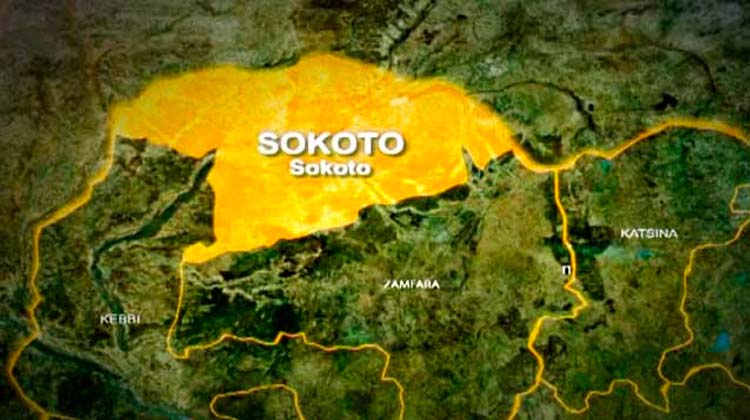
But as Osun waited on August 15, another platform was already attempting to show Nigerians what was happening at polling units across the state.
E Don Kast is an independent election data platform designed to make election results visible from the ground up, beginning with the polling unit where votes are counted.
The platform allows voters, journalists, party agents, and election observers to submit the figures recorded on Form EC8A, along with photographs of the completed result sheet.
Those submissions are then organised and displayed by polling unit, ward, and local government, allowing citizens to see the results recorded at the point of voting before they move through the various stages of collation.
But E Don Kast does not simply publish every figure submitted to it.
The platform uses a verification process designed to identify duplicate submissions and suspicious patterns. It compares submissions from the same polling unit and relies on photographic evidence and community verification to assess the credibility of the information received.
Results supported by stronger evidence can be published, while questionable submissions can be flagged for further review. The platform also assigns confidence scores to help users understand the strength of the evidence behind a result.
The idea was developed by Femi Olamijulo, who wanted to address a problem that has continued to feature in Nigeria’s electoral process, the gap between what is recorded at the polling unit and what eventually emerges during the collation and declaration process.
E Don Kast, however, does not seek to replace INEC or declare election winners.
Instead, it is designed to create an independent, time-stamped record of polling-unit results that citizens, journalists and observers can use to compare with official figures released by electoral authorities.
That distinction is important.
Nigeria has previously faced concerns around the transmission and accessibility of election results. During the 2023 general elections, INEC’s IReV results-viewing portal experienced technical challenges and delays, triggering criticism and questions over the electronic transmission and publication of polling-unit results.
E Don Kast is testing a different approach: what happens when citizens themselves become part of the process of documenting election results?
The experiment in Osun could offer an early indication of what such technology might mean for future elections.
But the scale of the challenge is enormous.
Osun has 30 local government areas, while Nigeria’s 2027 elections are expected to involve 176,846 polling units.
Covering such a vast electoral landscape would require more than technology. It would require thousands of citizens, journalists, observers, and party agents willing and able to document results and upload credible evidence from polling units accurately.
That leaves perhaps the most important question for E Don Kast: is Nigeria ready to participate?
The technology may be available, but its success will ultimately depend on whether enough Nigerians are willing to use it responsibly.
If they do, the 2027 elections could look different, not simply as an election in which citizens wait for authorities to announce the results, but one in which they can follow the evidence as it builds from the polling unit to the ward, the local government and eventually the national result.
E Don Kast.
The name itself captures the ambition: by the time the official result is announced, Nigerians may already have seen the evidence for themselves.
We’ve got the edge. Get real-time reports, breaking scoops, and exclusive angles delivered straight to your phone. Don’t settle for stale news. Join THISTIMES on WhatsApp for 24/7 updates →
Join Our WhatsApp Channel