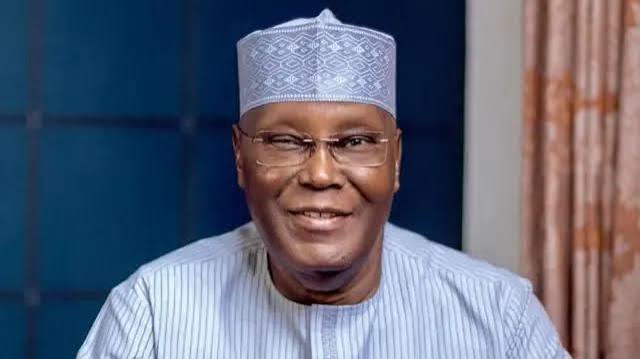
The presidential candidate of the African Democratic Congress (ADC), Atiku Abubakar, has unveiled a new petroleum subsidy model that would shift government support from fuel imports to domestic refining.
Atiku said the proposed model under his Atiku Economic Recovery Plan (AERP) 2027 would target domestic production, cap government spending, track subsidised crude from allocation to the point of sale and subject the entire process to independent audits.
The proposal was contained in a statement issued on Thursday by his Senior Special Assistant on Public Communication, Phrank Shaibu.
Atiku said his plan was not a return to Nigeria’s former opaque petrol subsidy regime, but a structured intervention aimed at strengthening local refining while ensuring consumers benefit from government support.
“My proposal is not to resurrect the old subsidy regime. We will move subsidy from importation to production, from middlemen to Nigerian refineries, and from unverifiable claims to verifiable barrels.
“The principle is simple: the subsidy will follow the barrel,” he said.
Under the proposed AERP framework, qualifying public and private refineries would have access to Nigerian crude at preferential prices, subject to production, efficiency, transparency and domestic supply requirements.
Atiku acknowledged that selling crude below its market-equivalent value would impose an opportunity cost on the Federation, but said the cost would be openly disclosed and controlled.
“The cost will be known. The ceiling will be known. The beneficiaries will be known. And, most importantly, the benefit delivered to Nigerians will be measurable.
“We will determine what Nigeria can afford before we subsidise. We will not subsidise first and discover the bill afterwards,” he said.
The former vice president said his proposal would prevent refinery operators from benefiting from subsidised crude without passing the savings to Nigerian consumers.
He said no refinery would receive preferentially priced crude without an independently verified quantity of petroleum products being supplied to the domestic market under a transparent pricing formula reflecting the crude subsidy.
According to him, crude allocations, refinery intake, production yields, inventories and domestic deliveries would be reconciled to ensure that every subsidised barrel could be traced from allocation through refining to consumers.
“No phantom cargoes. No fictitious imports. No unverifiable under-recoveries. No retrospective claims,” Atiku said.
He added, “If you receive subsidised Nigerian crude, you must refine it in Nigeria, supply the agreed products to Nigerians and pass the benefit to Nigerians. Otherwise, you do not qualify.”
Atiku said the proposed scheme would be open to all qualifying public and private refineries and would not be designed to favour politically connected operators.
He said allocation would be based on independently verified refining capacity, efficiency, domestic supply and compliance rather than political discretion.
The proposed framework would also contain measures against arbitrage, with subsidised crude and products benefiting from the intervention barred from being diverted to more profitable foreign markets while Nigerian taxpayers bear the cost.
Operators found diverting subsidised crude or products, manipulating production records, breaching domestic supply obligations or failing to pass the prescribed benefit to consumers would lose eligibility and be required to refund the subsidy benefit, in addition to facing applicable regulatory and legal sanctions.
“Nigeria will not subsidise anybody’s private profit. Public support must produce a measurable public benefit,” he said.
Atiku said his proposed production subsidy would operate within a predetermined annual fiscal ceiling approved through the federal budget.
He said this would eliminate what he described as the open-ended liabilities associated with the previous subsidy system.
“No refinery gets unlimited support. No marketer brings government a surprise bill. No agency manufactures an under-recovery after the transaction.
“The National Assembly will see the appropriation. Nigerians will know the maximum exposure. Independent auditors will see the barrels. And the public will see what was produced for every naira of support,” Atiku said.
He added that where oil revenues exceed the budget benchmark, a predetermined and legally appropriated portion of the additional revenue could be deployed within the established fiscal ceiling.
However, he said the government would not assume future windfalls or breach the subsidy ceiling because of weaker oil prices or lower production.
Atiku also said the framework would disclose the opportunity cost of the intervention and its implications for revenues accruing to the federal, state and local governments.
Atiku said the proposed intervention would include statutory sunset and periodic review provisions, with government support progressively reduced as domestic refining capacity expands, utilisation improves, competition increases and production costs fall.
“Our objective is not permanent subsidy. It is to use temporary and disciplined support to build a refining industry strong enough eventually not to need subsidy,” he said.
According to him, the policy would be evaluated against refinery output, domestic prices, jobs, investment and the benefits delivered to consumers.
“If the policy is not delivering value greater than its cost, it must be adjusted or terminated,” he said.
Atiku said the broader objective was to reduce transportation, energy and logistics costs, which he argued would ultimately help farmers, manufacturers, traders and households.
“The ultimate objective is not merely cheaper petrol. It is cheaper transportation, cheaper food, stronger businesses, more Nigerian jobs and greater purchasing power.
“Nigeria’s crude should first help build Nigerian refining capacity and Nigerian prosperity,” he said.
The ADC presidential candidate also criticised President Bola Tinubu’s handling of petrol subsidy removal, questioning what he described as continued petroleum-related expenses in government accounts after Tinubu declared the subsidy had ended.
Atiku recalled that Tinubu announced the removal of petrol subsidy during his inauguration at Eagle Square in Abuja on May 29, 2023.
“President Tinubu stood at Eagle Square on May 29, 2023 and declared that ‘subsidy is gone.’ Nigerians were immediately handed the bill.
“Petrol prices exploded, transportation costs multiplied, food prices soared and households were told that their suffering was the necessary price of reform,” he said.
Atiku, however, argued that questions remained over petroleum-related costs recorded in the accounts of the Nigerian National Petroleum Company Limited (NNPCL).
He cited NNPCL’s audited financial statements, which he said recorded approximately ₦4.84 trillion in Energy Security Expenses in 2023 and ₦7.13 trillion in 2024.
He demanded an explanation of the economic substance of the expenses and whether they included under-recoveries, pricing differentials or other petroleum supply-related costs.
“We are not interested in playing games with accounting terminology.
“If government continued absorbing differences between the economic cost of petroleum products and what was recovered from the market, then Nigerians are entitled to ask how that differs economically from the subsidy they were told had disappeared.
“You cannot abolish subsidy at Eagle Square and allow subsidy-like costs to resurface in government accounts without explaining the contradiction,” Atiku said.
He added that Nigerians should not be required to pay market-level fuel prices while government resources simultaneously bear petroleum-related costs that have not been adequately explained.
“Nigerians cannot pay for subsidy removal twice — through punishing pump prices and through unexplained subsidy-like costs against their commonwealth,” he said.
The former vice president also raised questions over what he described as approximately ₦30 trillion in Federation revenues, deductions, savings, transfers and related funds requiring reconciliation.
“Our reconciliation of published Federation Account figures has identified approximately ₦30 trillion in revenues, deductions, savings, transfers and related funds requiring transparent reconciliation,” he said.
Atiku stressed that he was not alleging that the entire ₦30 trillion represented fuel subsidy or had been stolen.
“Let nobody misrepresent the argument. We are not saying ₦30 trillion is fuel subsidy or that ₦30 trillion has been proven stolen.
“We are saying that approximately ₦30 trillion reflected across Federation revenues, deductions, savings, transfers and related classifications requires a complete, month-by-month public reconciliation.
“The distinction is important — but so is the question,” he said.
He therefore challenged the Tinubu administration to explain what happened to the financial benefits expected from subsidy removal and account for the petroleum-related costs subsequently recorded by government.
“First, if subsidy was removed, where is the subsidy-removal windfall and what precisely are the petroleum-related costs subsequently recorded in the government’s accounts?
“Second, what accounts for the approximately ₦30 trillion in Federation revenues, deductions, savings, transfers and related funds requiring reconciliation?” Atiku asked.
He called for the publication of details of government deductions, beneficiaries, transfers, balances and the legal authority backing them.
“Publish every deduction. Identify every beneficiary. Show every transfer. Show every balance. Show the legal authority.
“If the money is properly accounted for, open the books and end the argument,” he said.
Atiku further promised that previous subsidy transactions would be subjected to lawful scrutiny, with anyone found through due process to have fraudulently obtained or diverted public funds facing prosecution and asset recovery.
“Anyone who stole subsidy money should prepare to return it. But we will not replace one opaque system with another,” he said.
Atiku said the fundamental difference between his proposed subsidy framework and the Tinubu administration’s approach was transparency, fiscal discipline and accountability.
“Tinubu’s approach was: announce first, impose the pain immediately, and explain the accounts later.
“Ours will be: define the intervention, establish the ceiling, appropriate the money, track the crude, verify the production, guarantee the consumer benefit, publish the accounts and progressively reduce the subsidy,” he said.
Summarising his proposed policy, Atiku said: “That is the Atiku alternative:
“Target it. Cap it. Budget it. Track it. Audit it. Make Nigerians feel the benefit. Reduce it as domestic production grows. And ultimately, end the need for it altogether.”
We’ve got the edge. Get real-time reports, breaking scoops, and exclusive angles delivered straight to your phone. Don’t settle for stale news. Join THISTIMES on WhatsApp for 24/7 updates →
Join Our WhatsApp Channel