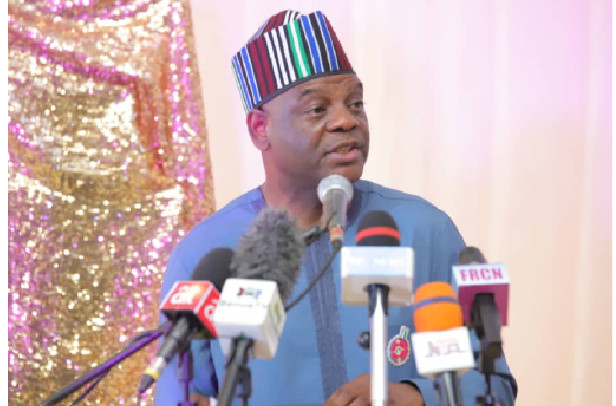
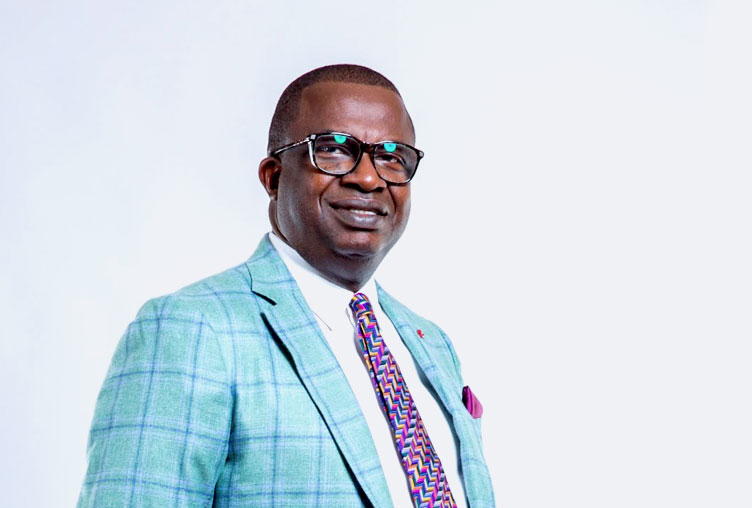
The Presidency has described former Vice President Atiku Abubakar’s proposal to restore petrol subsidy as retrogressive and a desperate attempt to regain political power, arguing that the policy would return Nigeria to a wasteful and fiscally burdensome petroleum regime.
The Special Adviser to the President on Information and Strategy, Bayo Onanuga, stated this in a statement titled: “Restoring Petrol Subsidies: Atiku’s Volte-Face and Desperation for Power,” issued on Thursday, August 20, 2026.
According to Onanuga, Atiku has finally revealed his economic plans to Nigerians should he be elected President by January next year, but instead of presenting a more creative alternative to the economic programme being implemented by the administration of President Bola Ahmed Tinubu, he proposed the restoration of what the Presidency described as the “much-abused, wasteful, pillaged, corruption-ridden fuel subsidy regime.”
The Presidency noted that the Petroleum Industry Act had made the subsidy regime illegal from the end of June 2023, adding that Atiku had previously supported the elimination of the subsidy in the run-up to the 2023 presidential election.
“Even though he used to believe that the subsidy regime must be eliminated,” Onanuga said, Atiku had now “opportunistically recanted the major plank of his economic doctrine.”
The Presidency said it was not difficult to explain why Atiku had embraced the abandoned subsidy regime five months before the election, arguing that he needed to make a promise that, if candidly presented to Nigerians, would not make fiscal sense and would be against the country’s interests.
However, Onanuga said the Presidency respected Atiku’s constitutional right to propose alternative policies, seek the support of Nigerians and change his position on a major policy prescription.
He added that Nigerians were equally entitled to understand what restoring the subsidy would mean, how it would be funded and whether it was compatible with the legal and structural changes that had taken place in the petroleum sector.
Onanuga also sought to clarify what he described as ambiguities surrounding the word “subsidy.”
According to him, subsidy was not money sitting in government coffers waiting to be distributed to make petrol cheaper. Rather, he explained, it involved NNPC selling fuel to the Nigerian government at a price below its cost, resulting in under-recovery and substantial losses.
He said trillions of naira in subsidy costs were still reflected in NNPC’s books as obligations that the Nigerian government had not paid.
The Presidency also rejected Atiku’s claim of a N30 trillion subsidy windfall or savings, saying no such amount existed.
“Contrary to Atiku’s claim in his interview, no N30 trillion subsidy windfall or savings exists anywhere except in his imagination,” Onanuga stated.
The statement said the petrol subsidy regime Nigerians knew before May 2023 had been dismantled as part of reforms in the petroleum sector.
It explained that the Petroleum Industry Act established a new framework for the downstream petroleum market and removed the subsidy, as had previously happened with diesel, kerosene and aviation fuel.
According to the Presidency, the PIA scheduled the removal of petrol subsidy by the end of June 2023, but President Tinubu accelerated the process by several weeks to stop further financial losses before the statutory deadline.
It argued that restoring the old arrangement could therefore not simply be achieved by announcing that government would once again pay part of the cost of petrol.
Such a policy, it said, would require a clear legal, fiscal and administrative framework, including identifying the source of funds and determining how the programme would operate within the current petroleum-market structure.
The Presidency further argued that Nigeria’s petroleum landscape had changed significantly since May 2023.
For many years, Nigeria relied heavily on imported petrol, with government absorbing the difference between the regulated pump price and the cost of supplying the product.
The statement said the emergence of substantial domestic refining capacity had fundamentally altered that situation, with the Dangote Refinery becoming a major source of locally refined petrol.
Onanuga argued that the Dangote Refinery would not have commenced production for local consumption if the subsidy regime had remained in operation.
He accused Atiku of ignoring that development in his proposal.
According to the Presidency, the proposal could reverse current local production and threaten smaller local refineries, including Aradel’s, with possible job losses and foreign-exchange losses.
It said the market-driven petroleum sector had also enabled Nigeria to export refined petroleum products to Europe, Asia and the United States.
The Presidency contrasted this development with the period when former President Olusegun Obasanjo and Atiku served in government, when refined petroleum products constituted Nigeria’s largest import, costing about $10 billion.
“President Tinubu has flipped that to Nigeria’s advantage,” the statement said.
Onanuga also said that the N15 trillion that would have been borrowed and spent on selling discounted petrol had now significantly gone into the coffers of the three tiers of government.
He argued that states were now fiscally stable, enabling them to pay salaries regularly and embark on infrastructure projects.
According to the statement, the three tiers of government shared about N3 trillion from the Federation Account in July, describing the amount as a record.
The Presidency attributed the development to the abolition of petrol price discounts and distortions in the foreign-exchange regime.
It further said Nigeria was increasingly moving away from a model in which scarce foreign exchange was used to import refined petrol towards one in which crude oil, largely sold in naira, could be processed domestically and supplied to the Nigerian market.
According to Onanuga, the transition creates opportunities for greater energy security, foreign-exchange conservation, industrial development and increased employment generation.
He therefore argued that the subsidy debate should be based on the realities of the current market rather than treating Nigeria’s petroleum sector as though it had remained unchanged.
The Presidency said the former petrol price discount arrangement was not merely government providing consumers with a harmless discount.
Rather, it involved the public sector absorbing the difference between regulated prices and the actual cost of supplying petrol, with significant consequences for public finances.
Onanuga said that at various points, government financed or accommodated the burden through borrowing and other public-sector financing arrangements.
He added that millions of barrels of crude oil had previously been pledged against loans used to finance the subsidy regime.
According to him, NNPC reached a breaking point in 2024, owing suppliers billions of dollars.
The Presidency said Nigerians should therefore ask a simple question if the subsidy was restored: who would pay for it?
It also questioned what the new petrol pump price would be under Atiku’s proposal, asking whether it would be N200 or N500.
The statement said that if petrol was sold below its economic cost, estimated at between N1,200 and N1,300, somebody would have to absorb the difference.
Ultimately, it said, the cost would fall on public finances through reduced funding for infrastructure and social services, reduced allocations to states and the 774 local councils, increased borrowing, higher public debt, or a combination of these consequences.
The Presidency acknowledged that the cost of petrol was placing enormous pressure on Nigerian households and businesses.
It said the hardship caused by higher energy and transportation costs was real and that government would continue to pursue policies aimed at reducing the burden on citizens.
As part of those measures, the Tinubu administration has been encouraging the use of Compressed Natural Gas, which the Presidency said was 70 per cent cheaper than petrol, to power taxis, cars and distribution trucks.
It added that Dangote and BUA also had CNG trucks in their fleets.
The Presidency, however, said commercial trucks, buses and taxis needed to pass the benefits of reduced energy costs on to Nigerians.
“We believe sustainable relief is different from recreating a fiscal arrangement that will again cripple our country,” Onanuga said.
The Presidency said the better approach was to use Nigeria’s emerging domestic refining capacity, improved petroleum-sector regulation and increased competition to achieve more stable and affordable energy prices without returning to an opaque and fiscally burdensome subsidy regime.
It stressed that political promises must be backed by fiscal arithmetic.
While acknowledging Atiku’s right to propose a different economic direction, the Presidency demanded specific answers to questions surrounding the proposed subsidy.
It asked how much the programme would cost annually, what revenue source would finance it, whether government would borrow to fund it, whether the National Assembly would be asked to amend existing PIA legislation and petroleum-sector rules, and how subsidy payments would be verified and protected from the abuses witnessed in the past.
The Presidency also questioned what the proposed subsidy would subsidise now that Nigeria had substantially increased domestic petrol production, asking whether it would cover local production, transportation and distribution costs or another component of the petroleum value chain.
Onanuga warned that Nigeria could not afford to return to policies whose costs were hidden from citizens until they later emerged as debt, reduced government spending on social services and additional pressure on the national currency.
He said the country should welcome robust debate over the cost of living and the direction of economic policy, but maintained that such debate must be anchored in Nigeria’s current realities rather than what he described as “yesterday’s petroleum economy.”
The Presidency consequently urged all political actors, including Atiku Abubakar, to present Nigerians with the full fiscal and legal implications of any proposal to restore fuel subsidy.
We’ve got the edge. Get real-time reports, breaking scoops, and exclusive angles delivered straight to your phone. Don’t settle for stale news. Join THISTIMES on WhatsApp for 24/7 updates →
Join Our WhatsApp Channel