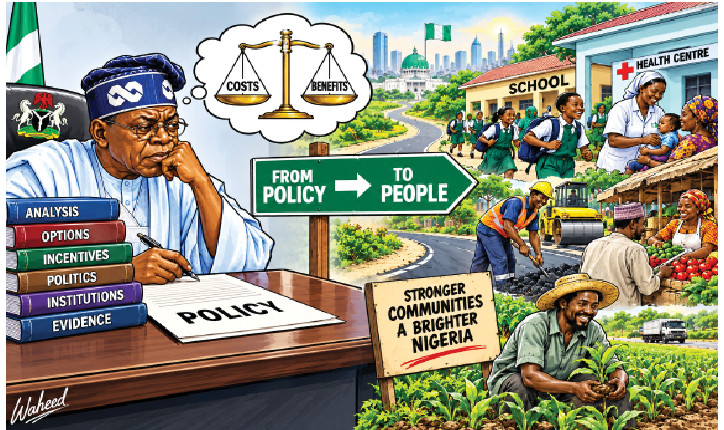
Memember of the Nigerian Society of Engineers (NSE) Bwari Branch have called for a fundamental shift in the planning, designing, construction and maintenance of infrastructure to address the growing threats posed by climate change, flooding, rapid urbanisation and Nigeria’s infrastructure deficit.
The call was made at the 2026 Annual General Meeting and Conference of the NSE Bwari Branch, with the theme, “Sustainable Infrastructure, Resilient Nation: Engineering Solutions for Growth and Climate Action.”
At the event, the chairman of the NSE Bwari Branch, Engr. Funbi Babatunde Alonge, said the theme was a timely call on Nigerians, policymakers and professionals to rethink the country’s approach to infrastructure development.
Alonge said climate change and infrastructure deficiencies were no longer distant predictions but realities confronting communities across the country.
She identified flooding, erosion, environmental degradation, unreliable power supply, infrastructure deficits and rapid population growth as major challenges faced by Nigeria’s cities, communities and economy.
She said the recent floods in FCT Abuja had submerged homes, cut off roads and disrupted livelihoods, stressing that the situation required immediate intervention.
“Flooding is no longer an isolated incident. Communities that never experienced such levels of inundation are now vulnerable. Homes have been submerged, roads cut off, and livelihoods disrupted,” she said.
According to her, engineers should not see the challenges as reasons for despair but as problems requiring structural and enduring solutions.
She said Nigeria could no longer afford to design infrastructure based solely on present needs without considering future realities.
“Every road, bridge, dam, power plant, railway, water system, housing development and public infrastructure designed today must be built with consideration for the reality of tomorrow.
“Our infrastructure must not only serve its immediate purpose; it must be resilient, adaptable, maintainable and sustainable,” she said.
Alonge stressed the need for climate-smart infrastructure, urging engineers and policymakers to incorporate climate-risk assessments, resilient materials, improved drainage systems, sustainable construction practices, green-building principles and nature-based solutions into infrastructure planning and design.
She also raised concerns over the future of drainage and flood-management systems, noting that rapid construction without adequate consideration for environmental consequences could worsen flooding and other hazards.
She called for long-term engineering solutions capable of addressing the consequences of continued urban development and population growth.
Also speaking, the Nigerian Society of Engineers (NSE) president, Engr. Ali Alimasuya Rabiu, represented by the director of Engineering and Technical Services, Engr. Hamin Olayinka Abdulkareem, said climate change and infrastructure deficiencies were already affecting communities, businesses and economic activities across Nigeria.
Rabiu identified flooding, erosion, inadequate roads, poor drainage systems, power challenges and rapid urbanisation among the major pressures confronting the country’s infrastructure.
He said engineers must approach the challenges with innovative and sustainable solutions rather than despair.
Rabiu identified climate-smart infrastructure, energy transition and grid resilience, policy and local capacity as critical pillars for sustainable infrastructure development.
He called for stronger collaboration among engineers, governments, academia, industry and other stakeholders, stressing that local content should translate into genuine local capacity, manufacturing, research and innovation.
According to him, Nigeria must strengthen its ability to develop and maintain infrastructure locally instead of relying excessively on external expertise and solutions.
In her keynote address, former NSE chairman, Engr. Atinuke Wuraola Owolabi, urged engineers to move beyond simply constructing infrastructure to ensuring that projects were fit for purpose, durable, affordable and capable of serving both present and future generations.
Owolabi said engineers were trained to solve problems and should therefore ask critical questions before embarking on projects, including what should be built, how it should be built, who would benefit from it and how long it would last.
She advocated a systems approach to infrastructure development, stressing that infrastructure should be viewed as an interconnected national system rather than as isolated projects.
She particularly urged engineers to design infrastructure based on the environmental realities of different parts of the country, including areas vulnerable to flooding and other climate-related hazards.
Owolabi also called for population growth, increasing traffic and the needs of future generations to be incorporated into infrastructure design.
She warned against the continued construction of infrastructure without adequate attention to maintenance.
“We must build differently. We cannot afford infrastructure constructed without adequate consideration for maintenance. We build, but we must also consider maintenance,” she said.
The conference also emphasised the need for universities to produce graduates capable of contributing to national development rather than merely turning out job seekers.
We’ve got the edge. Get real-time reports, breaking scoops, and exclusive angles delivered straight to your phone. Don’t settle for stale news. Join THISTIMES on WhatsApp for 24/7 updates →
Join Our WhatsApp Channel