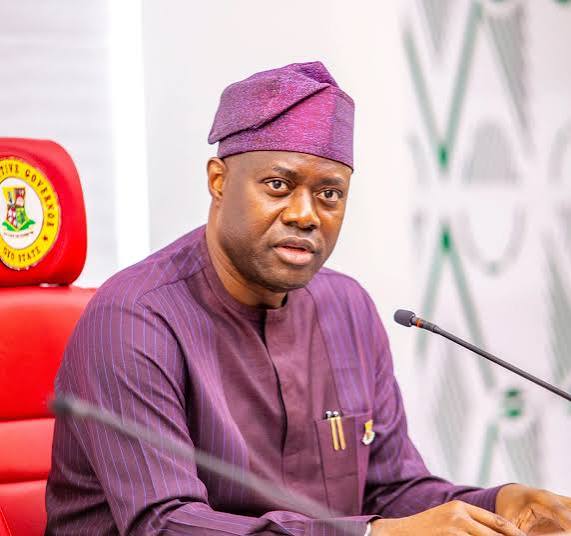
Oyo State Governor, Seyi Makinde, has questioned why Nigerians should continue paying higher prices for petroleum products, arguing that the country’s fuel pricing system must be reviewed rather than framing the debate solely around the removal or restoration of subsidy.
Makinde said Nigerians deserve greater transparency on how pump prices are determined, including the crude oil benchmark, refining costs, exchange-rate assumptions, logistics, distribution costs, taxes and other charges factored into the pricing formula.
“For years, the debate in Nigeria has largely been presented as a choice between subsidising petroleum products or allowing Nigerians to pay the full market price. I believe we are asking the wrong question,” Makinde said.
He asked: “What is the right pricing framework for an oil-producing country like Nigeria?”
The governor also rejected the argument that Nigerians should pay more for petroleum products to make smuggling into neighbouring countries less profitable.
“We should also reject the argument that Nigerians must pay more for petroleum products simply to eliminate the price difference that makes smuggling into neighbouring countries profitable,” he said.
“Nigerians should not be made to bear the cost of government’s inability to secure its borders,” he added.
Makinde said the petroleum debate should focus on whether the current pricing model gives Nigerians a fair return from the country’s natural resources.
“The petroleum question should therefore not simply be whether subsidy should return or remain removed. It should be whether the pricing system we are using is the right one for Nigeria and whether it allows Nigerians to derive a fair benefit from the natural resources they own,” he said.
He disclosed that his Reset Nigeria movement would present an alternative petroleum pricing framework in the coming weeks, saying Nigerians would be free to assess the proposal.
“In the coming weeks, we will put forward our alternative and allow Nigerians to judge it for themselves,” Makinde said.
The governor said the petroleum pricing controversy reflects a broader problem with Nigeria’s systems and institutions, arguing that the country’s challenges cannot be solved merely by changing the individuals in government.
“Nigeria’s challenge is bigger than the individuals occupying public office at any particular time. We must address the systems, institutions and structures that continue to reproduce outcomes that do not serve the majority of our people,” he said.
Makinde described Reset Nigeria as “a national movement to rebuild Nigeria’s systems and institutions so that Nigeria works for every Nigerian.”
He also called for accountable leadership and greater citizen participation, saying a national transformation would require sustained collective effort.
“This will not be an instant transformation, nor will it be the work of one person. It must be a deliberate national effort supported by a clear roadmap, measurable priorities and the sustained participation of Nigerians at home and abroad,” he said.
We’ve got the edge. Get real-time reports, breaking scoops, and exclusive angles delivered straight to your phone. Don’t settle for stale news. Join THISTIMES on WhatsApp for 24/7 updates →
Join Our WhatsApp Channel