The minister of State for Foreign Affairs, Ambassador Sola Enikanolaiye, has sensitised stakeholders in the North East Zone on the Economic Community for West African States (ECOWAS) Trade Liberalisation Scheme (ETLS).
He described the initiative as a major step towards strengthening regional economic integration and expanding trade opportunities for Nigerian businesses.
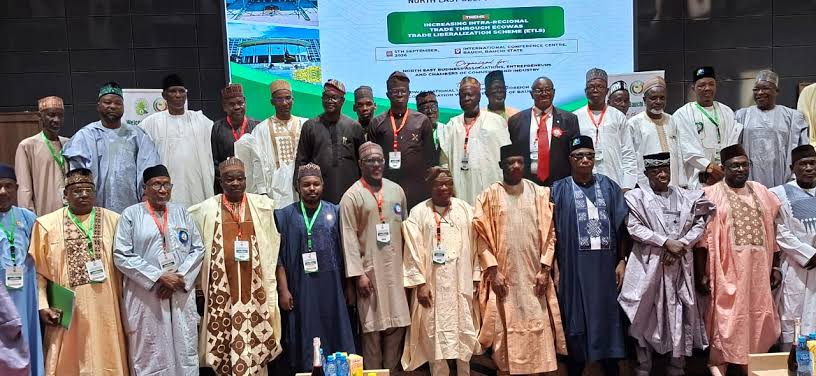
The minister stated this at the opening of the NorthEast sub-regional ETLS sensitisation workshop held at the Ahmadu Bello International Conference Centre in Bauchi at the weekend.
He said the workshop was designed to deepen stakeholders’ understanding of the scheme and promote its effective implementation as a flagship instrument for regional economic integration within the ECOWAS subregion.
Enikanolaiye said the initiative was also in line with the federal government’s 4Ds foreign policy, which places the welfare and interests of Nigerians at the centre of the country’s foreign policy.
He explained that bringing the sensitisation programme to Bauchi was aimed at ensuring that Nigerians at the grassroots were adequately informed and involved in foreign policy initiatives that directly affect their economic wellbeing.
Enikanolaiye described the ETLS as the cornerstone of Nigeria’s regional integration agenda, noting that it was established to promote intra-community trade by providing duty-free access to approved products originating from member states.
He said the scheme was designed to enhance economic cooperation, encourage industrial growth and support micro, small and medium-scale enterprises, including those operating in agriculture, by facilitating cross-border trade and improving citizens’ livelihoods.
The minister stressed the need to raise awareness among stakeholders, strengthen institutional coordination and address challenges limiting the full realisation of the scheme’s potential.
He also called for increased production and participation by Nigerian businesses to enable them to take advantage of regional market opportunities and position Nigeria as a leading force in West Africa’s economic transformation.
Enikanolaiye said the workshop was not merely a visit by federal government officials, but a deliberate intervention aimed at closing the information gap between the opportunities provided by the ETLS and the level of awareness among Nigerian producers and manufacturers.
He added that the workshop would provide a platform for constructive dialogue, knowledge sharing and collaboration among government officials, private-sector operators and other relevant stakeholders across the North-East.
The minister further urged stakeholders to take advantage of the region’s abundant agricultural, livestock and mineral resources to develop competitive value chains.
He identified rice, millet, sorghum, groundnut and livestock, among others, as resources with significant potential for industrial production and regional trade, stressing that the focus should shift from exporting raw materials to processing, packaging and adding value to products for both domestic consumption and export.
Declaring the workshop open, Bauchi State Governor Bala Mohammed said the ETLS remained an important instrument for advancing regional economic integration in West Africa by facilitating legitimate trade in qualifying products originating from ECOWAS member states.
Represented by his deputy, Muhammad Auwal Jatau, the governor said the scheme would help promote investment, expand markets, strengthen production and deepen economic cooperation among member states.
He said Bauchi was richly endowed with agricultural, livestock, mineral and industrial resources, adding that the state had hardworking farmers, innovative entrepreneurs, manufacturers, processors, traders, cooperatives, women-owned businesses and a growing population of young people seeking productive economic opportunities.
The governor reaffirmed his administration’s commitment to economic diversification, private-sector development, employment creation and the expansion of economic opportunities for residents.
According to him, government alone cannot create sustainable prosperity, stressing that the private sector must be empowered to produce, invest, innovate and create jobs.
He described the ETLS sensitisation programme as a bridge between knowledge and opportunity, production and markets, as well as local enterprises and regional prosperity.
Mohammed said stakeholders should leave the workshop with a clear understanding of the opportunities offered by the scheme, the requirements to be met, the relevant institutions to engage and the standards products must satisfy to compete effectively in the regional market.
He noted that the ETLS was particularly relevant to the development aspirations of the North-East, urging stakeholders to produce more, process more, add value and access larger markets.
The governor called for a shift in the perception of regional integration from an abstract diplomatic concept to an economic pathway capable of connecting farmers, processors, manufacturers, traders and entrepreneurs across the North-East with consumers and businesses throughout West Africa.
He further advocated the creation of a trading environment where legitimate businesses could operate confidently, compete fairly and access regional markets without unnecessary obstacles, while governments retain the capacity to protect legitimate revenues and national economic interests.
Mohammed also called for stronger economic cooperation among Bauchi, Adamawa, Borno, Gombe, Taraba and Yobe states, proposing the development of an integrated North-East economic corridor.
He said the states should explore practical ways of connecting producers, processors, traders, transport operators and business associations, while strengthening access to trade information and encouraging investment in value addition.
We’ve got the edge. Get real-time reports, breaking scoops, and exclusive angles delivered straight to your phone. Don’t settle for stale news. Join THISTIMES on WhatsApp for 24/7 updates →
Join Our WhatsApp Channel