By Olakunle Olasanmi and Helen Onyemowo Foster, Abuja and Olugbenga Soyele, Lagos
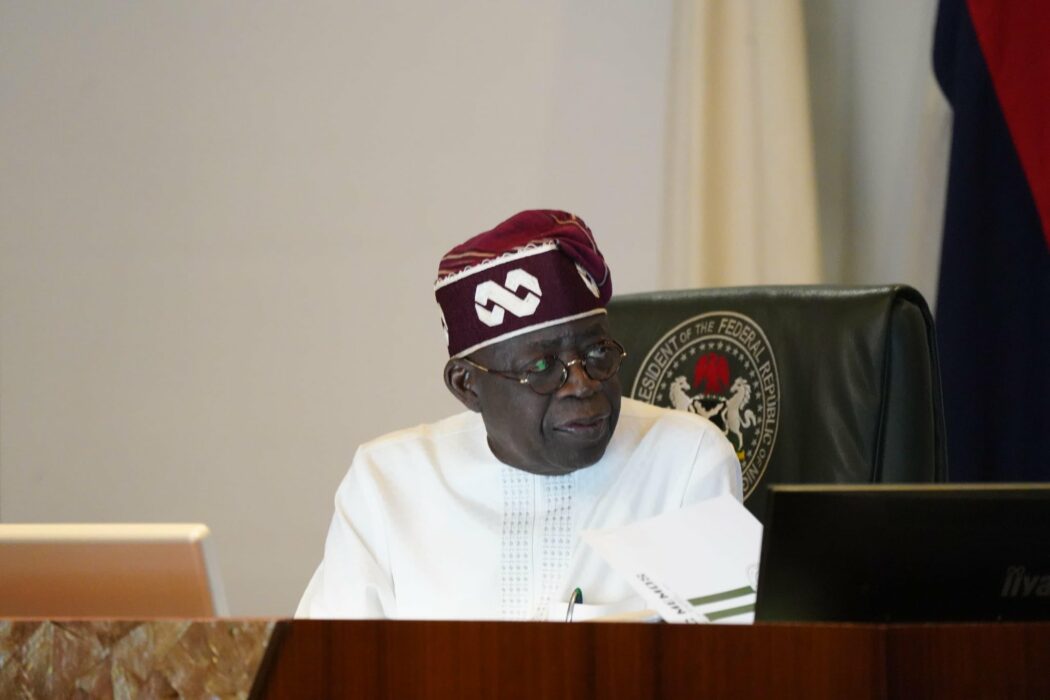
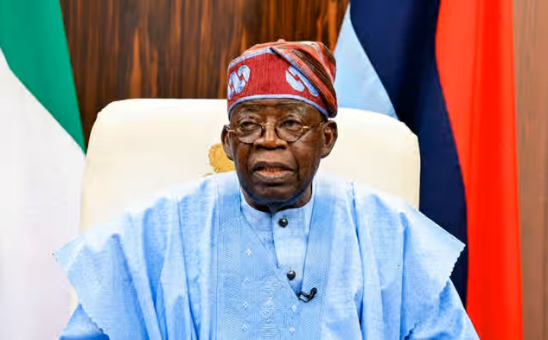
Senior lawyers yesterday said President Bola Tinubu’s concept of working vacation is not known to law.
This comes as the Labour Party (LP) and the New Nigeria Peoples Party (NNPP) accused the National Assembly of abdicating its constitutional duty to defend the Constitution over Tinubu’s refusal to hand over power after 21 days as required by law.
The National Assembly is scheduled to resume today, which coincides with President Tinubu’s anticipated return from his extended working vacation.
READ ALSO: Vacation: Sowore’s AAC Sues Tinubu, AGF, National Assembly Over Refusal To Hand Over Power To Shettima
Tinubu’s absence from Nigeria since August 30 has stretched into its 30th day, rekindling a familiar constitutional debate and raising questions about governance optics at a time of mounting insecurity and economic pressure.
The President left Abuja for a three-week working vacation in Europe, according to the State House. On September 21, the Presidency announced an extension, with his return now anticipated for Tuesday, September 30 (today).
The extension coincided with Vice President Kashim Shettima’s trip to New York on September 20 to represent Nigeria at the 81st United Nations General Assembly, creating a moment when both the President and Vice President were outside the country simultaneously.
The Presidency maintained that the President is hale and hearty and can preside over the country from anywhere.
However, a Senior Advocate of Nigeria (SAN), Mike Ahamba, faulted the description of President Bola Ahmed Tinubu’s foreign trip as a “working vacation”, saying there is no such constitutional category.
Ahamba, a former presidential candidate and constitutional lawyer, told LEADERSHIP that the President could either be on vacation or performing his official functions, arguing that the expression “working vacation” is not recognised by the Constitution.
“It is either the President is working or on vacation. I’m not aware of any provision for a working vacation,” Ahamba said.
The senior lawyer rejected the explanation that Tinubu continued to discharge his responsibilities while away from Nigeria, saying the terminology was used to conceal what he described as the President’s failure to discharge his constitutional responsibilities.
“All these things they are manufacturing are meant to cover up his dereliction of duty and constitutional responsibilities, something this administration is already very used to,” he said.
Another senior lawyer, Oladele Joseph, told LEADERSHIP that the controversy over President Tinubu’s prolonged “working vacation” should be assessed strictly under the 1999 Constitution, not by whether the President has continued to communicate with officials or issue directives from abroad.
Joseph stated that “working vacation” is not a constitutional category and therefore cannot, by itself, determine whether the President’s absence from Nigeria is lawful.
He argued that Section 145(1) of the Constitution is the key provision. It states that whenever the President is proceeding on vacation or is otherwise unable to discharge the functions of his office, he “shall transmit a written declaration” to the President of the Senate and the Speaker of the House of Representatives. “This requirement is mandatory, not discretionary.”
“The Constitution does not say that the President ceases to be President because he travels out of the country. Neither does it say that a President cannot communicate with his officials or continue to perform some official functions while abroad.
“But there is a specific constitutional consequence attached to the President proceeding on vacation. Section 145 prescribes what must happen. The issue, therefore, is not whether Mr President has access to a telephone, the internet or government files. The issue is whether the constitutional procedure applicable when the President proceeds on vacation has been complied with.”
The lawyer further submitted that Section 145(1) is particularly important: until the President transmits a written declaration to the contrary, the Vice-President shall perform the functions of President as Acting President.
He cautioned, however, against concluding that President Tinubu has violated the Constitution without first establishing whether the required written declaration was transmitted to the two presiding officers of the National Assembly.
Reacting also, Abdul Balogun, SAN, said Section 145 of the 1999 Constitution is clear on what the President is expected to do if he will be absent from office by reason of ill-health or vacation.
He said, “There is no controversy on this issue; the law has already taken care of it. In fact, there is nothing to debate about it. If the President fails to do what the law says, it’s an impeachable offence.”
Constitutional lawyer, Bula Zakayo Kelle, Esq., said the position of the law is very clear on the issue, particularly the provision of Section 145 of the 1999 Constitution.
According to him, the section clearly states that for whatever reason, if the President cannot perform the functions of his office, whether by reason of ill-health or vacation, he is expected to communicate to the two chambers of the National Assembly that he will be away for such a period of time so that the Vice President will become the Acting President.
He said, “For the purpose of avoiding a vacuum, the 1999 Constitution has already taken care of that area. So, he is expected by law to communicate his absence to the National Assembly. The National Assembly is also mandated to call on the Vice President to act in that capacity until the President returns from his trip.
“Upon his return, he will communicate to the National Assembly that he is back so that he will assume the functions of his office.
“We are practising a constitutional democracy; the President cannot rule the country in absentia. If there is anything outside what the law prescribes, I’m not aware. All I know is that the law has taken care of that and there is no confusion.
“The issue has been taken care of by the law, so there is no basis for anyone to do anything outside the law and still claim he is doing the right thing.”
Opposition Parties Tackle Lawmakers Over Silence As NASS Resumes
The Labour Party (LP) and the New Nigeria Peoples Party (NNPP) yesterday accused the National Assembly of abdicating its constitutional duty to defend the Constitution over the President’s absence.
At the centre of the debate is Section 145 of the 1999 Constitution (as amended). Section 145(1) provides: “Whenever the President is proceeding on vacation or is otherwise unable to discharge the functions of his office, he shall transmit a written declaration to the President of the Senate and the Speaker of the House of Representatives to that effect, and until he transmits to them a written declaration to the contrary, the Vice-President shall perform the functions of the President as Acting President.”
Section 145(2) provides the safeguard: “In the event that the President is unable or fails to transmit the written declaration mentioned in subsection (1) of this section within 21 days, the National Assembly shall, by a resolution made by a simple majority of the vote of each House of the National Assembly, mandate the Vice-President to perform the functions of the office of the President as Acting President.”
The history behind that provision makes the current moment sensitive. In 2009-2010, Nigeria operated for months without a formally empowered President during the illness of President Umaru Musa Yar’Adua. The National Assembly eventually invoked the Doctrine of Necessity to allow Vice President Goodluck Jonathan to function as Acting President. It was that crisis that led to the strengthening of Section 145.
NNPP: It Is Institutional Failure
Speaking to LEADERSHIP yesterday, the National Chairman of the New Nigeria Peoples Party (NNPP), Agbo Major, described the situation as an institutional failure which Nigerians must guard against going forward.
“Leaders must be accountable by doing the right thing always. The real essence of checks and balances which is the hub around which democracy revolves is undermined here. A balanced National Assembly would have risen to its task of defending the Constitution when breached,” Major said.
On governance, however, Major said no severe gaps have been observed since the President departed, insisting governance is still on course.
He also said the President may have chosen to have some more rest or private consultations in his Lagos private home having been away for some time, noting that since it is campaign season and the President is a candidate, his movement cannot be censored.
“The National Assembly should wake up to its responsibility of defending the Constitution. No democracy survives if rule of law is not adhered to. They should do their job always,” he stated.
He reiterated the party’s call for a constitutional amendment to ensure that incumbents do not remain in office during campaign and election periods.
LP: ‘Working Vacation’ Is Contradictory
For its part, the Labour Party (LP) questioned the legality of the concept of a “working vacation”, describing it as contradictory and contrary to the intendment of the framers of the Constitution.
The National Publicity Secretary of the party, Eluma Asogwa, said the term appears to have been deliberately introduced to give a semblance of continued discharge of presidential responsibilities abroad.
“It is either the President is on vacation or is discharging his responsibilities as President. You can’t put the two together. Even if he returns and escapes the hammer of the National Assembly, I encourage the opposition to head to court to test the validity of that nebulous term ‘working vacation’. Even if the President is not impeached, it will help to enrich our jurisprudence,” Asogwa said.
He described as an aberration the claim that the President remains in full charge while spending weeks abroad, arguing that if the President was truly hale and hearty, the death of 37 miners in Minna should have been enough reason to cut short his vacation.
“It is only in Africa that you find the President of a country spend such a number of days in another country and yet claim to still be in charge. That is an aberration! President Tinubu cannot afford to be fiddling like Emperor Nero while the nation burns,” he added.
Both parties also faulted the President’s alleged plan to celebrate Nigeria’s 66th Independence Anniversary on October 1 in Lagos instead of Abuja, the seat of power. Asogwa said by tradition the President is expected to inspect the Guard of Honour on Independence Day, questioning whether he would now do so in Bourdillon.
Senate President Godswill Akpabio has however defended the President, saying “Asiwaju Tinubu is still in power, and he’s still running the affairs of Nigeria. The world is a global village, you can give instructions from the internet.”
As the President’s plane is expected to touch down on September 30, the larger question remains whether the Presidency and the National Assembly will clarify the status of Section 145 compliance.
We’ve got the edge. Get real-time reports, breaking scoops, and exclusive angles delivered straight to your phone. Don’t settle for stale news. Join THISTIMES on WhatsApp for 24/7 updates →
Join Our WhatsApp Channel