Love used to be a slow dance. A stolen glance across the classroom, a carefully folded love letter, a landline call that went on for hours while your parents shouted that you were blocking the line. It was patient, physical, and deeply local. Today, love lives in your pocket. It swipes left and right, sends a DM at 2 a.m., and blossoms on WhatsApp, Instagram, and dating apps. We now fall in love with strangers we have never met, sustain relationships across continents via video calls, and break up with a single, cold text. But has technology made love easier or more complicated? As we gain endless choice, instant connection and new ways to express romance, are we losing the very intimacy we crave? This is the story of how the algorithm rewrote the oldest human emotion. BUKOLA OGUNSINA and NGOZI IBE report.
Buba is sceptical about online dating. “I don’t believe in online dating. What happened to those days when you could see a woman walking down the street or in a shop and toast her? People need to go out more and bring back the days of chasing a woman they want to build a relationship with,” he said.
While some people share Buba’s view, many others have embraced the convenience and confidence that online dating offers, particularly for those who may find approaching someone face-to-face difficult.
In Nigeria, online dating has grown in popularity, with more than 60,000 active users reportedly using dating platforms each month. Elijah Bassey-Kokoette, co-founder of Tramatch International Limited, disclosed this during a webinar titled “Love, Relationship, Technology.”
Iremide Oluwajuwon, the owner of Couple’s Corner, a matchmaking group, attributed the growing popularity of online dating to the convenience technology offers, particularly for young people juggling work, business, school, and other responsibilities.
“Many young people are busy with work, business, school, and other commitments. Online platforms offer a convenient way to meet people who are also interested in relationships,” she stressed.
She noted that online platforms also expose people to a wider pool of potential partners, including those they might not encounter through traditional means. However, she cautioned that users should be deliberate about who they allow into their lives.
“People need to be careful and intentional about who they allow into their lives,” she said.
“Relationships that develop organically online are fine, but I’m not a fan of dating apps. I prefer connections that naturally move into real life,” a media personnel, Ogwuche Abah, said when asked for his views.
He noted that young Nigerians are increasingly open to finding love online, as social media has made meeting and connecting with people easier and more socially acceptable.
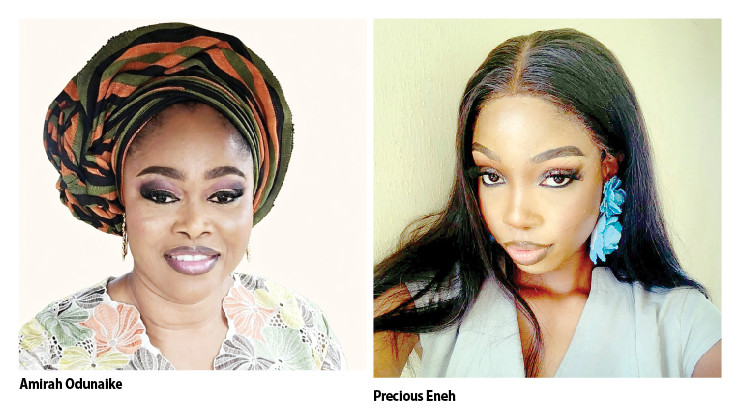
For socialite Amirah Odunaike, however, the idea of starting a serious relationship online is unappealing.
“To be honest, no, I would not feel comfortable starting a serious relationship online. Not because I’m closed to love, but precisely because I’ve walked this road before and know what matters most,” she said.
Having experienced marriage, Odunaike said she has learned that genuine compatibility and character cannot always be assessed through online interactions.
“I have lived with someone, shared a home, navigated hard days, raised children, and seen them at their best and worst. I know that true character isn’t found in a profile or a message; it’s seen in how someone shows up when things are difficult, when they’re tired, when they disagree, or when they have nothing to gain.”
“Online, we only see the version someone chooses to show. I’ve already lived through the difference between the image people present and the reality they live, and I won’t settle for anything less than the full, unfiltered truth.”
Odunaike also noted that online relationships can sometimes move quickly, fuelled by messages, imagination and idealisation. She said she would rather meet someone in person and observe how they treat elders, speak to service staff, carry themselves in public, respect her boundaries and relate with her children.
“These things cannot be learned from a screen; they must be lived and seen,” she said.
Businessman Ajuogu Obinna Kingsley described online dating as a normal part of modern relationships, although he said he would not personally use dating apps.
“Online dating is very normal. Lots of people date people they haven’t met before in Nigeria, even though I won’t be doing so,” he said.
Kingsley said he would not be uncomfortable telling his friends and family if he were using a dating app, noting that online interactions have become commonplace since the emergence of mobile phones and platforms such as 2go.
“I feel like it’s a normal thing since the existence of mobile phones,” he said.
He added that dating app profiles could be more appealing if users included clear photos of their faces, along with a bio, location, and other elements that improve their presentation.
Meanwhile, for social media manager Precious Eneh, who has experienced online dating, the decision was driven by curioity rather than loneliness.
“Honestly, I wasn’t lonely; I just wanted to see what it was like and was open to meeting someone with genuine intentions,” she said.
Speaking about the difference between meeting someone online and in person, Eneh said the two experiences can be very different.
“Online, you connect through conversation. In person, you connect through energy. Someone can text amazingly and still feel completely different when you meet them,” she said.
She described online dating as both easy and difficult, noting that while dating apps make it easier to meet people outside one’s usual social circle, they can also make relationships feel more disposable.
“They make meeting people easier, especially outside your usual circle, but they’ve also made people feel a bit more disposable because there’s always another profile to swipe to.”
With the risks associated with online dating becoming an increasing concern, Abah stressed the importance of trust, caution and personal safety when meeting someone for the first time.
“Trust and comfort are key. If I must meet someone, it would be in a public place, and I’d trust my gut. Dating app? Nah. Social media? Sorry, I can’t relate,” he said.
For Eneh, a prospective partner’s profile can offer useful clues about the person behind the screen.
“Photos might catch my eye, but the bio tells me more. I pay more attention to personality, values and lifestyle than someone’s job title,” she said.
She, however, does not rule out online dating entirely and would recommend it with caution.
“It’s a tool, not magic. You can meet amazing people, but you also need boundaries, patience, and to prioritise your safety,” she said.
Odunaike, on the other hand, believes traditional connections offer a level of accountability that can be difficult to find online.
“When you meet through family, church, community or mutual friends, there is a natural accountability. People know who you are. They know who they are. There is nowhere to hide. Online, that safety net doesn’t exist,” she said.
Although Oluwajuwon’s own experience has largely been through matchmaking rather than personal online dating, she said she had seen people develop genuine connections through digital platforms.
“I have seen people connect through online platforms and develop genuine interest in one another,” Olajuwon said.
On the risks, she advised users to take relationships slowly and avoid rushing into emotional or financial commitments. She urged them to verify identities before meeting, choose public locations and inform trusted people about their plans.
She also warned against sending money or sharing sensitive financial information with people met online, while identifying romance scams, identity deception, emotional manipulation, financial fraud and physical danger as some of the major risks.
“My overall advice is that online dating can create meaningful opportunities, but people should combine an open heart with wisdom, patience, and caution,” she said.
Oluwatosin Ojo, a relationship expert who owns an online platform, TOSLAND Voice Of Wisdom, where content on relationships, marriage and other aspects of life is shared, explained that online dating has gradually become part of modern society, largely due to the growing influence of the internet and social media.
According to Ojo, people turn to online dating for various reasons. While some genuinely seek love and life partners, others may be interested in meeting people from particular backgrounds, flirting, establishing international connections, or exploring opportunities to relocate abroad, a trend popularly known as “Japa”.
However, he cautioned that not every relationship formed online ends in a successful partnership or marriage.
“While some relationships formed online have ended beautifully, resulting in amazing unions, others have ended in disappointment, heartbreak, or worse,” he said.
Ojo warned that online dating also carries risks, including fraud, manipulation and scams, and urged users to verify the identity and intentions of people they meet online.
“Do not allow emotions to override wisdom. Take your time, ask questions, verify information, and never ignore red flags just because you are emotionally attached,” he advised.
We’ve got the edge. Get real-time reports, breaking scoops, and exclusive angles delivered straight to your phone. Don’t settle for stale news. Join THISTIMES on WhatsApp for 24/7 updates →
Join Our WhatsApp Channel