The recent increase in the pump price of petrol to between N1,400 and N1,480 per litre in the country has triggered fresh hardship for residents, with transport users, workers and families struggling to cope with rising daily expenses.
Recent checks by LEADERSHIP Sunday found petrol selling at between N1,450 and N1,480 per litre in several Abuja filling stations and several parts of the country, while transport fares on some major routes have risen by between 20 and 30 per cent.
For instance, in the Federal Capital Territory, the fare from Nyanya to the Federal Secretariat reportedly increased from about N700 to N1,000, while the Federal Secretariat-Lugbe route rose from N500 to N700.
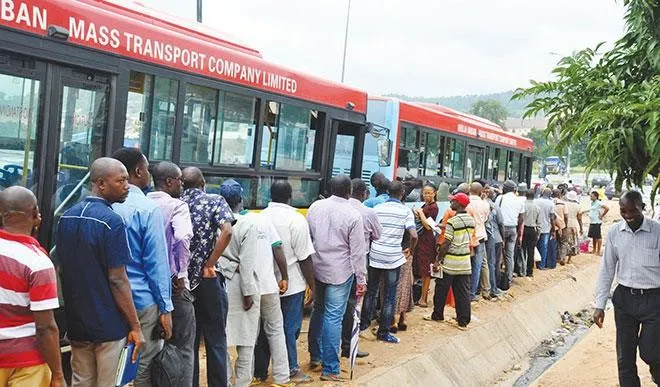
Checks across parts of Abuja showed reduced vehicular movement on some roads, longer waiting times at bus stops and higher fares, same as elsewhere in the country.
Some motorists have reportedly parked their private vehicles and resorted to public transportation to reduce their fuel expenses.
Reports from earlier this week indicated that some commuters were stranded at bus stops after transport operators increased fares, with some routes recording increases of up to 50 per cent.
The situation has also affected workers living in satellite towns and neighbouring Nasarawa communities who commute daily to Abuja. Some commuters have resorted to walking part of their journeys, while others have waited for buses offering relatively cheaper fares.
At the Federal Secretariat, some civil servants said the increase had forced them to reconsider how they commute to work, with transportation now taking a larger portion of their monthly salaries.
A civil servant who works at the Secretariat, Mrs Grace Emmanuel, said she had started leaving home earlier to avoid spending more on transportation.
“Before now, I could budget a particular amount for transport every day. But with the new fares, that amount is no longer enough. By the time I pay for transportation to and from work, there is very little left for feeding and other expenses,” she said.
Another worker, Mr Ibrahim Musa, said some of his colleagues had started sharing rides or abandoning their private cars.
“Some people who normally drive to work are now parking their vehicles because of the cost of fuel. If you calculate what you spend on fuel every day, especially when there is traffic, it becomes difficult to justify bringing your car to work,” he said.
He said that the problem was not only the increase in fares but the uncertainty over further increases.
“You wake up in the morning and you don’t know whether the fare will remain the same. Sometimes you get to the bus stop and discover that the driver has increased the fare. It makes planning very difficult,” he said.
The pressure on household budgets has intensified as schools reopen for the new academic session.
For parents and guardians in Kubwa, Garki and other parts of Abuja, the challenge extends beyond transportation to school fees, feeding, uniforms, books and other resumption expenses.
In Kubwa, Mrs Janet Daniel, a mother of three, said the increase in transport costs had forced her family to review its daily spending.
“Taking three children to school every morning is now another major expense. You have to think about the school bus, public transport or taking them yourself. If you use your own car, you spend more on fuel, and if you use public transport, the fares have also increased,” she said.
She said feeding the children had also become more difficult.
“We have to prepare food for them before they leave home because buying food outside is becoming too expensive. The children need breakfast, lunch and sometimes transport money. Everything is increasing at the same time,” she said.
Another parent in Kubwa, Mr Chinedu Okafor, said he had started combining errands to reduce the number of times he used his vehicle.
“I now plan my movements very carefully. If I have to take the children to school and go to the market, I try to do everything on the same trip. You cannot continue driving up and down as before when fuel is almost N1,500 per litre,” he said.
In Garki, Mrs Amina Yusuf, a guardian of two schoolchildren, said the new fuel price had complicated an already difficult period for parents.
“School has just resumed and there are already many things to pay for. Now transport has gone up again. You have school fees, books, uniforms, food and transportation. The salary has not increased because petrol has increased,” she said.
She said some parents were considering car-pooling to reduce the cost of taking their children to school.
“We are discussing among ourselves to see whether parents who live close to one another can take turns conveying the children. That may help us reduce the number of trips and the amount we spend on fuel,” she said.
She further said the increase was forcing families to make difficult choices.
“Before, you could buy food on your way home or give the children money for snacks. Now you have to calculate everything. If you spend too much on transportation, it affects what you can spend on food,” she said.
Beyond transportation, residents said the fuel increase was beginning to affect the prices of food and other household necessities because traders and service providers were also facing higher transportation and operating costs.
A recent report on the Abuja market showed that commuters and motorists were already feeling the impact of petrol prices above N1,450 per litre, with residents warning that higher transportation costs were spilling into other aspects of household spending.
While transport operators have attributed fare increases to the rising cost of fuel and vehicle maintenance, commuters say their incomes have not risen at the same pace.
For workers and parents, the immediate concern is how to stretch their incomes further as the cost of commuting, feeding and educating children continues to rise.
As the new school term commenced and workers continue their daily commute to the city centre, many Abuja residents are adjusting their routines, cutting unnecessary journeys, sharing rides, trekking short distances and relying more heavily on public transportation to cope with the latest increase in the cost of living.
We’ve got the edge. Get real-time reports, breaking scoops, and exclusive angles delivered straight to your phone. Don’t settle for stale news. Join THISTIMES on WhatsApp for 24/7 updates →
Join Our WhatsApp Channel