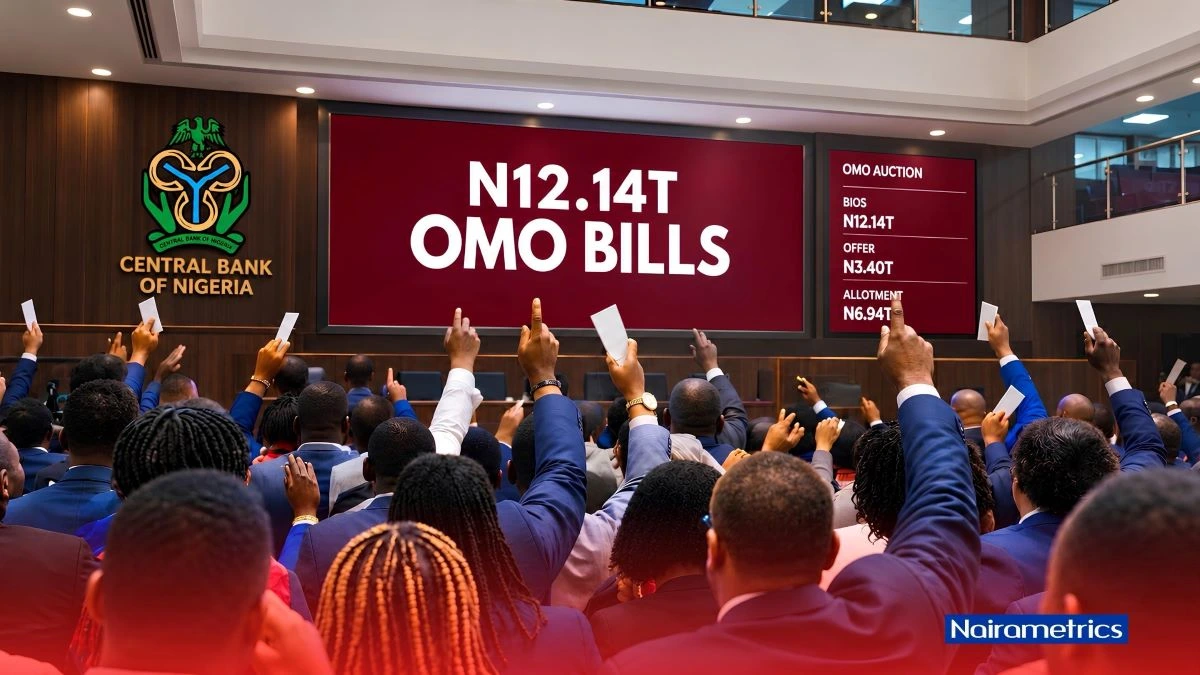
The Central Bank of Nigeria (CBN) closed September with two Open Market Operations (OMO) auctions that attracted N12.14 trillion in bids despite falling rates, suggesting investor demand remained strong even as yields moved lower.
Nairametrics’ analysis of the September 24 and 29 auction results show investors submitted N12.14 trillion in bids against N3.4 trillion offered across the two sessions, while the CBN allotted approximately N6.94 trillion.
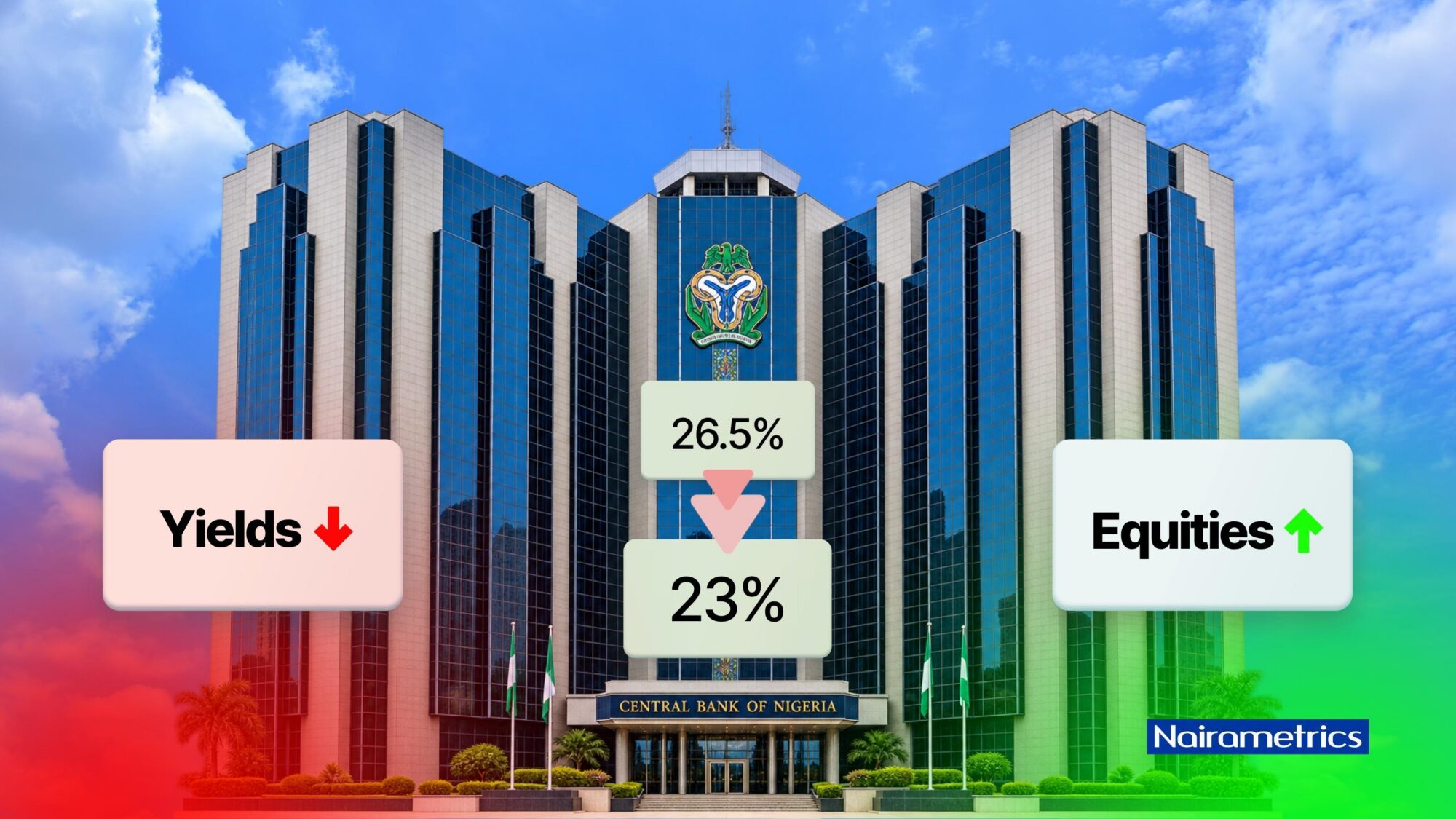
This means subscriptions were about 3.57 times the amount offered, while eventual allotments were more than twice the original offer. The auctions also came after the Monetary Policy Committee reduced Monetary Policy Rate by 350 basis points to 23%, and an intensified liquidity withdrawals.
Demand was particularly strong at the September 24 auction, when the CBN offered N900 billion across 152-day and 180-day instruments and received N5.741 trillion in subscriptions. Five days later, investors submitted another N6.399 trillion against N2.5 trillion offered across 147-day, 182-day and 266-day securities.
Stop rates on longer tenors declined by about 170 basis points during September from 18.99% at the start of the month, even as subscriptions remained several multiples above the amounts offered.
Speaking to Nairametrics, David Adonri, CEO of Highcap Securities Limited, attributed the resilience of demand partly to the attractiveness of Nigerian fixed-income yields compared with global rates.
He argued that even after the MPR reduction, OMO yields of 17% and above remained attractive to both domestic and foreign investors. Adonri also pointed to naira stability as another factor that could support offshore demand for naira-denominated instruments.
Adonri’s comments suggest that the absolute level of Nigerian yields, rather than simply the direction of rates, remains important in explaining demand.
Tajudeen Olayinka, CEO of Wyoming Capital Partners Limited, offered another explanation, arguing that the MPR reduction largely reflected an adjustment to conditions that had already developed in the fixed-income market. He said government securities, including OMO bills, were already trading below 20% before the MPC decision.
Olayinka also attributed stronger OMO demand partly to the expansion of participation beyond the narrower investor base that previously dominated the market.
His assessment suggests that the combination of broader participation and abundant liquidity could continue supporting OMO demand even as yields gradually decline.
The wider liquidity data reinforces the picture of a financial system that remains liquid despite heavy CBN sterilisation. Banks still had more than N4.6 trillion placed at the Standing Deposit Facility as of October 2, even after the apex bank’s aggressive September OMO sales.
The next OMO auctions in October will therefore provide further evidence of whether investors continue favouring longer-dated instruments as rates decline and the gap between the MPR and actual OMO yields narrows.