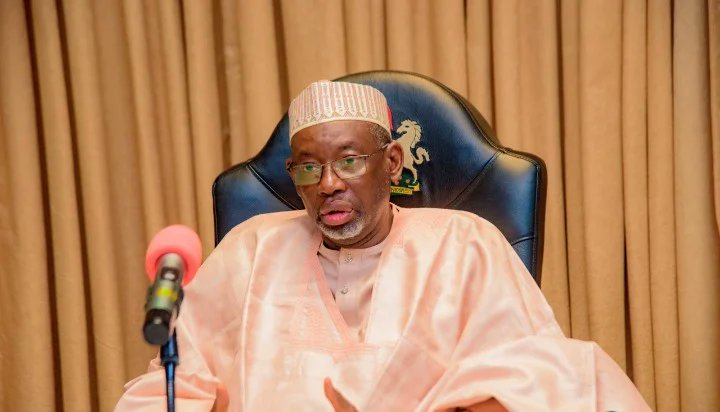
Jigawa State Governor, Malam Umar Namadi, has signed a supplementary budget for the state and the 27 local government councils, amounting to ₦63.478 billion for the 2026 fiscal year.
The Governor signed the supplementary budget after the State House of Assembly passed the bill into law.
The supplementary appropriation provides ₦46.369 billion for the state and ₦17.109 billion for the 27 local government councils, representing a combined additional appropriation of ₦63.478 billion.
The initial 2026 state budget was ₦901.84 billion, while the 27 local government councils had a combined initial budget of ₦288.85 billion.
In his speech after signing the budget, Governor Namadi said the supplementary budget was aimed at ensuring due process in Jigawa State public expenditures and at delivering the dividends of democracy to every community in the state.
Governor Namadi explained that the supplementary appropriation was necessitated by additional revenue that had accrued to the state and was subsequently presented to the State House of Assembly for appropriate legislative action in conformity with the provisions of the Constitution.
He noted that the additional funds injected into the state budget would provide more opportunities for his government and the 27 local government councils to continue implementing laudable projects and programmes under the 13-point agenda, designed to enhance public service delivery and the social and economic lives of the people of Jigawa.
The Governor then charged the ministries and departments to work tirelessly to ensure the full implementation of the budget in order to achieve sustainable growth and make Jigawa State great.
Earlier, speaking during the House sitting, the Speaker of the Assembly, Rt. Honourable Haruna Aliyu Dangyatin said the House had reviewed the proposed supplementary budget bill and made all necessary legislative adjustments to ensure full compliance with public expenditure requirements.
While fielding questions from newsmen after passing the budget, the Chairman of the House Committee on Appropriation, Hon Ibrahim Hamza Adamu, said the House was satisfied with the level of implementation of the initial budget and that the additional supplementary budget would strengthen public service delivery.
He explained that education and health are the most critical sectors of public service delivery and that they received special priority in the supplementary budget.
“The House is also determined to strengthen its oversight function to ensure that what was appropriated in the budget is fully implemented on the ground.” Hon Adamu stated