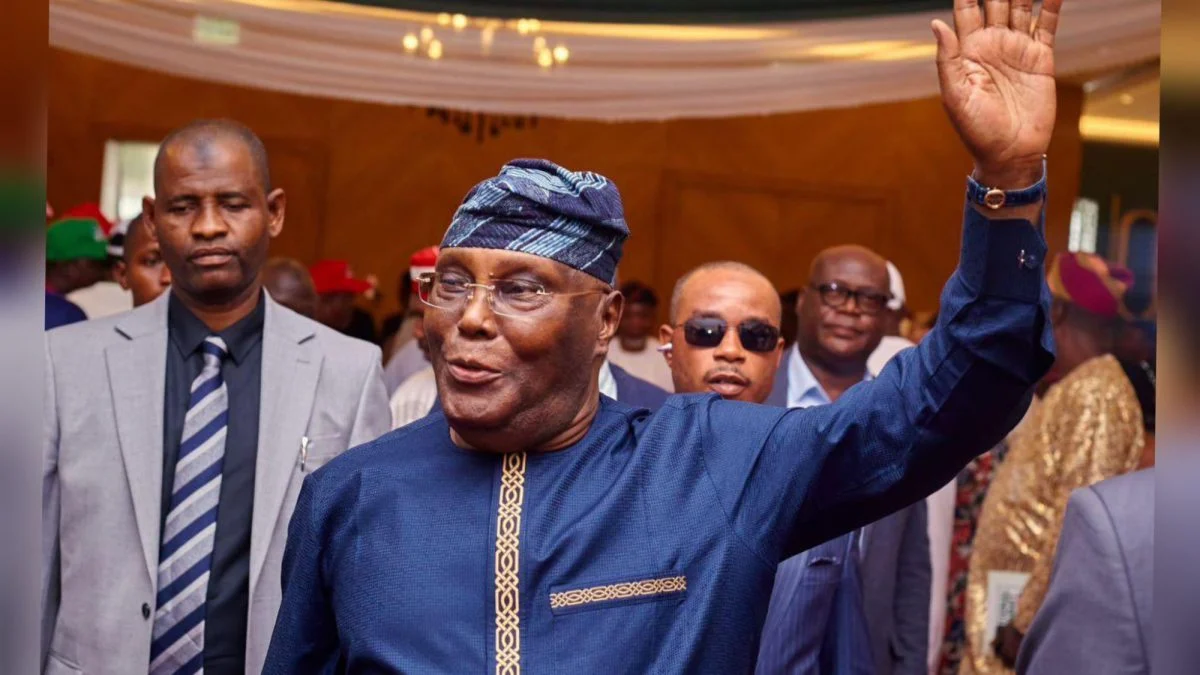
Former Vice President and 2027 presidential candidate of the African Democratic Congress (ADC), Atiku Abubakar, has criticised the Federal Government’s proposed 30-day fuel discount at NNPC stations.
The opposition politician has described the measure as a panic-driven publicity stunt and an election-laced attempt to temporarily ease the hardship caused by high petrol prices.
Atiku’s position was contained in a statement issued on Thursday by Phrank Shaibu, Director of Strategic Communication of the ADC Presidential Campaign Council.
The former Vice President said the proposed discount was a desperate and temporary gesture that could not address the wider economic difficulties Nigerians had faced since the removal of petrol subsidy.
According to him, the government had allowed Nigerians to endure years of rising fuel, transport and food costs before suddenly introducing a 30-day discount as the 2027 election approaches.
“Atiku totally rejects this calendar-scheduled, election-laced subsidy package. Nigerians are not fools to be offered a month of discounted fuel after years of punishing prices and then expected to forget the hardship when the discount expires. This is shameless and heartless,” he said.
Atiku argued that the proposed intervention was not a comprehensive economic policy but a temporary response to a problem created or worsened by the government’s handling of fuel pricing.
“What happens on Day 31? Nigerians wake up to the same brutal prices, the same punishing transport fares and the same rising cost of food. The government cannot manufacture relief for one month and expect Nigerians to applaud while the hardship remains,” he said.
He also questioned the scope and effectiveness of the proposed discount, noting that it would be limited to NNPC stations.
Atiku said the Federal Government had yet to explain how much motorists would actually save per litre or provide assurances that any reduction enjoyed by transport operators would be passed on to passengers through lower fares.
He described the government’s decision to introduce the temporary relief as an admission that the hardship resulting from high fuel prices had become too severe to ignore.
“The Tinubu government and its spin doctors have tried to make it sound impossible, yet they are now reaching for a temporary subsidy-style intervention because the pain has become impossible to ignore,” Atiku said.
He argued that the latest move also strengthened his earlier proposal for production support tied to locally refined petrol.
Atiku said he had advocated capped and budgeted production support for fuel refined in Nigeria, with safeguards to ensure that the benefits reached consumers while also encouraging domestic refining.
“This volte-face proves that the production-support proposal I have advanced is workable, achievable and not complicated,” he said.
The former Vice President insisted that Nigerians needed a permanent solution to the cost-of-living crisis rather than a short-term reduction that would expire after one month.
“Nigerians need lasting relief, not a countdown to the return of hardship. Tinubu’s government cannot spend years telling Nigerians to endure, then offer 30 days of relief and call it a solution,” he said.
The latest criticism is part of Atiku’s long-running opposition to the manner in which President Bola Tinubu’s administration has handled the removal of petrol subsidy.
Tinubu announced the removal of the subsidy during his inauguration on May 29, 2023, declaring that “fuel subsidy is gone.” The decision immediately triggered a sharp increase in petrol prices and contributed to higher transportation and food costs across the country.
The President had defended the policy on the grounds that the subsidy was too expensive for Nigeria to sustain and that the funds could instead be redirected to infrastructure, healthcare, education, transportation and national security.
In a national broadcast on July 31, 2023, Tinubu said, “Subsidy cost us trillions of Naira yearly,” arguing that the resources would be better spent on “public transportation, healthcare, schools, housing and even national security.”
In August, the former Vice President said during a Facebook Live session that he had initially not opposed the removal of the subsidy but had become concerned about what happened to the money the government said it would save.
“I initially did not oppose the removal of the fuel subsidy. But now that it has been removed, where is the money? Where has the subsidy money gone? Has it been used to improve healthcare, education or security?” Atiku asked.
He added, “If I win the presidential election, I will restore the subsidy. And anyone who stole Nigeria’s subsidy funds must return the money.”