Adebayo Waheed, Ibadan, Francis Okoye, Maiduguri, Kalu Eziyi, Umuahia, Nnamdi Mbawike, Enugu, Achor Abimaje, Jos
Poor sanitation standards and meat handling at abattoirs characterised by infrastructure and operational deficits across the country have raised concerns among consumers, prompting suggestions for strict inspection of animals before slaughter and safe handling of meat in slaughter houses.
In the Federal Capital Territory, concerns followed observations at an abattoir in Lugbe area which appeared relatively clean, but aspects of meat handling, particularly the processing of cow skin, raised questions about hygiene at the abbatoir.
During a visit by our correspondent, people were observed stepping on cow skin, popularly known as kpomo with footwears while it was being processed for consumption.
However, the secretary of the abattoir, Ahmed Rufai, said the facility animals were inspected before slaughter to ensure sanity.
“Everywhere is hygienic and the facilities are neat. The animals are checked before slaughter to ensure they are healthy enough. We do not have any major challenge with hygiene or safety here,” he said.
Ismaila, a meat seller at Zone 5 Market, Lugbe, said environmental officials inspect the facility, while workers use footwears specifically meant for abattoir operations.
He said the footwear was not ordinary and not used elsewhere after workers complete their duties.
But a meat consumer, Benedict Irokyaa, said the condition of some abattoirs and the manner in which meat was handled could discourage consumers from buying meat.
Irokyaa said seeing how animals were slaughtered and meat handled could make consumers question the hygiene of the meat eventually sold to them.
Providing an expert perspective, a veterinarian, Dr Sani Umar, said inspection of animals before slaughter was important because some diseases might not be immediately apparent to people handling the animals.
He said animals or animal parts found to be affected should not be allowed for human consumption, adding that affected portions should be removed and properly disposed of.
Umar also raised concerns about conditions in some local abattoirs, saying poor facilities, sanitation, waste disposal and handling practices could affect meat safety.
He stressed the importance of proper facilities, cleaning and safe transportation of meat from the point of slaughter to consumers.
BAYELSA
The poor state of facilities and sanitation at the Yenagoa abattoir in Bayelsa State has raised concerns about the conditions under which meat consumed by residents is handled, displayed and sold.
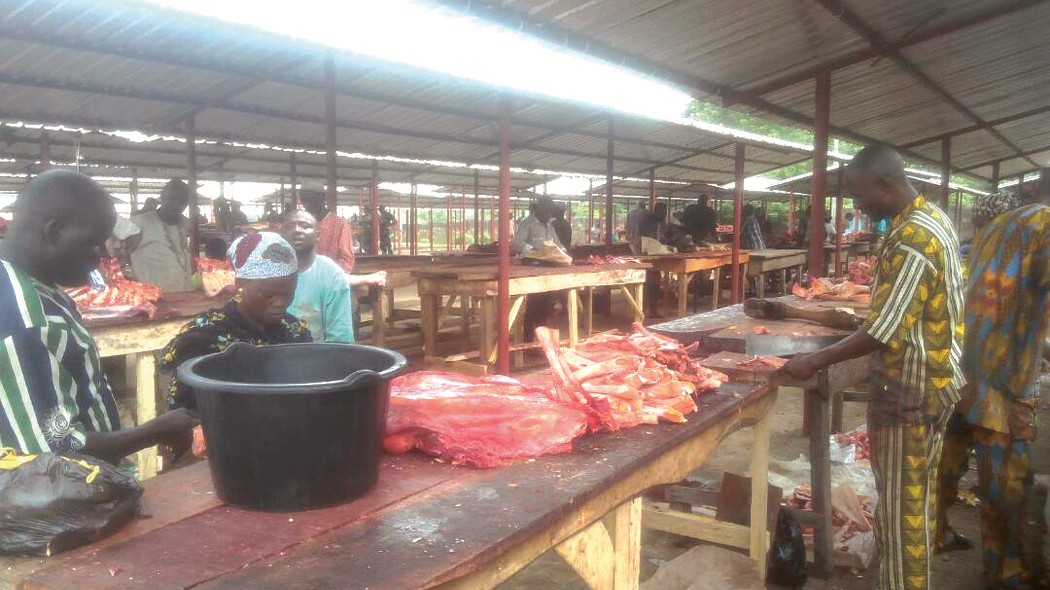
A visit to the abattoir revealed a busy, open-air slaughterhouse and meat market where butchers worked, carcasses were displayed, and customers moved between tables to buy meat.
The ground was muddy and wet, with dark-red stains and puddles spread across the area. Raw meat and animal carcasses were placed on wooden tables in the open, while parts of slaughtered animals were seen on the ground beneath some of the tables.
The abattoir was crowded, with butchers, traders, customers and passersby moving through narrow spaces between the stalls. Commercial tricycles were parked within the premises, sharing the same space with people buying and selling meat.
The state of the environment raised concerns about sanitation and the handling of meat in a facility that serves residents of the state.
An abattoir operator, Mr Ikedi Peter, said the facility lacked basic amenities needed to maintain a clean and safe working environment.
Peter, who expressed disappointment over what he described as the neglect of the abattoir by the Bayelsa State government, said operators had continued to manage the situation despite the difficulties they faced.
According to him, the facility lacks adequate shelter, toilets, clean water and proper shops where meat can be displayed and sold.
He said, “We don’t have a good abattoir. As I have mentioned, we lack water. If the abattoir itself is not good, it means that everything there is not good. There is not a single facility we can point to as being adequate.”
Peter said the lack of a reliable water supply had forced workers to fetch water from the river, a situation he described as dangerous.
He alleged that some workers had lost their lives while fetching water because they could not swim.
The poor sanitary conditions at the abattoir raise concerns about the need for adequate water supply, proper drainage, effective waste disposal and improved facilities for handling meat.
DELTA
In Delta, the condition of abattoirs and impact on meat safety calls for urgent attention as many abattoirs across the state are in deplorable state. Abattoirs in Asaba/Benin Express road, especially so called Hausa markets lack basic facilities such as clean water, proper waste disposal systems and adequate ventilation.
Animals are frequently slaughtered on bare, dirty floors and the carcasses are often left exposed to flies and other pests while tyres said to be poisonous are used to roast meat. The blood and offal are discarded haphazardly, creating an environment ripe for the proliferation of harmful bacteria and pathogens.
A public health expert and consumer, Patrick Ochei, said meat poisoning occurs when meat contaminated with harmful bacteria, viruses, or parasites is consumed, causing foodborne illnesses. He agreed buyers have no choice because the situation is compounded by the lack of regular inspections and enforcement of existing health and safety regulations.
A butcher, Robbery Izete, advised that government should invest in the modernization of abattoirs by upgrading of existing facilities. This can include the installation of proper waste disposal systems, water supply infrastructure, and refrigeration units to ensure that meat is processed and stored under hygienic conditions.
Meanwhile, Delta state government, once flagged off the construction of two ultra-modern abattoirs and cold-room projects to be executed by Warri South LGA at Pessu Market, Warri. Then Delta State Commissioner for Trade and Investments, Hon. Samuel Oligida, facilitated it.
Also to improve the standards, processing and handling of meat consumed in the state, the Delta State Butchers’ Union (DSBU) unfolded strategies aimed at sanitising the red meat value chain in the state.
OYO
A worker at the Akinyele Central Abattoir, Akintunde Akinwande, while speaking on the current state and key issues, said major hubs like the Akinyele and Gbagi Community Slaughter houses in Ibadan, showed widespread shortage of water supply, non-functional or missing drainage systems, and abandoned or poorly kept toilet facilities.
According to him, most facilities suffered from poor solid and liquid waste disposal, with effluents and refuse frequently discharged directly into open drains or nearby water bodies, raising severe water pollution and environmental health concerns.
He added that ante-mortem and post-mortem veterinary inspections are often limited or bypassed entirely outside major approved centers, increasing the risk of distributing uncertified or contaminated meat.
He said workers and butchers frequently lack or failed to use personal protective equipment and general disinfection of slaughterhouse infrastructure, tools, and premises is poorly implemented in many local slaughter slabs.
However, he said the state government had pursued mitigation efforts, such as plans to establish additional modern abattoirs to improve meat hygiene standards across the state, alongside legislative motions, such as those raised in the State House of Assembly to better standardise operations at major distribution hubs like Akinyele Central Abattoir.
BORNO
Residents of Maiduguri have called on the Borno State government to ensure adequate hygiene maintenance at the Maiduguri abattoir.
The residents who spoke to our correspondent lamented the poor sanitary condition of the abattoir and the meat market environment, saying it poses health risks.
One of the residents, Mallama Hauwa who was at the abattoir to buy meat, said the stench from the environment was unbearable and called on the Ministry of Environment to intervene.
“As you can see, the environment within the abatoir is not clean. It is really dirty. So we want government to put more effort to see that the place of slaughtering and selling of meat is very neat.
” When it is very dirty , people will contaminate all manner of diseases, especially during rainy season. There are more flies, look at the drianages, they are very dirty. Government should provide modern facilities, running water and proper waste disposal system at the abattoir to safeguard public health,” Hauwa said.
Another meat customer AT the abattoir, Babaji Alhaji Kuri, called for regulation and monitoring of animals being slaughtered and sold in the abattoir so that people don’t bring in slaughtered dead animals to sell in the place.
Kuri equally advised customers to be vigilant about the source of animals slaughtered in the abatoir and sold, adding that the leadership of the abbatoir and meat market should as well monitor the animals brought to the market for slaughtering.
ABIA
Findings at some abattoirs visited in some communities in Abia State indicated that there may not have been official certification of the health status of the animals slaughtered there.
According to a mobile food vendor at Orie Ugba Market in the state capital, Umuahia, Agodichi Egwu, the manner in which meat are exposed at the abbattiors calls for serious concern.
ENUGU
In Enugu, consumers who spoke to our correspondent raised safety concerns, insisting that the addatoirs were not neat as expected.
They therefore urged relevant government agencies to intensify efforts to force the operators to comply with healthy standards.
PLATEAU
In Plateau, Governor Caleb Mutfwang recently performed the groundbreaking of a 500-cattle-per-day ultra-modern abattoir at Pwomol Village, Heipang, and a Veterinary Teaching Hospital in Barkin Ladi Local Government Area.
The projects, supported by the Livestock Productivity and Resilience Support (L-PRES) Programme, are designed to strengthen the livestock value chain, improve food safety standards, create employment opportunities, attract private investment, and enhance Plateau State’s capacity for meat processing and export.
“We are replacing crude and unhygienic slaughter practices with a world-class, automated abattoir capable of processing 500 cattle daily—the largest facility of its kind in this region,” he said.
We’ve got the edge. Get real-time reports, breaking scoops, and exclusive angles delivered straight to your phone. Don’t settle for stale news. Join THISTIMES on WhatsApp for 24/7 updates →
Join Our WhatsApp Channel