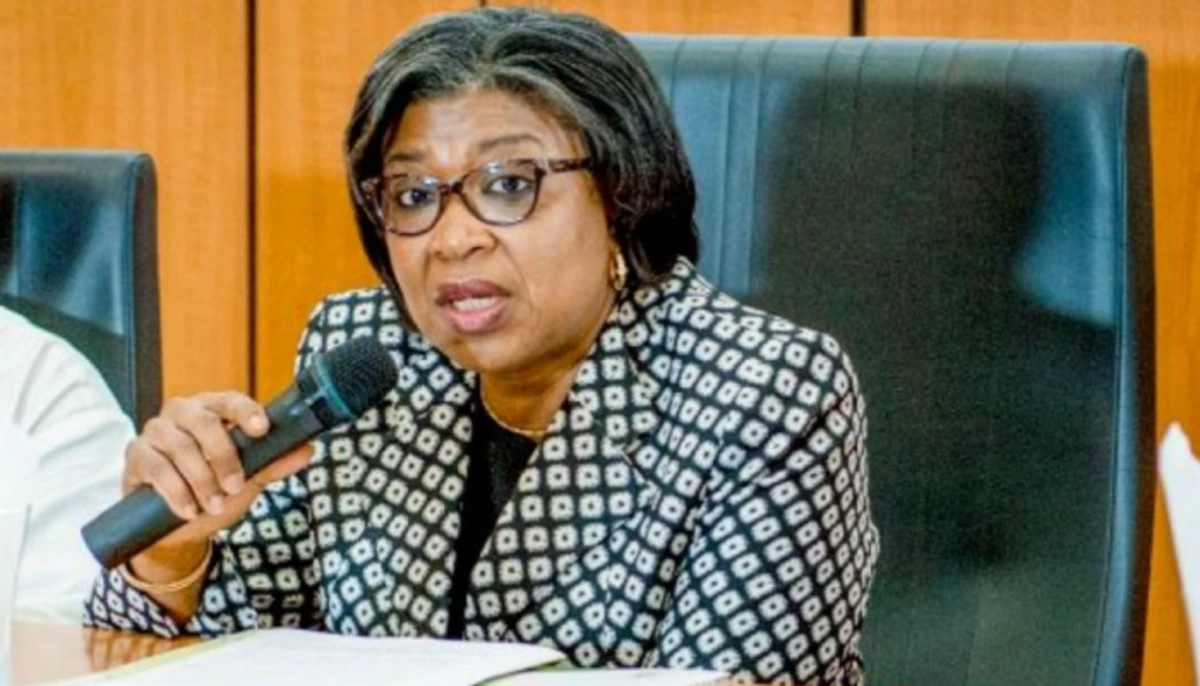
The Director-General of the Securities and Exchange Commission (SEC), Dr Emomotimi Agama, has warned that a shortage of credible issuers in Nigeria’s capital market could drive up the prices of existing assets rather than support genuine market development.
Agama gave the warning on Friday, October 9, 2026, while delivering the University of Ibadan Alumni Association’s 2026 Annual Public Service Lecture in Ibadan, Oyo State, themed “First and Best — But Whose Capital Built It? Rethinking How Nigeria Funds Its Own Future.”
He argued that Nigeria has developed a pattern of consuming resources that could otherwise be invested in long-term, income-generating assets, citing the University of Ibadan’s historical dependence on external funding as an example of the country’s broader capital mobilisation challenge.
Agama cautioned that expanding Nigeria’s capital market without increasing the number of credible institutions seeking investment could create excessive demand for a limited pool of assets, resulting in price inflation rather than sustainable growth.
He explained that the capital market faces a more fundamental challenge than attracting additional investors, stressing that the availability of institutions with strong governance, transparent financial records and credible investment structures remains inadequate.
The SEC DG also noted that retail investor participation is expanding at an unprecedented pace, with the capital market targeting 30 million investors by 2030.
His remarks highlighted the need to increase the supply of credible investment opportunities alongside efforts to attract more investors into Nigeria’s capital market.
Nigeria’s Capital Market Masterplan outlines an ambitious expansion of the country’s capital market from approximately N250 trillion to N750 trillion, as regulators pursue reforms aimed at improving market efficiency, attracting investment and increasing participation.
The directive required market operators and other stakeholders to align their systems and procedures with the revised settlement framework, which was intended to improve liquidity, reduce counterparty risks and bring Nigeria’s capital market closer to international standards.
The Central Securities Clearing System (CSCS) subsequently announced the official launch of the T+1 settlement cycle on June 1, marking the completion of the transition from the previous two-day settlement framework.
Beyond improving transaction efficiency, the SEC is pursuing broader retail investor participation and leveraging technology to make Nigeria’s capital market more accessible to investors across different income groups.
The company is targeting participation from up to 10 million Nigerian investors through a technology-driven subscription process integrated with the Bank Verification Number (BVN) system, aimed at simplifying access to equity investment.
The offering illustrates efforts to expand the supply of investable assets alongside growing retail participation, an issue central to Agama’s warning about increasing market liquidity without a corresponding rise in credible issuers.