How Southern Borno, Benue South, Gombe South, Kwara North, Kogi West, Ekiti South are schemed out
Despite the return to democratic rule in 1999, some senatorial districts in the country have yet to produce elected governors in their respective states, raising concerns about political marginalisation, inequitable power-sharing and regional representation, our correspondents report.
By Francis Okoye, Maiduguri; AZA MSUE, Makurdi; Babaji Usman Babaji, Gombe; Abdullahi Olesin, Ilorin; Adebayo Waheed, Ibadan; and IBRAHIM OBANSA, Lokoja
Southern Borno Yet To Produce Governor
Since Borno State was created, its southern senatorial district has yet to produce a governor, with the position always occupied by politicians from the northern and central parts of the state.
Political analyst Zubairu Dauda attributed the situation partly to the voting strength of the northern and central districts, which he said accounted for a significant share of the state’s more than 2.3 million eligible voters.
Of Borno’s 27 local government areas, nine are in the southern district: Askira-Uba, Bayo, Biu, Chibok, Damboa, Gwoza, Hawul, Kwaya Kusar and Shani. The northern and central districts account for the remaining 18.
Dauda argued that the northern and central districts often aligned politically because of shared interests, putting southern aspirants at a disadvantage.
He also claimed that Chibok and Damboa did not consistently align with the southern district politically, citing their historical and traditional affiliations with the Kanuri and the Shehu of Borno’s emirate.
The state chairman of the Peoples Democratic Party (PDP), Zanna Gadzama, similarly attributed the situation to the numerical strength of the northern and central districts, their dominance of local government areas, and their substantial share of party delegates.
He said these factors made it difficult for aspirants from the southern district to secure the governorship.
Benue South: A Case of Political Marginalisation
In Benue State, the southern senatorial district, popularly known as Zone C, has yet to produce an elected governor since the state’s creation.
Since the administration of the first civilian governor, Aper Aku, successive elected governors have emerged from Benue North-East and Benue North-West, areas predominantly inhabited by the Tiv.
Although former Senate President David Mark served as military governor of Niger State, and retired General Lawrence Onoja was military governor of Plateau and Katsina states, neither held the elected governorship of Benue.
Speaking with LEADERSHIP Weekend in Makurdi, one James Agada expressed hope that an Idoma or Igede indigene would eventually emerge as governor.
“This is a case of political marginalisation, but I believe one day an Idoma man or Igede man or daughter from Benue South, popularly known as Zone C, will emerge governor of Benue State. With God, all things are possible,” he said.
Stephen Akor, however, called for sustained dialogue between the southern district and the two predominantly Tiv districts, arguing that mutual understanding would be essential to changing the political equation.
“I believe there are fears among the Tiv people that if the governorship is given to an Idoma or Igede person, the Tiv may be marginalised,” he said.
Akor urged political leaders from Zone C to reassure their Tiv counterparts that allowing the southern district to produce a governor would not threaten their interests but could promote unity and development across the state.
Gombe South Still Awaiting Governorship Slot
Gombe South is the only one of the state’s three senatorial districts that has yet to produce a governor since the return to democratic rule in 1999.
Gombe North has produced three governors: the late Abubakar Habu Hashidu, Ibrahim Hassan Dankwambo and the incumbent, Muhammadu Inuwa Yahaya. Gombe Central produced former governor Danjuma Goje, who served from 2003 to 2011.
The southern district comprises Balanga, Billiri, Kaltungo and Shongom local government areas.
In March 2026, the Gombe State Unity Alliance Movement urged political stakeholders to support former Works Commissioner Abubakar Bappah’s governorship ambition, arguing that fairness required the position to rotate to the southern district.
Adam Maisamari, a PDP supporter from Kaltungo, attributed the district’s inability to secure the position partly to political calculations and internal disagreements.
He argued that Gombe North’s dominance of the governorship had contributed to the south’s exclusion, which he alleged extended to political appointments and the distribution of other offices.
James Tula, a Gombe Southerner based in GRA, Gombe, also called for greater unity among political stakeholders in the district and a fairer distribution of elective positions.
Kwara North Blames Marginalisation, Internal Divisions
Kwara North remains the only senatorial district in the state that has yet to produce a governor since the return to democratic rule in 1999.
Kwara Central held the position from 1999 to 2011 under former governors Mohammed Lawal and Bukola Saraki. Kwara South took over from 2011 to 2019 under Abdulfatah Ahmed, before the incumbent, AbdulRahman AbdulRazaq, from Kwara Central, assumed office in 2019.
Community leaders in Kwara North attributed the situation to political marginalisation, internal divisions and poverty.
A former council secretary in Moro Local Government Area, AbdulRauph AbdulSalam, said the district’s challenges extended beyond its exclusion from the governorship.
He argued that internal marginalisation had also weakened the district, particularly in how its five local government areas were represented.
According to him, Baruten, Edu, Kaiama and Patigi have had representation in the National Assembly over the years, while Moro, the district’s only predominantly Yoruba local government area, has suffered relative neglect.
AbdulSalam said Kwara North needed to address its internal divisions if its demand for the governorship was to gain wider acceptance across the state.
“Any senatorial district that is crying for fairness in the state must first look inward and address the principles of equity, fairness and justice within its own territory,” he said.
Another community leader from Baruten, retired General Manager of the Nigerian Television Authority (NTA), Alhaji Sule Sabi, blamed the situation on the influence of political leaders from Kwara Central.
He alleged that political godfathers in the central district largely determined where the governorship ticket went, partly because they considered Kwara North electorally weak and overly dependent on their support.
Sabi also rejected suggestions that the district lacked competent candidates for the position.
He said political leaders sometimes exploited disagreements among elders to prevent the district from speaking with one voice.
According to him, Kwara North must unite behind its demand, educate residents on the factors limiting its political prospects and address divisions among its constituent ethnic groups, including the Baruba, Bokobaru, Nupe and Yoruba.
He added that widespread poverty remained another challenge confronting the district.
Kogi West Seeks Governorship After 35 Years
Kogi West Senatorial District remains the only one of the state’s three senatorial districts that has yet to produce an elected governor, 35 years after Kogi State was created.
The call to zone the governorship to the district in 2027 has gained momentum, with proponents arguing that equity and political inclusion require a shift in power.
A former commissioner in the state, Dr Tom Ohikere, is among those advocating a review of the existing power-sharing arrangement, which he said had disadvantaged Kogi West since the return to democratic rule.
“Since 1999, Kogi East has been around for 16 years. Kogi Central would have completed 12 years by 2027. Kogi West has done zero. Not one day as elected governor since creation,” Ohikere said.
A pressure group in the district, Degroup, has also called for the governorship to rotate to Kogi West in 2027.
Its spokesperson and former member of the House of Representatives for Lokoja/Kogi Federal Constituency, Barrister Shaba Ibrahim, said the group remained committed to securing the position for the district.
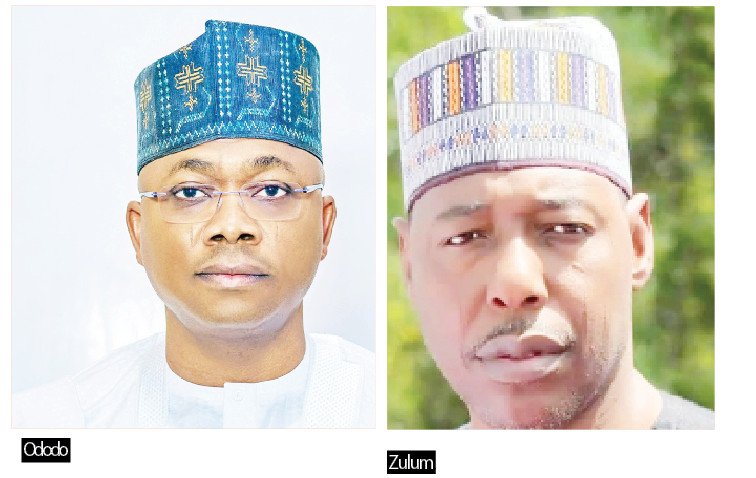
However, some stakeholders, particularly those aligned with the ruling APC administration, have argued that Governor Ahmed Usman Ododo should be allowed to complete his constitutionally permitted two terms before power shifts to Kogi West.
The position was reinforced by stakeholders from Kogi Local Government Area, also known as Koton-Karfe, who endorsed Ododo for a second term and urged the district to defer its governorship ambition until 2031.
Led by Senator Ado Shaibu, the stakeholders included elders, political leaders, youths and women from the local government’s 11 wards.
They argued that allowing Ododo to complete a second term would promote political stability, consolidate development projects and improve Kogi West’s chances of producing the next governor in 2031.
The competing positions have intensified the debate over whether power rotation should take precedence in 2027 or whether continuity under the incumbent should come first.
While advocates of an immediate shift insist that Kogi West has waited long enough, supporters of the 2031 timeline believe that allowing Ododo to complete two terms would facilitate a more stable transition and improve the district’s prospects.
In a further push for power rotation, stakeholders from Kogi West recently convened a summit to canvass support from the other senatorial districts for the area’s governorship ambition.
Governor Ododo has also established a power rotation committee, headed by former governor Idris Wada, to facilitate the smooth rotation of power among the state’s senatorial districts.
Ekiti South Yet To Produce Governor
In Ekiti State, the southern senatorial district is the only one of the three districts that has yet to produce a governor since the return to democracy in 1999.
Ekiti Central has produced three governors, while Ekiti North has produced two. Ekiti South has yet to occupy the state’s highest executive office.
Otunba Niyi Adebayo, who governed from May 1999 to May 2003, is from Ekiti Central. His successor, Ayo Fayose, also from the central district, served from May 2003 to October 2006 and again from October 2014 to October 2018.
Segun Oni, from Ekiti North, served from April 2007 until October 2010, when a Supreme Court ruling ended his tenure.
Kayode Fayemi, also from Ekiti North, governed from October 2010 to October 2014 and returned to office from October 2018 to October 2022.
The incumbent, Biodun Abayomi Oyebanji, from Ekiti Central, assumed office in October 2022.
The distribution of the governorship among the central and northern districts, with the south yet to produce a governor, has kept the question of equitable political representation alive in the state.
We’ve got the edge. Get real-time reports, breaking scoops, and exclusive angles delivered straight to your phone. Don’t settle for stale news. Join THISTIMES on WhatsApp for 24/7 updates →
Join Our WhatsApp Channel