Sending $200 to Sub-Saharan Africa costs an average of 8.46% of the amount transferred, the highest rate of any world region, compared with a global average of 6.36%, according to the World Bank’s third-quarter 2025 data.
Traditional cross-border transfers can take several days, depending on the payment route and provider, while correspondent banking networks add complexity to moving money between African markets.
Faster rails have arrived. Stablecoins can move value across borders in seconds on some blockchains. Yet African trade is still not seamless.
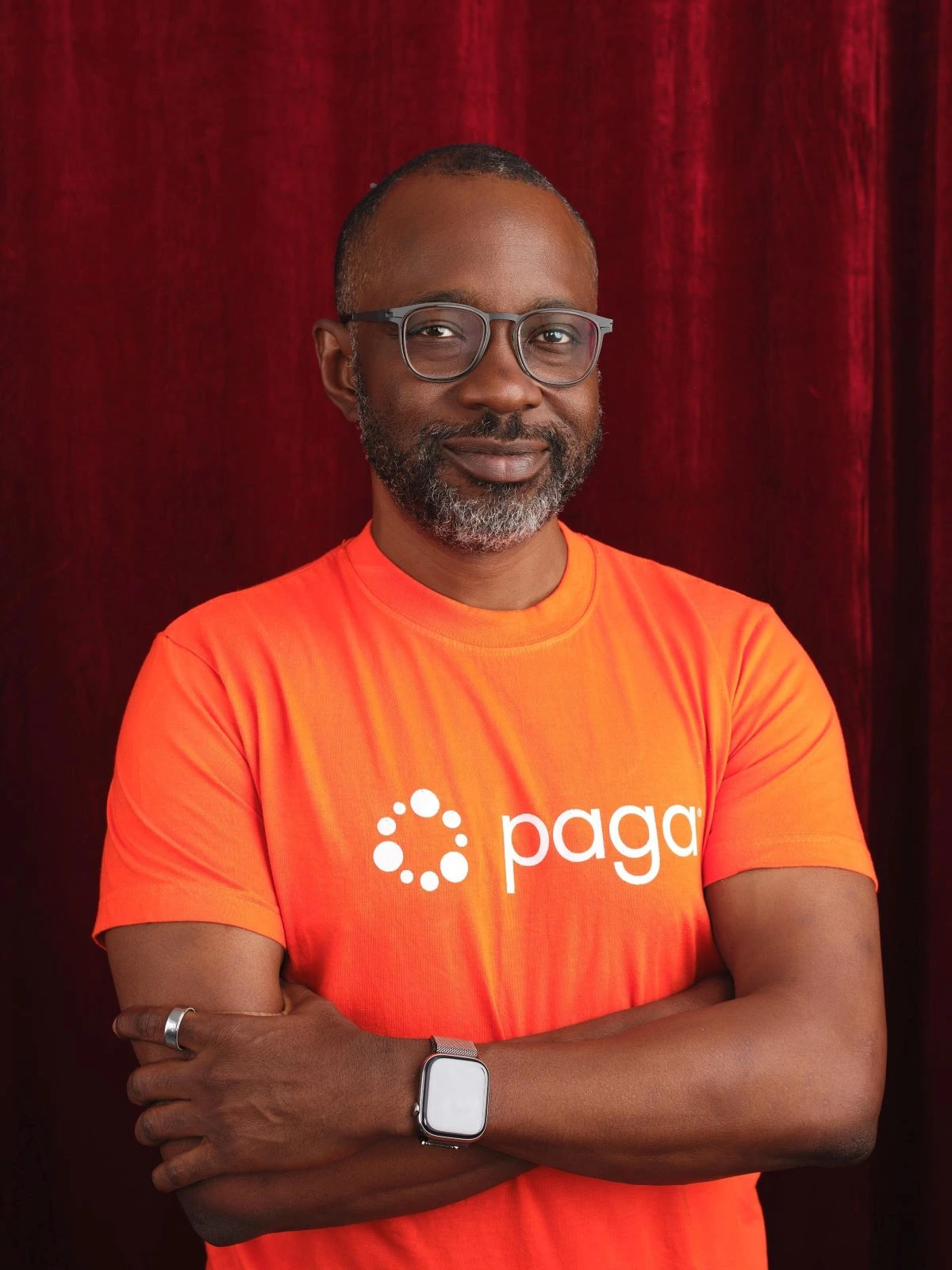
Few people have watched this gap more closely than Tayo Oviosu. After over 17 years building payments infrastructure across the continent, the Paga Group CEO has a clear-eyed view of what the new technology solves and what it does not.
A dollar stablecoin can cross borders almost instantly, he notes, but the recipient usually wants local currency in a bank account. Everything between those two points remains hard: deep liquidity so conversion does not move the price, access to foreign exchange shaped by central bank policy, licences in each country, and a reliable way to cash out.
In this exclusive interview with Nairametrics, Tayo Oviosu breaks down why speed alone has not made African trade seamless, and what still stands in the way.
Tayo Oviosu: A dollar stablecoin can move in seconds, but the person on the other end usually wants naira in an account. Everything between those two points is still hard. You need deep local liquidity so conversion doesn’t move the price against you.
You need access to foreign exchange, which depends on central bank policy. You need a license in each country, and KYC and sanctions screening that satisfy each regulator. Regulation is also still catching up with the technology. You also need a reliable way to cash out.
A blockchain doesn’t give you a banking relationship in Kenya or a license in Ghana. Or give you liquidity. People building in this space tend to learn that late.
Tayo Oviosu: A traditional corridor stacks fees. The sending bank takes one, the correspondent takes another, there is an FX spread, then the receiving bank, then cash-out if the recipient needs cash. Settlement usually takes one to three days.
Moving the stablecoin itself costs less because fewer parties are involved, and it takes seconds.
Most importantly, you also avoid pre-funding balances to execute transactions. A fintech in Hong Kong does not need to pre-fund money with Paga in Nigeria to send money to Nigeria.
They can send money to Paga in stablecoins, and the recipient gets Naira. Imagine that at scale. Instant global payments.
Tayo Oviosu: Both, to be honest. More options are good for builders, but every new chain and every new stablecoin is another island unless someone connects them. A business shouldn’t have to care which chain its money moved on.
That’s a big reason we’re multi-chain and multi-stablecoin, so the complexity stays on our side of the line.
What needs to change is for regulators to recognize each other’s licensing for this kind of activity, so a company approved in one market doesn’t start from zero in the next. Local payment rails across countries also need to connect, and the work on pan-African settlement helps there.
Someone then has to build the plumbing that makes it all usable. Our plan is to take Paga Engine into other African markets with local licenses and partners, one platform with many corridors.
Tayo Oviosu: Our goal at Paga is to be the global financial infrastructure for Africans. This means providing the engine that powers other companies’ access to domestic and global financial rails.
Today, over 375 enterprises trust and build on Paga. Our partnership with Sui and Crossmint is key to our mission: providing access to global financial rails and new ways to move money using stablecoins.
The Sui blockchain gives us a fast, low-cost stablecoin network and a dollar stablecoin, USDsui, which offers yield. We have partnered with Crossmint to access stablecoin wallet infrastructure across more than 50 blockchains. Paga Engine sits underneath both and does the hard part in Africa: turning local currency into dollars and back again, legally and at scale, to offer global connectivity.
In practice, that means a company anywhere in the world can pay someone in Nigeria in a stablecoin and have it land as Naira in a bank account within minutes. It also means an African business or individual can pay globally with significantly lower costs using local currency. Before, that meant correspondent banks, T+2, and many intermediaries taking a cut.
Tayo Oviosu: The foundation has been live for years. More than 375 enterprises now run on Paga Engine, mostly domestic names but also global companies. Last year we processed $11 billion across 169 million transactions, and today we’re running at about $1.5 billion a month. The business is profitable, so we’re building the next phase from a position of strength.
The stablecoin layer is newer, and we are readying to go live soon. We will launch with USDSui, USDC, and USDT on the Sui and Solana blockchains. Post initial launch, we’ll expand to Arc, Tempo, and Ethereum-based blockchains to maximize coverage. As an infrastructure provider, our plan is to be multi-stablecoin and multi-chain.
Tayo Oviosu: The vast majority of our infrastructure is owned by us. Where we don’t own the infrastructure, we have built in redundancies to ensure operational resilience. We own the licenses. We hold a mobile money operator license, a microfinance bank license, and an international remittance license.
We also own the ledger, the wallets, the compliance stack, and the orchestration layer that routes every transaction, and we have direct connections to settlement banks, NIBSS, and the card schemes.
Seventeen years went into that, and nobody can buy it quickly.
Tayo Oviosu: Issuers earn yield on the reserves behind stablecoins, and that is a very large business. The networks earn small fees on each transaction.
A major reason we have partnered with Sui is an agreement to share yield with customers on USDsui. That said, economic value exists across the value chain.
The fintechs will earn transaction fees, and also the liquidity providers will earn fees.
Tayo Oviosu: Stablecoin issuers do not necessarily or typically hold custody of the stablecoins. They do hold the underlying asset that backs the stablecoin and, to give the public confidence, audit those assets and make those audits publicly available. US Dollar stablecoins are typically backed 1:1 with US Treasury bills.
Custody of the stablecoin depends on what type of wallet holds the value – a custodial or non-custodial wallet. The difference is who controls the keys needed to move funds from the wallet. In a non-custodial wallet, the owner has full control over the funds, and no one can freeze their money.
For custodial wallets, whoever holds custody, i.e., the keys, can freeze the money. That’s where regulation comes into play. Regulators worldwide are in the process of regulating custodial services.
Tayo Oviosu: Own your licenses, your ledger and your compliance. Build your own relationships with banks and liquidity providers. Keep the routing layer in-house so you can swap suppliers without a rewrite, and hire the engineers to maintain it all.
The temptation is to stitch together a few vendors, put a brand on top and call it a product. That works until one of them changes its pricing or its mind. It’s why we opened Paga Engine to other companies in 2022. We serve businesses, so we never compete with our clients for their customers, and a lot of fintechs shouldn’t have to rebuild what we spent years on.
Tayo Oviosu: I expect stablecoins to be the glue that connects Africa to the global economy and makes it easy for Africans to achieve their continental or global ambitions.