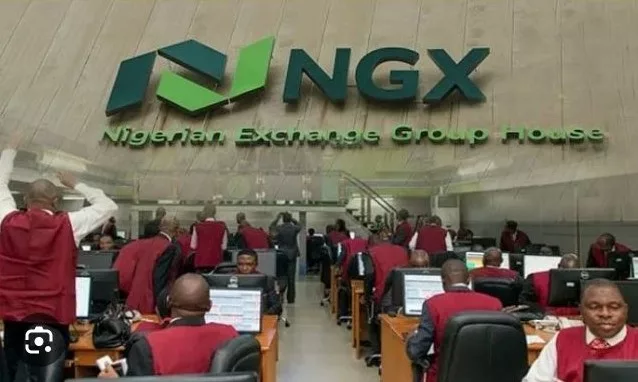
Capital market analysts have attributed the current downturn in the Nigerian equities market to a post-earnings correction, rising inflation and investor caution ahead of Nigeria’s general elections.
The equities market has experienced volatility so far in the month of June. The NGX All-Share Index has recorded a month-to-date decline of 5.77 per cent as of June 19, 2026, closing at 234,941.27 points from 250,385.47 points at which it opened for the month. Also, market capitalisation declined by N9.182 trillion to close at N151.327 trillion on June 19, 2026, from N160.509 trillion.
Speaking to LEADERSHIP, the Vice President of Highcap Securities Limited, Mr David Adnori, pointed out several underlying factors contributing to the current market conditions. First and foremost is the expected market correction.
He said, “At this time of year, after the release of full-year results and corporate disclosures, we often see a realignment between market prices and the actual values and fundamentals of listed companies. This adjustment typically occurs for those companies that did not meet investor expectations.”
He noted that after companies distribute their earnings, the absence of new price-sensitive information can lead to a temporary decline in market activity, adding that this results in a corrective phase that often drives prices downward.
“Another consideration is the rising inflation observed over the past few months, which, although slight, has contributed to investor anxiety. Such inflation rates can indicate deteriorating economic fundamentals and may prompt concerns about potential interest rate hikes, leading some investors to exit the equity market prematurely,” he said.
“The anticipation surrounding the Dangote Refinery IPO may have led some investors to hold off on market participation in favour of cash positions. This does not necessarily reflect negatively on market stability but rather indicates a strategic realignment among institutional investors.
“Capital market operators are also taking prudent steps to liquidate positions to safeguard their capital against possible risks, especially given the heightened political uncertainty as Nigeria approaches a general election. This is a typical reaction as investors become more cautious during such times.”
Despite these challenges, Adnori said there is optimism for market recovery.
“As half-year results begin to emerge in the third quarter, we can expect renewed interest in and demand for shares of companies that perform well. Furthermore, international factors, such as changes in crude oil prices following the recent peace deal between the US and Iran, also play a role in shaping market dynamics,” he said.
The managing director/chief executive officer of ECL Asset Management Limited, Charles Fakrogha, said, “While we are observing some bearish conditions in June, this is a natural part of market cycles.” He emphasised that it is not accurate to say the market is bleeding; rather, what we are witnessing is a necessary correction.
Fakrogha pointed out that profit-taking is a key factor behind the current market behaviour, adding that many investors have seen significant returns this year, and that as they realise these profits, it can lead to short-term price declines.”
“The banking sector appears to be under more pressure than other areas of the market. This pressure is partly due to new policies being developed by the Central Bank of Nigeria (CBN), aimed at protecting depositors and enhancing the stability of banks under the Holdco structure. While these changes may initially cause some uncertainty among investors, they are intended to strengthen the financial system in the long run,” he said.
As the CBN continues to refine these policies, Fakrogha said that by the time second-quarter results are released, investors will have a clearer understanding, potentially leading to a more stable and slightly bullish market environment.
He explained that the market operates in cycles, and this phase is just one part of an ongoing journey.
“With patience and an informed approach, the market can return to growth,” he added.
We’ve got the edge. Get real-time reports, breaking scoops, and exclusive angles delivered straight to your phone. Don’t settle for stale news. Join THISTIMES on WhatsApp for 24/7 updates →
Join Our WhatsApp Channel