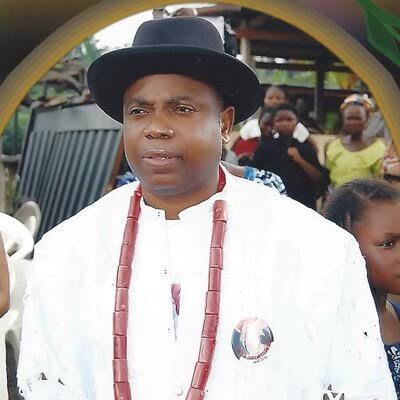
The African Democratic Congress (ADC) senatorial candidate for Delta South, Dr Austin Orette, has unveiled his political agenda ahead of the 2027 general elections, with emphasis on electoral reform, security, healthcare, infrastructure, youth employment and accountability in public institutions.
Orette, who spoke to party supporters and journalists in Ozoro, headquarters of Isoko North Local Government Area of Delta State, on Thursday, also condemned the Independent National Electoral Commission (INEC) over the alleged omission of his name from its published list of senatorial candidates.
He demanded an explanation from the commission and called for the matter to be resolved through the appropriate electoral procedure.
“My concern is not simply that my name was omitted from the list published by INEC, but how such an omission occurred after my party submitted my candidacy. I am demanding that INEC explain clearly what happened, verify its records and, if the omission was an administrative error, correct it through the proper procedure,” Orette said.
“The electoral process must not deny any qualified candidate a democratic opportunity because of an unexplained administrative failure.”
He said INEC should clarify whether his nomination was properly received, whether the information submitted by the ADC was correctly captured and at what stage the alleged omission occurred.
“I am not asking INEC for a favour. I am asking for the law and the established process to be applied correctly. If there was an error, it should be identified and corrected through the proper procedure. If there was no error, INEC should explain clearly why my name was omitted despite my party’s submission,” he said.
The ADC also called on INEC to review the alleged omission and ensure that the name of its nominated candidate for Delta South is properly reflected in the official candidate list.
Orette said the development highlighted the need for greater transparency in the handling of candidate information, proposing an auditable process from party nomination and submission to INEC verification and publication.
He also proposed mandatory acknowledgement of candidate submissions, a rapid mechanism for correcting wrongly omitted names and accountability for officials found to have negligently or unlawfully mishandled candidate information.
On electoral administration, Orette called for stronger legislative oversight of election preparation, procurement, logistics and the implementation of electoral reforms.
He also advocated greater transparency in political party primaries, including proper documentation of nomination fees, accredited delegates, voting procedures, results and dispute-resolution processes.
On security, the ADC candidate said legislative measures should address kidnapping, organised criminal networks, illegal arms trafficking and the financing of criminal enterprises.
He said tackling insecurity should also involve addressing youth unemployment, institutional weaknesses, poor intelligence coordination and limited economic opportunities.
For Delta South, Orette identified environmental remediation, improved roads and waterways, healthcare, youth employment, technical training and support for small and medium-sized enterprises as areas requiring attention.
He also called for stronger oversight of agencies responsible for development in the Niger Delta.
On healthcare, Orette said legislative and budgetary priorities should include strengthening primary healthcare, improving rural medical services, supporting healthcare workers and expanding emergency medical services.
“As a medical doctor, I understand that healthcare is not merely a budgetary issue. It is a question of whether people live or die. Delta South should not require citizens to travel hundreds of kilometres for basic specialist care,” he said.
On youth development, he said government policies should expand access to vocational training, technology, entrepreneurship, agriculture and maritime opportunities.
Orette also advocated equal application of the law to public officials and ordinary citizens, arguing that political influence should not shield individuals from lawful investigation or prosecution.
“For Nigeria to develop, the wealthy and politically influential must be subject to the same legal standards as everyone else. Privilege must carry responsibility. Office must carry consequences. Influence must never become immunity,” he said.
He referred to the 2023 conviction in the United Kingdom of former Deputy Senate President Ike Ekweremadu, his wife, Beatrice Ekweremadu, and medical doctor Obinna Obeta in connection with a proposed kidney donation, saying the case illustrated the principle that public office should not place individuals beyond lawful process.
Orette also called for investigations and prosecution where credible evidence exists linking individuals to kidnapping, terrorism, organised criminality or the financing of criminal activities.
He said the Senate could contribute to addressing the country’s challenges through legislation, amendments to existing laws, appropriation and oversight.
“The Senate cannot solve every problem in Nigeria by itself. But a senator can introduce bills, sponsor amendments, influence appropriations, conduct oversight, demand explanations from agencies and bring the concerns of constituents directly into national policy,” he said.
He urged voters in Delta South to examine the programmes and records of candidates ahead of the 2027 elections.
We’ve got the edge. Get real-time reports, breaking scoops, and exclusive angles delivered straight to your phone. Don’t settle for stale news. Join THISTIMES on WhatsApp for 24/7 updates →
Join Our WhatsApp Channel