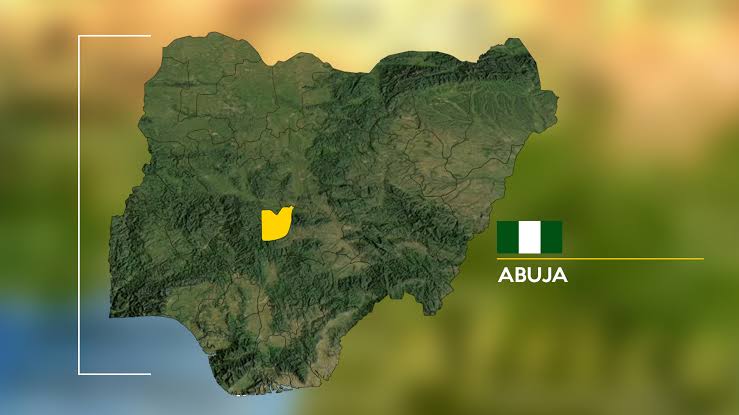
A civil society organisation (CSO), the Grassroots Centre for Rights and Civic Orientation (GRAPO) has called on the Federal Capital Territory Administration (FCTA) to halt developments on designated green areas in Abuja.
The centre warned that continued conversion of such spaces into concrete structures could worsen the nation’s capital environmental challenges, particularly flooding.
The CSO also urged the minister of the FCT, Nyesom Wike, to ensure that Abuja’s original master plan and environmental regulations were respected.
The executive director of GRAPO, Armsfree Ajanaku, made the call when he spoke with journalists in Abuja yesterday on a disputed property in the FCT, which, according to him, was designated as a green area under the Abuja master plan.
Ajanaku stressed that the protection of green spaces was a matter of public interest, environmental sustainability and adherence to the rule of law.
He said, “The place and the space that is in dispute is actually a green area. This is the place that has been approved and pencilled down in the master plan for our capital.”
The GRAPO director warned that Abuja must not be allowed to lose its green spaces to unregulated concrete development, stressing that the city’s greenery remained one of the features that distinguished it from other major Nigerian cities.
“We cannot fold our hands and watch all the green spaces to be blatantly taken over by concrete development,” he said.
Ajanaku linked the depletion of green areas to the growing environmental challenges confronting the FCT, particularly flooding.
He said he had lived in the territory since 2012 but had never witnessed the level of flooding recorded in Abuja this year.
“I have not seen the level of flooding that we experienced this year ever since I have been a resident of the FCT. It shows that, in the context of the environment, some things are not being done right,” he said.
According to him, the environment should be regarded as a collective heritage rather than the private estate of individuals or organisations.
He warned that the continued conversion of green spaces into shopping malls, housing estates and other developments could have serious consequences for residents and future generations.
“This is not just about private interest; it is also about public interest. The environment belongs to all of us collectively as citizens,” he said.
Ajanaku also urged the government to comply with Nigeria’s international environmental commitments and ensure that developments within the FCT conformed with existing planning regulations.
He alleged that some of the disputed developments had also affected public infrastructure, including streetlights installed with public funds.
“Go and look at the streetlights outside. The streetlights that public funds provided for, they are part of the things that have been pulled out,” he said.
The GRAPO executive director called on the FCT authorities to immediately stop developments encroaching on designated green areas and restore the spaces to their original purposes.
“There is a reason why those areas were designated as green areas in the first place. Green area does not mean the place would be left fallow. There are particular uses, including recreational uses, for those areas,” he said.
Ajanaku further stressed the importance of green spaces to the health and wellbeing of residents, noting that they provided environmental and recreational benefits in an increasingly urbanised city.
Also, a legal practitioner, Matthew Onoja, has has urged the Minister of the Federal Capital Territory (FCT), Nyesom Wike, and the Inspector-General of Police (IGP), Olatunji Disu, to intervene in the alleged takeover of a disputed green area in Kado Estate, Abuja.
Onoja, who represents Hongye International Nigeria Limited, a lessee of the Federal Capital Territory Administration (FCTA), said his client was facing an attempt to take possession of the property despite a pending court case over the land.
He said the authorities were also informed that the dispute was already before the court and that several parties, including the FCT Administration, had been joined in the suit.
“Some persons came, moved equipment and bulldozers into the site and destroyed properties of my clients. The mesh fence was destroyed, trees were felled and everything my client had laboured to put in place was destroyed,” he alleged.
The lawyer further alleged that some of those involved in the demolition arrived in marked vehicles and were accompanied by other persons, including security individuals and police officers.
He said he questioned those at the site about their authority to enter and demolish the property but was allegedly told to go to court.
Onoja argued that such an action amounted to taking the law into one’s hands, stressing that even an alleged illegal occupant could not be forcibly dispossessed without due process.
“My client is not an illegal occupant. Our client is a lawful occupant in possession, having been allotted the property by the Federal Capital Territory Administration itself. By what authority are you coming to dispossess my client?” he asked.
He said the substantive case was scheduled for hearing on October 20, 2026, and urged all parties to maintain the status quo pending the determination of the suit.
According to him, the FCT Administration, being a party to the suit, should ensure that no individual or institution uses its influence or resources to undermine the judicial process.
“My demand is that the rule of law and due process be followed. Let the parties maintain the status quo, with my client remaining in possession until the rights of the parties before the court are determined,” he said.
We’ve got the edge. Get real-time reports, breaking scoops, and exclusive angles delivered straight to your phone. Don’t settle for stale news. Join THISTIMES on WhatsApp for 24/7 updates →
Join Our WhatsApp Channel