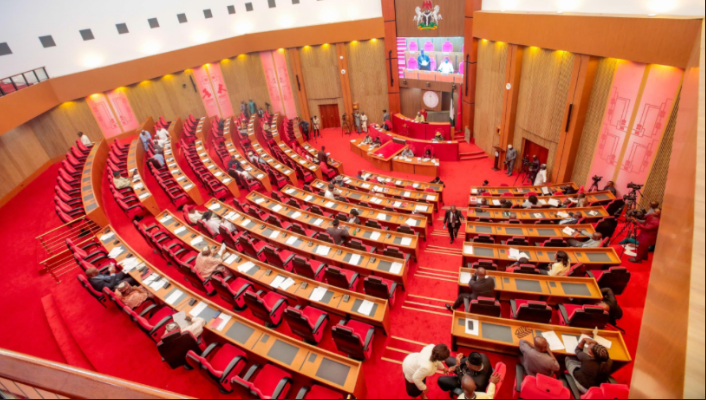
The Senate has passed a bill extending the implementation period of the capital component of the 2025 Appropriations Repeal and Enactment Act from September 30 to December 31, 2026, to allow the Federal Government to complete ongoing projects and utilise funds already appropriated and released.
The bill, sponsored by the Senate Leader, Senator Opeyemi Bamidele, was passed through second and third readings on Tuesday following an expedited legislative process.
Leading the debate, Bamidele said the extension was necessary to provide ministries, departments and agencies (MDAs) with sufficient time to complete capital projects for which funds had already been appropriated and released.
He said the amendment would provide “the necessary legal and administrative window” for the completion of ongoing projects, citing procurement, contract execution, mobilisation, certification of works and payment processes among factors that could affect implementation timelines.
According to him, allowing the current deadline to lapse without an extension could create difficulties for MDAs and increase the risk of abandoned or incomplete projects.
“The objective before us is straightforward: to protect ongoing public investments, facilitate the completion of critical projects, prevent avoidable waste of public resources and maximize the value derivable from funds already appropriated and released,” Bamidele said.
He stressed that the proposed amendment did not introduce a fresh appropriation but merely extended the period within which the capital component of the existing 2025 appropriation could be implemented.
The Senate Leader also maintained that the extension would not diminish accountability or legislative oversight.
“The extension should not be interpreted as a relaxation of the principles of accountability, fiscal responsibility, or legislative oversight,” he said.
He urged the Senate to support the bill, arguing that effective capital expenditure could support infrastructure development, employment generation, local contractors and businesses, economic activity and public service delivery.
Deputy Senate President Barau Jibrin described the bill as important to preventing the proliferation of abandoned projects across the country.
Barau said extending the implementation period would give the government an opportunity to complete projects initiated under the 2025 appropriation rather than allow them to remain unfinished because of the expiration of the statutory deadline.
He commended the Senate Leader for sponsoring the bill and urged senators to support its passage.
The Minority Leader, Senator Abba Moro, (Benue South) also supported the extension but cautioned senators against turning the debate into an avenue for blaming previous administrations.
Moro said failure to extend the implementation period could delay projects and, in some cases, contribute to their abandonment.
He, however, urged lawmakers to avoid political comparisons while debating matters affecting national development.
“We agree that extending the budget will enable the government to implement these projects. But to say, for instance, that the non-implementation of budgets extend beyond the administration of APC government is actually being unfair,” Moro said.
He urged lawmakers to focus on measures that would enable the government to implement its programmes and projects.
Senator Mohammed Tahir Monguno, representing Borno South, also supported the bill but raised concerns about the government’s payment system and its impact on budget implementation.
Monguno said extending the lifespan of the capital budget would help prevent abandoned projects and ensure that Nigerians benefited from ongoing development programmes.
He, however, called for a review of the centralised payment system, which he said had contributed to delays in the implementation of appropriated projects.
“So long shall we continue to have this ugly scenario of non-implementation of the budget necessitating the National Assembly to extend the lifespan of the budget,” Monguno said, urging the executive to review the policy.
After the debate, the Senate committed the bill to the Committee of Supply, which considered and approved amendments to the principal Act, including the extension of the implementation date from September 30 to December 31, 2026.
The Senate subsequently returned to plenary, adopted the committee’s report and suspended its rules to allow the bill to proceed to third reading.
Senate President Godswill Akpabio thanked senators for supporting the measure, saying the extension was necessary because several contractors had yet to complete their projects or receive full payment under the 2025 Appropriations Act.
Akpabio said allowing the September 30 deadline to pass without an extension could have affected the completion of projects and settlement of outstanding contractual obligations.
“It is not good for us to have abandoned projects littered across the nation, since most contractors have not either completed their jobs or have been fully paid in respect of the 2025 Appropriations Act,” he said.
He urged the government to use the additional three months to settle outstanding payments and advance ongoing infrastructure projects.
“I hope that this period extended will be utilized to ensure that all payments are made and all necessary contracts are done for the benefit of the Nigerian people,” Akpabio said.
He said the measure would help ensure that infrastructure projects reached stages where Nigerians could see, feel and benefit from them.
We’ve got the edge. Get real-time reports, breaking scoops, and exclusive angles delivered straight to your phone. Don’t settle for stale news. Join THISTIMES on WhatsApp for 24/7 updates →
Join Our WhatsApp Channel