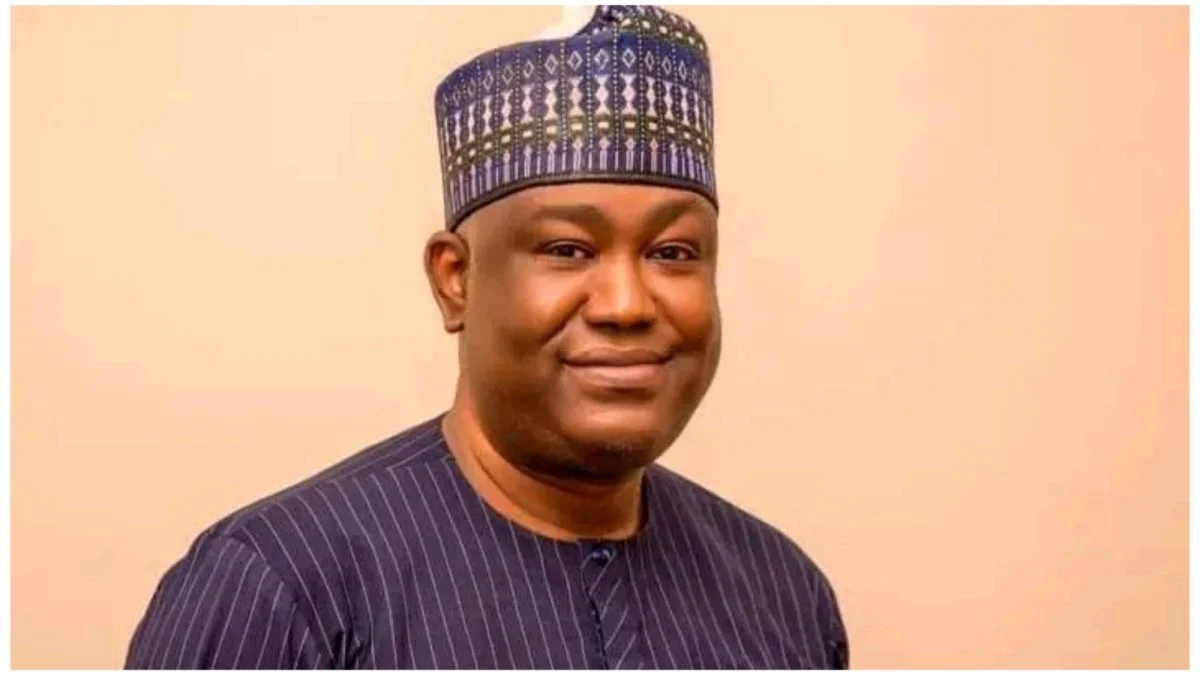
The Independent Corrupt Practices and Other Related Offences Commission (ICPC) and the Attorney-General of the Federation (AGF) have asked the Federal High Court in Abuja to dismiss a N1 billion fundamental rights suit filed by former Kaduna State Governor, Nasir El-Rufai.
The suit centres on allegations that El-Rufai’s wife, Aichatou Asabe, and his son, Abba El-Rufai, were prevented from visiting him while he was being held in ICPC custody.
Politics Nigeria reports that the former governor instituted the case against the ICPC, its Chairman, Musa Aliyu, SAN, and the AGF, seeking damages and other reliefs over what he described as an infringement on his constitutional rights.
The matter, marked FHC/ABJ/CS/1852/2026, was filed at the Federal High Court in Abuja on August 13 by El-Rufai’s lawyer, Ubong Akpan.
El-Rufai is asking the court to recognise that his fundamental rights remain enforceable despite his detention. He also wants the court to order the respondents to allow him reasonable access to members of his family and to award him N1 billion in damages.
The ICPC, however, has rejected the allegations and maintained that the restrictions placed on visits to the former governor were introduced because of security concerns within its detention facility.
In its joint counter-affidavit, filed on behalf of the commission and its chairman, the ICPC described several claims contained in El-Rufai’s affidavit as false.
The commission said El-Rufai was in its custody pursuant to an order of the Federal High Court in Kaduna in charge number FHC/KD/73C/2025.
According to the ICPC, it had previously allowed El-Rufai access to his personal physician in accordance with a court directive. The medical visit, it alleged, later became a political gathering, prompting the commission to review its access arrangements.
The commission said the incident occurred on July 7, when El-Rufai was taken to see his personal doctor. His wife accompanied him along with ICPC officers.
The agency alleged that what was supposed to be a medical visit was subsequently turned into a political meeting. It said the development exposed weaknesses in the existing security arrangements at the facility.
As a result, the commission said it introduced temporary measures restricting non-essential visits to El-Rufai while it reviewed the security situation.
The ICPC’s account also focused on an incident involving Abba, who allegedly arrived at the commission’s premises on July 7 to see his father.
John Uche, a Chief Anti-Corruption Assistant in the commission’s Internal Security Support Unit, said he was instructed by his superior to establish the purpose of Abba’s visit.
He said Abba explained that he had come for a normal visit and was subsequently asked to wait in the commission’s reception area.
According to Uche, the situation later became tense after Asabe met her son and demanded that he be allowed to see his father.
“That my colleague, Miss Titilayo Remi, tried to speak and reason with her to de-escalate the situation, but she was uncooperative.”
Uche further alleged that Abba later attempted to enter the commission’s premises.
He said he moved to stop him but fell into a ditch while trying to prevent the entry.
“That while being focused on preventing him from gaining access, I fell into a ditch where my leg was trapped, and I called out for help, at which point the applicant’s son and Aichatou Asabe continued to make their way towards the building’s entrance, as captured by the CCTV footage.”
He said security personnel responded after hearing his call for help.
“That my cry for help attracted the security personnel who then swung into action to prevent the unauthorised entry of the applicant’s son while Aichatou Asabe gained access into the building and headed for the detention area.”
The ICPC said the incident was captured by CCTV cameras installed around its premises.
Uche said the recordings had not been altered and remained an accurate record of what happened at the facility.
He added that the July 7 incident was not the first security concern involving access to El-Rufai.
According to him, a review of the commission’s security arrangements uncovered an earlier incident involving Asabe.
He alleged that she had been brought into the facility after official visiting hours on July 4, at about 7:35pm, with the assistance of some officers.
The ICPC said the officers involved in the alleged breach were subjected to disciplinary proceedings.
The commission further claimed that one of the officers involved was eventually dismissed from service.
It said the incident contributed to its decision to temporarily suspend Asabe’s visiting access while the security review was ongoing.
“As such, her visiting access to the applicant was temporarily suspended pending completion of the security review and implementation of appropriate mitigation measures.”
The ICPC insisted that the decision was not intended to cut El-Rufai off completely from his family.
Uche said other members of the former governor’s family continued to visit him after the July 7 incident. According to him, relatives were allowed to bring food, medication and other essential items to the former governor.
The commission attached its visitors’ log to the counter-affidavit as evidence of the visits.
It therefore urged the court to reject El-Rufai’s claims and dismiss the case against the ICPC and its chairman.
The AGF has also taken a similar position.
In a separate counter-affidavit filed on September 11, the Federal Government argued that the Attorney-General was wrongly blamed for actions carried out within the ICPC facility.
The affidavit was deposed to by Oni Michael, an administrative officer in the Civil Litigation and Public Law Department of the Federal Ministry of Justice.
Michael said the AGF neither arrested nor detained El-Rufai and did not control the detention facility where the former governor was being held.
“That the alleged infringement of the applicant’s right was not done by the 3rd respondent in any way whatsoever, as he is not responsible for the maintenance and control of the 1st and 2nd respondents’ detention facility.”
The AGF also denied being involved in the events of July 7.
The Federal Government argued that a previous court order relied upon by El-Rufai only required the ICPC to give him access to his counsel and personal physician.
“That the attached order did not include access to Aichatou Asabe or any other person.”
The AGF further maintained that the ICPC was within its powers to establish security procedures for its detention facilities.
“That the 1st and 2nd respondents are empowered to put in place protocols within their facilities to prevent breach of security,”
Michael described security at the detention facility as a matter of national security.
He also supported the ICPC’s account that a previous breach had occurred when Asabe was allegedly brought into the facility after visiting hours.
According to the AGF’s counter-affidavit, the officer accused of facilitating the alleged breach had since been dismissed.
The Federal Government therefore asked the court to dismiss the suit, insisting that the AGF could not be held responsible for the alleged denial of access to El-Rufai’s family.