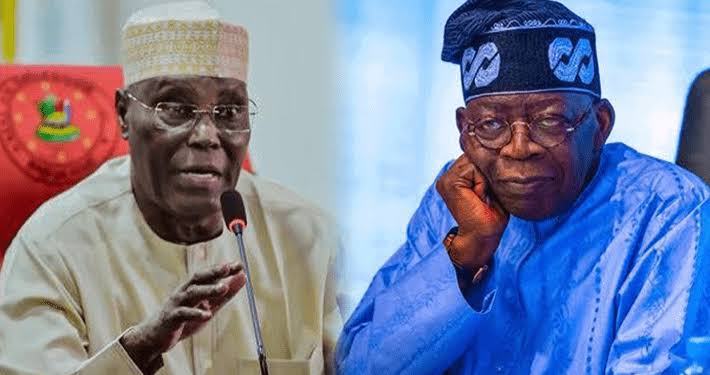
Former Vice President and presidential candidate of the African Democratic Congress (ADC), Atiku Abubakar, has launched a scathing attack on President Bola Tinubu’s economic policies, accusing the Presidency of celebrating impressive macroeconomic figures while millions of Nigerians grapple with worsening living conditions.
Reacting to the State House’s lengthy defence of the Tinubu administration’s economic record, Atiku argued that government officials were focusing on favourable economic indicators rather than addressing the harsh realities facing ordinary citizens.
“The State House celebrates macroeconomic indicators while ordinary Nigerians struggle with microeconomic realities. It speaks glowingly about GDP growth while families skip meals. It boasts of debt ratios while businesses shut their doors. It trumpets reforms while millions of citizens slide deeper into poverty. It applauds statistical improvements while market women, artisans, manufacturers, transporters and young graduates confront an economy that has become increasingly hostile to honest enterprise,” Atiku said.
In a statement issued on Monday by his Senior Special Assistant on Public Communication, Phrank Shaibu, the former Vice President described the Presidency’s lengthy rebuttal of opposition criticism as an attempt to replace performance with propaganda.
Atiku questioned why Nigerians continued to experience rising hardship despite repeated government claims that the economy was improving.
“It is remarkable that the Presidency devoted thousands of words to attacking the opposition while failing to answer the one question every Nigerian is asking: If the economy is doing so well, why are Nigerians getting poorer?” he asked.
He maintained that improvements in gross domestic product and other macroeconomic indicators had not translated into better living standards for citizens.
According to him, governments should be assessed by their ability to improve the welfare of the people rather than by statistical achievements.
“Governments are not elected to improve spreadsheets. They are elected to improve the lives of their people. Nigerians cannot eat GDP. They cannot cook with debt-to-GDP ratios. They cannot pay school fees with statistical projections. The true measure of economic management is whether families are living better today than they were yesterday. On that score, this administration has failed,” Atiku stated.
The former Vice President also rejected the Presidency’s suggestion that critics were relying on outdated economic data, insisting that the consequences of policy decisions taken since 2024 continued to affect Nigerians.
He argued that economic policies could not be separated from their long-term effects, adding that citizens were still bearing the burden of reforms introduced earlier in the administration.
“The economic shocks unleashed in 2024 did not disappear with the turning of the calendar. Their consequences continue to define the lives of millions of Nigerians in 2026,” he said.
Atiku further challenged the government’s celebration of GDP growth, asking whether the purchasing power of Nigerians had improved, transport fares had fallen or manufacturers were spending less on production.
“The answer, tragically, is no,” he declared, citing findings by the International Monetary Fund that an estimated 63 per cent of Nigerians now live below the national poverty line, while about 27 million people faced food insecurity in late 2025.
On public borrowing, Atiku said the issue was not the size of Nigeria’s debt but whether the borrowed funds were improving infrastructure, creating jobs and raising living standards.
“If revenue has improved so dramatically; if subsidy has been removed; if tax collection has increased; and if debt servicing has supposedly become more manageable, why does this administration continue to borrow at record levels? Why are Nigerians being told to celebrate improved revenues while the government simultaneously accumulates fresh debt?” he queried.
The ADC presidential candidate also questioned the benefits of fuel subsidy removal, arguing that Nigerians had endured unprecedented fuel prices, soaring transport costs and declining purchasing power without seeing the promised dividends of the policy.
“Government cannot ask citizens to celebrate sacrifice while the promised rewards remain invisible,” he said.
He equally criticised the government’s tax reforms, saying businesses were already struggling under rising energy costs, multiple taxation and weak consumer demand.
“Government cannot tax its way into prosperity while simultaneously shrinking the productive capacity of the economy,” Atiku argued.
Atiku further accused the Presidency of failing to fully disclose details of crude-backed financing arrangements, insisting Nigerians deserved transparency over how future oil revenues had been committed.
“If the proceeds of Nigeria’s most valuable natural resource have already been committed through opaque financing arrangements, Nigerians deserve full disclosure,” he said, demanding answers on the terms, beneficiaries and projects financed under such agreements.
On healthcare and education, Atiku contended that government announcements did not reflect the reality facing citizens, arguing that quality healthcare remained unaffordable for many Nigerians while student loans alone could not be described as comprehensive education reform.
He also accused the administration of celebrating slowing inflation despite persistently high prices, stressing that lower inflation did not mean lower costs for food, transport and other necessities.
“A reduction in the rate of inflation simply means prices are rising more slowly than before. It does not mean they have returned to affordable levels,” he said.
The former Vice President urged President Tinubu’s administration to stop blaming previous governments for current challenges, saying leadership required taking responsibility rather than offering excuses.
“Governments should be judged by the problems they solve—not by the number of excuses they manufacture,” Atiku said.
Citing data from the Manufacturers Association of Nigeria (MAN), Atiku claimed the country’s productive sector was under severe strain, alleging that hundreds of manufacturing firms had shut down while trillions of naira worth of finished goods remained unsold because of weak consumer purchasing power.
“The true verdict on this administration’s economic policies is not written by government spokespersons. It is written in the silent factories, the abandoned production lines, the shuttered warehouses, the unemployed workers and the empty pockets of millions of Nigerians,” he said.
He concluded by urging the Presidency to focus less on defending its record and more on addressing the economic hardships confronting Nigerians.
“No amount of propaganda can substitute for competent governance. No statistical gymnastics can erase hunger. No carefully curated economic indicators can silence empty stomachs,” Atiku said, adding that the final verdict on the administration’s performance would ultimately be delivered by the Nigerian people.
We’ve got the edge. Get real-time reports, breaking scoops, and exclusive angles delivered straight to your phone. Don’t settle for stale news. Join THISTIMES on WhatsApp for 24/7 updates →
Join Our WhatsApp Channel