The Federal Government has said it will pursue local assembly and servicing of radiotherapy and imaging equipment as part of efforts to reduce Nigeria’s dependence on imported cancer technologies and build a sustainable oncology system.
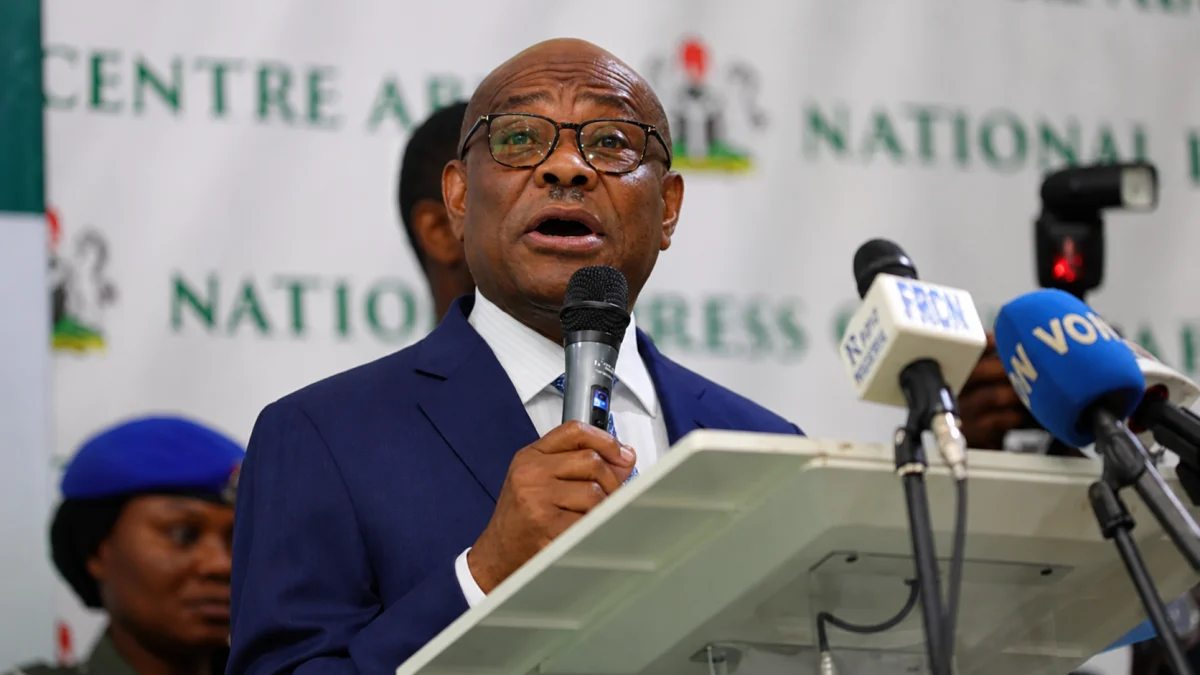
The Minister of State for Health and Social Welfare, Dr Iziaq Adekunle Salako, disclosed this at the LINK Global Summit on Innovation and Practice in Oncology held at the China National Convention Centre, Beijing, China.
Salako said Nigeria’s long-term cancer-care strategy was not merely to acquire sophisticated equipment but to develop the human and technical capacity to install, maintain and eventually manufacture the technologies locally.
“Machines without people are monuments,” the minister said, stressing that investments in cancer infrastructure must be matched with trained personnel, maintenance systems and sustainable technical support.
He said the Federal Government was therefore strengthening partnerships with China to facilitate technology transfer, technical assistance, joint research and development, academic exchanges and professional capacity building.
According to him, Nigeria had signed a strategic cooperation agreement with LinaTech, a Chinese technology company specialising in advanced radiation therapy solutions.
Salako said the agreement would support Nigeria’s efforts to strengthen radiotherapy services while building the technical capacity required to sustain the equipment.
He said the government would also pursue local assembly and servicing of radiotherapy and imaging equipment, joint clinical trials, cancer registry-linked research, artificial intelligence-assisted treatment planning, adaptive radiotherapy and tele-oncology collaborations by 2030.
The minister said government incentives for health manufacturing, including zero-duty and zero-VAT measures, provided an enabling environment for increased investment in local production and technology transfer.
He also called for the twinning of Nigerian cancer centres of excellence and tertiary hospitals with Chinese cancer hospitals to accelerate knowledge transfer and professional development.
Salako proposed the establishment of a designated clinical training base in Nigeria that could serve as a West African hub for advanced radiotherapy training.
He further called for fellowship opportunities in China for Nigerian radiation oncologists, medical physicists, radiotherapy technologists and biomedical engineers.
The minister said the push for local capacity was coming amid a significant cancer burden in Nigeria, with an estimated 127,763 new cancer cases and 79,542 cancer deaths recorded in 2022.
He said the government had consequently expanded investment in cancer prevention, early detection, treatment, research and infrastructure under the Nigeria National Cancer Control Plan 2026–2030.
Salako disclosed that President Bola Ahmed Tinubu had approved the procurement and installation of 35 additional linear accelerators between 2026 and 2028 to expand access to radiotherapy.
He said six cancer centres of excellence were being developed, with three already completed and commissioned in Katsina, Enugu and Benin.
The minister said the National Institute for Cancer Research and Treatment had also trained about 140 early-career cancer scientists and supported 24 research grants.
We’ve got the edge. Get real-time reports, breaking scoops, and exclusive angles delivered straight to your phone. Don’t settle for stale news. Join THISTIMES on WhatsApp for 24/7 updates →
Join Our WhatsApp Channel