For demonstrating visionary and people-centred leadership and transforming Plateau through infrastructure renewal, improved security, SME support, modernised transport, job creation, and investments in agriculture, tourism, technology and commerce, Caleb Manasseh Mutfwang is the Governor of the Year 2026.
Governor Caleb Manasseh Mutfwang has emerged as a defining figure in Plateau State’s contemporary political landscape, bringing to governance a blend of resilience, vision and determination to confront the structural challenges that had constrained the state’s progress for years. Since assuming office on May 29, 2023, Mutfwang has pursued an ambitious development agenda centred on restoring peace, rebuilding infrastructure, strengthening public institutions, revitalising agriculture and improving people’s welfare.
Before his election as governor, Mutfwang served as chairman of Mangu Local Government Area, an experience that gave him a practical understanding of grassroots governance and the developmental realities facing rural communities. He inherited a state burdened by insecurity, infrastructure deficits, salary and pension backlogs, and a civil service in need of renewed confidence and motivation. Despite these difficulties and the political turbulence that accompanied his administration, Mutfwang has pressed ahead with his governing philosophy, encapsulated in the slogan: “The Time is Now.”
At the heart of his administration is the recognition that sustainable development cannot flourish in an atmosphere of insecurity. Plateau State had endured years of violent conflict, particularly in rural communities, with devastating consequences for lives, livelihoods and investment. In response, the government strengthened coordination among security agencies, revitalised Operation Rainbow, the state-owned security outfit, and encouraged greater community participation in intelligence gathering and early-warning systems. These efforts, supported by improved logistics for conventional security agencies, have been directed at restoring public confidence and creating an environment in which development and investment can thrive.
The administration has also adopted an innovative response to the economic pressures arising from the removal of fuel subsidies. Rather than relying exclusively on short-term palliatives, the government has placed considerable emphasis on affordable mass transport. Through the Metro Bus Scheme, many residents have gained access to cheaper, more reliable transport, helping households reduce the burden of rising commuting costs. Collaboration with the Nigerian Railway Corporation has also supported the resumption of rail services, expanding mobility options within the state.
Air transport has also received renewed attention, with improved flight services strengthening Plateau’s links with Abuja and Lagos. The administration has also entered into a Memorandum of Understanding with the Federal Airports Authority of Nigeria to upgrade Yakubu Gowon Airport into an international cargo airport, a project expected to facilitate agro-exports and connect Plateau’s agricultural produce with wider domestic and international markets.
Tourism, one of Plateau’s most enduring economic assets, is also being repositioned. The revival of the iconic Hill Station Hotel in Jos, backed by an investment of ₦8.5 billion, marks a major effort to bring the facility up to modern hospitality standards. Investments in security and infrastructure at the Jos Wildlife Park are similarly intended to strengthen eco-tourism and to reclaim Plateau’s historic reputation as a destination for leisure, conferences and hospitality.
Infrastructure development remains a visible pillar of the administration. Road construction and rehabilitation have been aligned with a broader urban renewal programme across the Jos-Bukuru metropolis and surrounding communities. The emphasis has been on balanced development and on providing infrastructure that serves communities across religious and social divides. Improvements in water supply and rural electrification have also formed part of efforts to enhance living standards.
In healthcare, the government has pursued reforms to improve access and quality. A modern diagnostic laboratory has been completed at the Plateau Specialist Hospital, which has also undergone structural upgrades and departmental expansion as part of plans to transform it into a teaching hospital. Recruitment of medical consultants across key specialties and investment in modern equipment have strengthened service delivery. Meanwhile, the revitalisation of the Plateau State Contributory Healthcare Management Agency has expanded enrolment, particularly among rural residents, while the Drugs and Medical Commodities Management Agency is working to improve the availability of certified medicines.
Education has also received similar attention. Plateau State Polytechnic has recorded increased enrolment, while interventions at Plateau State University, Bokkos, have helped stabilise academic programmes and support the development of new faculties. At the basic education level, the administration has invested in classrooms, examination halls, boreholes, toilets, perimeter fencing and administrative facilities. Teacher welfare has also been addressed, and 500 teachers have been employed under the HOPE-EDU initiative.
Agriculture, however, is among the most ambitious components of the Mutfwang administration’s development strategy. Recognising Plateau’s immense agricultural potential, the government has invested in mechanisation, improved seeds, fertilisers, agrochemicals, agricultural insurance and rural infrastructure. A farmer database has been developed to support data-driven planning, and farmers across the 17 local government areas have benefited from agricultural interventions.
More than ₦30 billion has reportedly been committed to agricultural development, complemented by extensive rural road construction and rehabilitation to improve access to farms and markets. The administration is also strengthening the potato value chain by providing certified seeds and establishing a potato tissue culture laboratory in Mangu, with the aim of moving agriculture beyond subsistence towards a more productive, technology-driven and commercially viable enterprise.
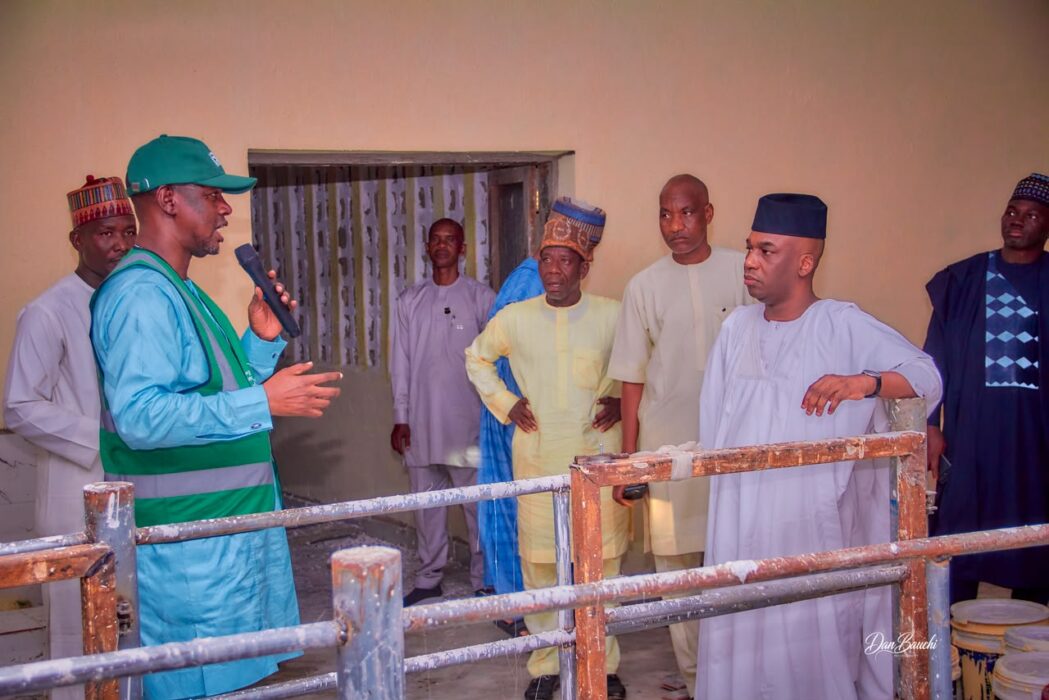
The livestock economy is receiving strategic attention through the development of a 500-cattle-per-day ultra-modern abattoir at Pwomol Village, Heipang, and a Veterinary Teaching Hospital in Barkin Ladi Local Government Area. Backed by the Livestock Productivity and Resilience Support Programme, these projects are expected to modernise the livestock value chain, improve food safety, attract investment and create employment. The abattoir is also envisioned as a critical component of the Heipang Special Agro-Processing Zone.
Beyond governance, Mutfwang’s political journey has taken a dramatic turn. Rumours of his possible defection from the Peoples Democratic Party sparked considerable resistance among APC stakeholders in Plateau, many of whom feared that the arrival of a sitting governor could disrupt existing party structures and complicate ambitions ahead of the 2027 elections. State party executives also expressed concerns about the process by which his anticipated entry was being discussed.
Governor Mutfwang’s story is therefore one of governance amid complexity and political evolution. His administration represents a determined effort to build a Plateau State defined not merely by its historical challenges but by its immense possibilities. Through investments in peace, transport, infrastructure, healthcare, education, tourism and agriculture, he is seeking to lay the foundations for a more competitive and prosperous state.
For Mutfwang, governance is ultimately about restoring confidence in public institutions and demonstrating that Plateau can once again become a centre of peace, agricultural productivity, tourism and economic opportunity. The journey is still unfolding, but the ambition of the “Time is Now” administration is unmistakable: to build a Plateau where peace provides the foundation for progress and where development creates opportunities for shared prosperity.
We’ve got the edge. Get real-time reports, breaking scoops, and exclusive angles delivered straight to your phone. Don’t settle for stale news. Join THISTIMES on WhatsApp for 24/7 updates →
Join Our WhatsApp Channel