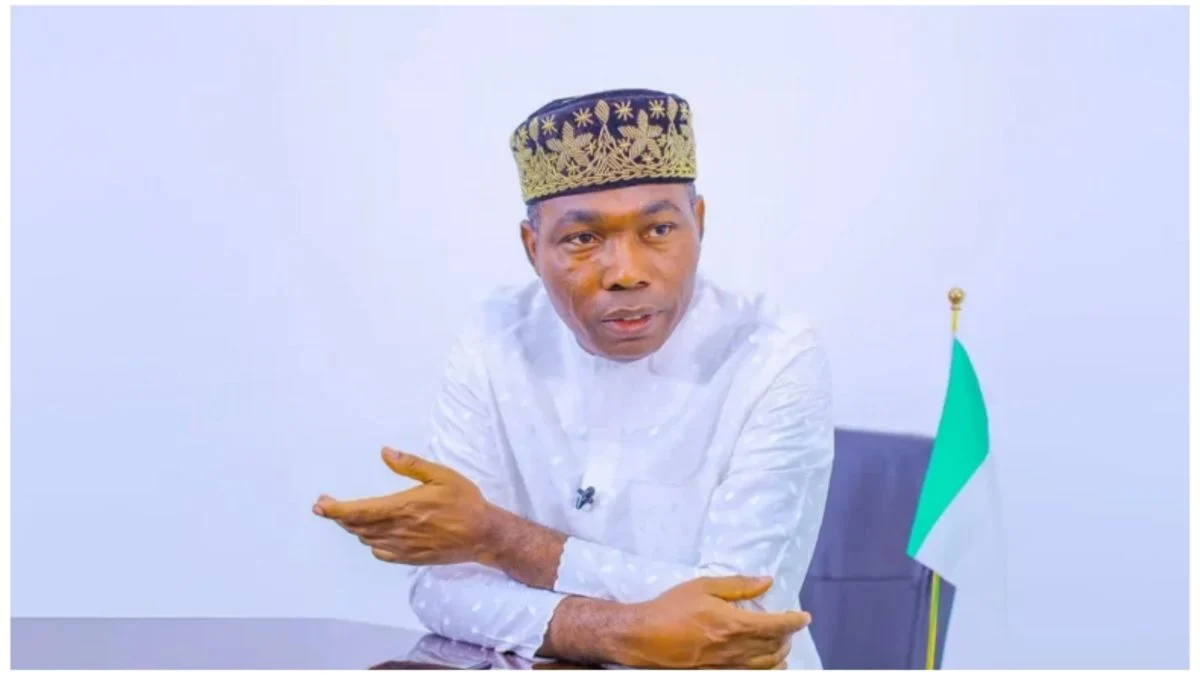
The presidential candidate of the Social Democratic Party (SDP), Adewole Adebayo, has alleged that President Bola Tinubu’s interest in occupying the presidency is driven by financial gain rather than a desire to serve Nigerians.
Adebayo stated this in Ibadan while presenting his presidential blueprint, Farewell to Poverty and Insecurity, where he urged Nigerians to take greater responsibility for the quality of leadership they choose.
According to him, Tinubu has shown little interest in the demands of the presidency, including supervising ministers, interacting with citizens and ensuring access to basic services.
Adebayo said, “Tinubu doesn’t want to be your president. He doesn’t care. He doesn’t like the job of president. Tinubu doesn’t want to stay in Aso Rock and serve the people. He doesn’t want to talk to you. He doesn’t want to supervise ministers.”
He further alleged that the President’s earlier political strategy involved sponsoring individuals for political offices and benefiting from the proceeds of their positions.
Adebayo claimed that Tinubu later opted to seek the presidency after allegedly determining that sponsoring other politicians was not generating enough financial returns.
“Tinubu’s business plan before was, ‘I will be sponsoring people to office and I will make profit out of it.’ Am I worried? Look, these people I am sponsoring, not enough money is coming back. Let me go and do this by myself,” he said.
The SDP candidate also used the occasion to warn about what he described as the possible consequences of allowing the current administration to continue for another period.
He predicted that petrol could rise to N5,000 per litre and argued that worsening inflation could leave Nigerians with large amounts of money that would no longer purchase basic necessities.
“You will see millionaires who cannot buy bread. All of you will become Manchester millionaires when Tinubu goes back because you will need one million naira to buy one loaf of bread. So you will be a millionaire in poverty,” Adebayo said.
He also warned that the economy could grind to a halt, while the incomes of artisans, traders, mechanics and other workers would continue to lose value as inflation persisted.
Beyond his criticism of the administration, Adebayo placed part of the responsibility for Nigeria’s governance problems on citizens themselves.
He questioned why Nigerians repeatedly elect leaders whom they accuse of corruption, saying voters should examine their own contribution to the political process.
“If you have one president who is a thief, you have a second president who is a thief, you have a third president who is a thief, something is wrong with you. Why are you always choosing thieves? What kind of bad luck is that?” he asked.
Adebayo described Nigeria’s 66 years of independence as an unfulfilled promise for citizens who remain without adequate food, healthcare, employment and housing.
He argued that political independence was meaningless for Nigerians whose living conditions had not improved sufficiently.
“When you have independence on a piece of paper for 66 years and you are hungry, you are sick, you are unemployed, you are without housing and there is no prospect for your child that you are carrying in your hand, your independence is a lie,” he said.
He said his blueprint was not intended to provide another catalogue of Nigeria’s problems but to encourage citizens to participate actively in changing the country.
Adebayo called for grassroots mobilisation and urged Nigerians to reject practices that sustain what they consider poor governance, including political patronage, misuse of public resources and misinformation.
He also argued that citizens should not compromise their values for political or financial benefits, saying such compromises make it difficult to hold government accountable.
According to him, government should guarantee free and compulsory quality education, affordable healthcare, housing, food and employment opportunities.
Adebayo illustrated his argument on healthcare with his experience as a farmer, questioning why livestock owners could spend money treating animals while Nigerians struggle to access healthcare.
“When my cow is sick, I use my money to treat the cow. The cow doesn’t pay for it. How can I value my cow more than the government values you?” he asked.
He added that families also provide veterinary care for dogs despite the animals neither attending school nor earning salaries.
“The dog does not speak English, doesn’t go to school, doesn’t pay salary. But we treat the dog. How can I love my dog more than I love you?” Adebayo asked.