The Federal Government has announced a 30-day discount on petrol sold by the Nigerian National Petroleum Company Limited (NNPCL), with public transport operators to receive priority under the arrangement.
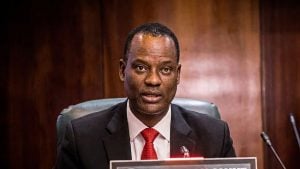
Politics Nigeria reports that the Minister of Finance and Coordinating Minister of the Economy, Taiwo Oyedele, disclosed this on Thursday at a press briefing on fuel prices and subsidy-related issues in Abuja.
Oyedele explained that the measure was not a return to petroleum subsidy but an arrangement through which the government would make petrol available at cost for the period.
“We are offering a discount on petrol dispensed by NNPC limited for the next 30 days in the first instance with priority for public transporters nationwide. So, it’s not a subsidy, government is just saying we sell to you at cost,” the minister said.
The announcement followed growing pressure from organised labour over the impact of rising petrol prices and transportation costs on workers and households across the country.
Recall that the Nigeria Labour Congress had demanded an immediate reduction in the price of petrol, a nationwide wage award for workers and the commencement of negotiations for a new national minimum wage.
In an Independence Day statement signed by its President, Joe Ajaero, on Wednesday, September 30, 2026, the NLC warned that Nigerians were facing what it described as a worsening survival crisis.
The union said persistent inflation had significantly reduced the purchasing power of workers, while higher petrol and transport costs had contributed to increases in the prices of food, school fees, rent and other basic necessities.
“We stand at the crossroads of a full-scale survival crisis. The real value of wages has been devoured by structural inflation. Petrol now sells at ₦1,430 per litre or higher in major cities and far more in remote areas,” the NLC said.
The labour union also revisited the Federal Government’s decision to remove petrol subsidy in May 2023, describing the resulting increase in fuel prices as a “systematic assault on the working class.”
It questioned the government over the use of funds saved from the subsidy removal, arguing that Nigerians had yet to see the infrastructure and social services it said were promised as part of the reform.
“Government claimed subsidy removal would free up resources for infrastructure and social services. Three years later, petrol prices have multiplied several times over, yet the promised infrastructure and social services remain mirages. Where exactly did the subsidy savings go? Nigerians deserve an answer, and they deserve it now,” the NLC said.
The union further criticised the country’s continued dependence on imported refined petroleum products despite Nigeria’s status as Africa’s largest oil producer.
According to the NLC, dependence on imported products had exposed Nigerians, particularly workers, to fluctuations in international oil prices and intensified the pressure created by higher fuel costs.
The union identified a reduction in petrol prices as its first priority, arguing that transportation was one of the major channels through which increases in fuel prices translated into broader inflation.
“Without cutting this chain, any effort to ease the suffering of the people is futile,” it said.
Beyond fuel prices, the NLC demanded the immediate implementation of a nationwide wage award for workers across the federal, state and local governments.
It argued that the measure should be treated as an emergency response to declining real incomes rather than a welfare gesture.
“A wage award is not charity. It is an emergency intervention against the collapse of real income,” the union said.
The Federal Government’s latest announcement, however, comes against the backdrop of President Bola Tinubu’s continued defence of his administration’s economic reforms and rejection of calls for the restoration of petrol subsidy.
Tinubu, in his 66th Independence Day address last Thursday, maintained that the reforms introduced by his administration were producing results and argued against reversing the subsidy removal policy.
Upon assuming office in May 2023, Tinubu announced the removal of petrol subsidy as part of a broader package of economic reforms. The policy was followed by a sharp increase in the price of petrol and subsequent pressure on household incomes and transportation costs.