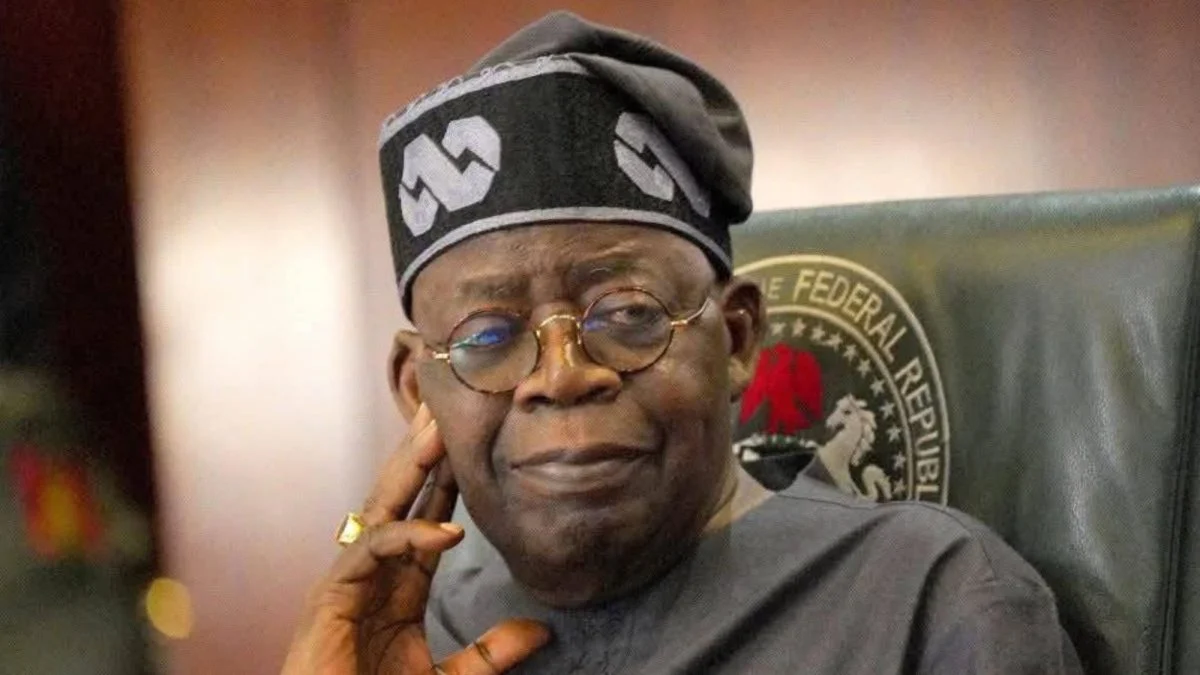
The federal government, the Food and Agriculture Organisation of the United Nations (FAO), ECOWAS Commission and the European Union have called for increased investment and stronger collaboration to bridge Nigeria’s estimated 2.2 million-tonne annual fish supply gap.
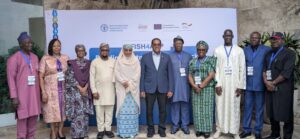
The stakeholders made the call at the Nigeria Fisheries and Aquaculture Partnership Dialogue held in Abuja to strengthen coordination among government agencies, producers, investors, researchers, financial institutions and other players in the fisheries and aquaculture value chain.
Representing the minister of marine and blue economy, Adegboyega Oyetola, Mrs Fatima Sugra Tabi’a Mahmood, said Nigeria’s annual fish demand was estimated at 3.6 million tonnes, while domestic production stood at about 1.4 million tonnes.
She described the gap as a major economic opportunity, saying increased domestic production would create jobs, strengthen businesses, improve food security and reduce the country’s dependence on imports.
“Every day, more than 230 million Nigerians must have access to food that is available, affordable, safe and nutritious. For a population of this size, food security is not an abstract policy objective. It is an urgent national imperative,” she said.
Mahmood said fish, as one of the most accessible sources of animal protein in Nigeria, should occupy a central position in the country’s food security strategy.
She noted that Nigeria was Africa’s second-largest aquaculture producer, the largest in sub-Saharan Africa and the continent’s leading producer of African catfish.
According to her, the country had successfully developed catfish production technology but needed to extend similar success to other fish species to meet growing demand and reduce import dependence.
She said the establishment of the Federal Ministry of Marine and Blue Economy by President Bola Ahmed Tinubu in 2023 had provided a dedicated institutional framework for harnessing the sector’s potential.
The minister’s representative also said the National Policy on Marine and Blue Economy 2025–2034 provided an integrated framework for the development of fisheries and aquaculture, maritime trade and transport, marine industries and environmental sustainability.
However, she identified high feed costs, dependence on imported inputs, inadequate access to quality fingerlings and broodstock, fish-health challenges, post-harvest losses and limited access to affordable finance as major obstacles to the growth of the sector.
“Finance has always been the big elephant in the room,” she said, calling for patient and affordable financing mechanisms that would reflect the realities of agricultural producers.
Earlier, FAO representative to Nigeria and ECOWAS, Dr Hussein Gadain, said fisheries and aquaculture were critical to Nigeria’s food security, livelihoods and economic development.
Gadain said fish accounted for more than 40 per cent of the protein consumed by Nigerians, adding that Nigeria was the second-largest producer of farmed fish in Africa and the continent’s largest producer of catfish.
He said the catfish subsector involved about 300,000 producers, six in 10 of whom were small-scale farmers, while supporting nearly one million direct and indirect jobs.
Despite the sector’s importance, Gadain said Nigeria still imported a substantial proportion of the fish consumed in the country, resulting in significant foreign exchange outflows.
“This is why coordination is not simply an administrative matter. It is an economic necessity and a pathway to stronger domestic production, job creation and investment,” he said.
He said the federal government’s ambition for the Ministry of Marine and Blue Economy to contribute 21 per cent to the nation’s Gross Domestic Product within 10 years was ambitious but achievable through stronger partnerships.
Gadain observed that the fisheries and aquaculture sector was fragmented, with producers, processors, input suppliers, financiers, researchers and regulators often pursuing their interests separately.
He said such fragmentation weakened the sector’s ability to develop common priorities, engage government collectively and attract investment.
According to him, the Fisheries and Aquaculture Multi-Stakeholder Platform, supported by the FISH4ACP programme, was designed to provide a stronger and more coordinated voice for the sector.
He urged participants to use the dialogue to identify shared priorities, develop investment opportunities and agree on practical actions.
Representing the ECOWAS Commission, Dr Djiga Thiao said fisheries and aquaculture had the potential to become major drivers of economic growth, food security, regional trade and employment across West Africa.
He said the region was experiencing rising demand for nutritious food, increasing pressure on natural resources and climate-related challenges, alongside the need to provide jobs for its growing youth population.
Thiao said ECOWAS was reviewing its Agricultural Policy, ECOWAP, for 2026–2030, while also developing a blue economy strategy in which fisheries and aquaculture would constitute a major pillar.
He described Nigeria as strategically positioned to lead the transformation of the regional fisheries and aquaculture sector because of its large consumer market, extensive inland waters, marine resources, growing aquaculture industry and expanding private sector.
“Nigeria therefore has the potential to become not only self-sufficient in fish production but also a regional champion and leader in fisheries and aquaculture value-chain development,” he said.
He called for the development of bankable projects, improved access to finance, stronger public-private partnerships and enhanced research collaboration.
The ECOWAS Commission, he added, would continue supporting Nigeria and other member states in policy coordination, regional trade, investment mobilisation and innovation.
Also speaking, the European Union representative, Hugh Briggs, said Nigeria had significant opportunities across fish production, processing, value addition and distribution but needed investment to convert the potential into sustainable economic growth.
Briggs said access to finance, quality inputs, technology, markets, strong institutions and appropriate policies were necessary to create an enabling environment for investment.
He disclosed that the EU was exploring additional opportunities to mobilise finance for Nigeria’s blue economy through its Global Gateway approach and other initiatives.
According to him, discussions were already ongoing with banks and EU member states to attract additional funding into the sector.
Briggs said one of the major challenges was ensuring that available funds reached small-scale producers.
“There is a lot of money moving around, but it is not necessarily getting to the local farmer. That is one of our biggest challenges,” he said.
He stressed the need for financial products specifically designed around the realities of fisheries and aquaculture businesses.
Briggs also emphasised the need for sustainable production, climate resilience and responsible management of natural resources.
The dialogue was organised with support from FISH4ACP, an initiative of the Organisation of African, Caribbean and Pacific States implemented by FAO, with funding from the European Union and the German Federal Ministry for Economic Cooperation and Development.
The stakeholders agreed that sustained collaboration among government, private investors, financial institutions, researchers, development partners and value-chain operators was essential to transform Nigeria’s fisheries and aquaculture sector from a largely fragmented industry into a competitive and investment-ready component of the blue economy.
We’ve got the edge. Get real-time reports, breaking scoops, and exclusive angles delivered straight to your phone. Don’t settle for stale news. Join THISTIMES on WhatsApp for 24/7 updates →
Join Our WhatsApp Channel