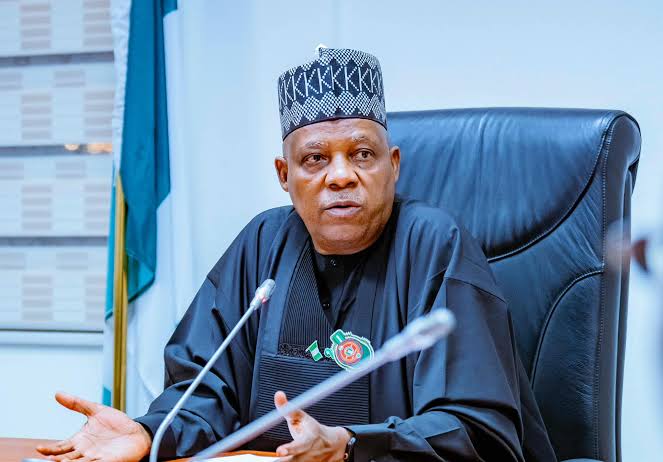
Bauchi State governor, Senator Bala Abdulkadir Mohammed, has directed newly inaugurated visitation panels for the Abubakar Tatari Ali Polytechnic (ATAP), Bauchi, and Aminu Saleh College of Education, Azare (ASCOEA), to investigate staff disputes, administrative bottlenecks, financial management and academic standards in the two institutions.
Mohammed gave the directive on Thursday during the inauguration of the panels at the Government House, Bauchi, saying the exercise was designed to strengthen governance, accountability, academic excellence and institutional development.
Represented by his deputy, Muhammad Auwal Jatau, the governor described education as the bedrock of his administration’s development agenda, stressing that tertiary institutions must serve as drivers of innovation, character development and economic growth.
“Therefore, we must ensure our institutions possess the regulatory and administrative health required to succeed,” he said.
Mohammed explained that standard regulatory and governance protocols require periodic comprehensive assessments of tertiary institutions through visitation panels, usually every five years.
According to him, ATAP and ASCOEA were due for such evaluations, particularly because of their growth and the need to align their development with the administration’s transformation agenda for the education sector.
The governor identified the approval and implementation of the Dual Mandate System at ASCOEA as a major milestone, noting that the policy allows the college to run both Nigeria Certificate in Education (NCE) and independent degree programmes concurrently.
He said the development would end the institution’s long-standing dependence on external university affiliations and significantly enhance its academic standing.
“However, a dual mandate requires dual responsibility. Expanding academic offerings demands absolute institutional readiness, strict curriculum quality assurance and rigorous financial discipline,” Mohammed said.
He consequently directed the panel to assess ASCOEA’s structural, infrastructural and academic readiness to operate effectively under the expanded mandate.
On ATAP, the governor said the institution had evolved from a small vocational centre into a major state-owned polytechnic offering diverse diploma and degree programmes.
He noted that the institution had expanded its student population and infrastructure, while upgrading its academic programmes to secure accreditation for various National Diploma and Higher National Diploma courses.
Mohammed, however, expressed concern over recurring disagreements, factionalism and friction among staff, warning that such developments could undermine academic excellence.
“In spite of these developments in the institutions, we cannot achieve academic excellence in an atmosphere of chaos. Recurring internal disagreements, factionalism and friction among staff members within these institutions have become sources of concern,” he said.
“Internal politics and personal grievances have begun to overshadow academic responsibilities. Let me be clear. Our administration will not tolerate toxic infighting that disrupts peace and slows down progress.”
He directed the panels to investigate the root causes of staff disagreements, trade union disputes and administrative bottlenecks and recommend measures for restoring industrial harmony and productivity.
The governor stressed that the panels were not constituted to witch-hunt anyone but to conduct objective assessments aimed at improving the institutions.
He tasked them with examining management-labour relations, long-standing disputes between management and staff unions, administrative bottlenecks, and the utilisation of internally generated revenue and government subventions.
The panels are also expected to assess the institutions’ relationships with statutory and regulatory bodies, including the Bauchi State Ministry of Higher Education, governing councils and the National Board for Technical Education (NBTE), to determine compliance with relevant policies and regulations.
They are to review management-council relationships, examine financial records, subventions and internally generated revenue, and determine whether grants and loans were utilised in line with approved budgetary regulations.
Similarly, the panels will review the quality, relevance and status of academic programmes, as well as instructional facilities, including workshops, laboratories and e-libraries, to ensure compliance with regulatory standards.
Mohammed further directed the panels to review human resources, including academic and non-academic staff ratios, recruitment and promotion processes, and compliance with civil service rules.
He also ordered the verification of academic staff certificates, transcripts and professional profiles to determine whether lecturers possess the required postgraduate and technical qualifications for their responsibilities.
The panels are expected to identify cases where lecturers are assigned to teach courses outside their areas of specialisation, which the governor warned could compromise instructional quality.
They will also examine staff and student welfare and industrial relations between management and labour unions, with a view to identifying the causes of disputes and recommending lasting solutions to prevent recurrent strikes.
The governor directed the panels to review the laws establishing the institutions and identify provisions that may have become obsolete or hindered their growth, with recommendations for possible legislative amendments.
He said the panels could also advise him on any other matter of public interest or institutional integrity that could affect the smooth running, development and reputation of the institutions.
Mohammed gave the panels eight weeks to submit their reports.
“To the panel members, you were selected based on your integrity and track record. Bauchi State expects total objectivity, thoroughness and fairness from your assignment,” he said.
“To the management, staff and students, I demand your maximum cooperation with these panels. Hide no information and shield no wrongdoing. We must collectively rescue our institutions from administrative decline.”
Former Vice-Chancellor of Abubakar Tafawa Balewa University (ATBU), Professor Abdulrahman Saminu Ibrahim, was appointed chairman of the visitation panel for ATAP.
Other members are Professor Muazu Saidu Badara of the Department of Accounting, Ahmadu Bello University, Zaria, and former lecturer at ATAP; Professor Isa Mohammed of ATBU; Barrister Abdulhamid Abubakar Bununu, Special Adviser on Multilateral Affairs and former Head of Administration/Head of Department, Ministry of Justice; Abdon Dalla Gin, Special Adviser on Civil Service and former Head of Service; and Aliyu Abdullahi Dambam, former Auditor-General and Deputy Accountant-General.
The Director of Tertiary Education, Ministry of Higher Education, will serve as secretary.
For ASCOEA, Mohammed appointed Professor Muhammad Ahmad Abdulaziz, former Vice-Chancellor of ATBU, Bauchi, as chairman.
Other members are Professor Demo Kalla of ATBU; Dr Habu Yusuf Abba of Sa’adu Zungur University and former Head of the Public Works Department, ATBU; Hon. Usman Danturaki, Special Adviser on Labour Matters; Barrister M.U. Usman, Deputy Director, Ministry of Justice; and Lawan Bello, former Director, Office of the Accountant-General.
The Director of Administration and Human Resources, Ministry of Higher Education, will serve as secretary to the panel.
We’ve got the edge. Get real-time reports, breaking scoops, and exclusive angles delivered straight to your phone. Don’t settle for stale news. Join THISTIMES on WhatsApp for 24/7 updates →
Join Our WhatsApp Channel